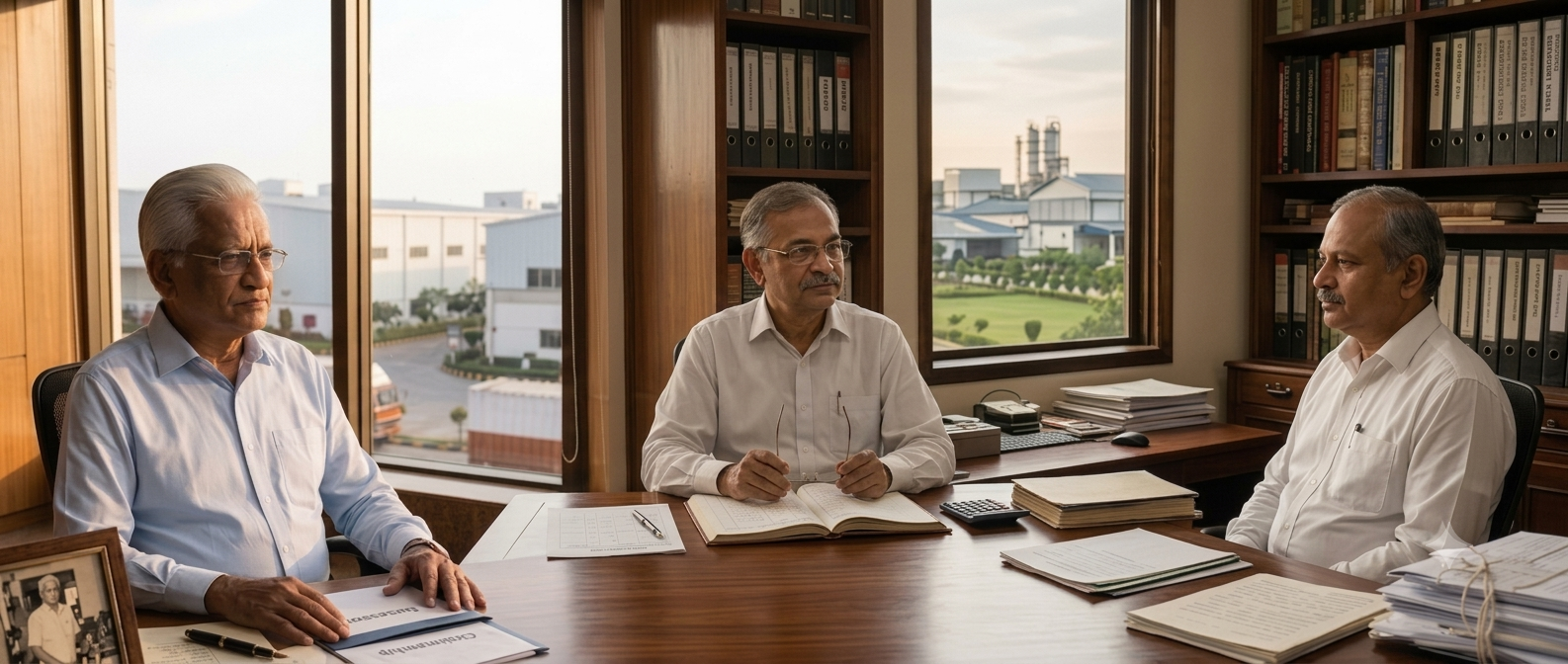
When the Family Cannot Speak
The auditor has become a diplomat. Nobody decided this.
He still asks after his brother's blood pressure
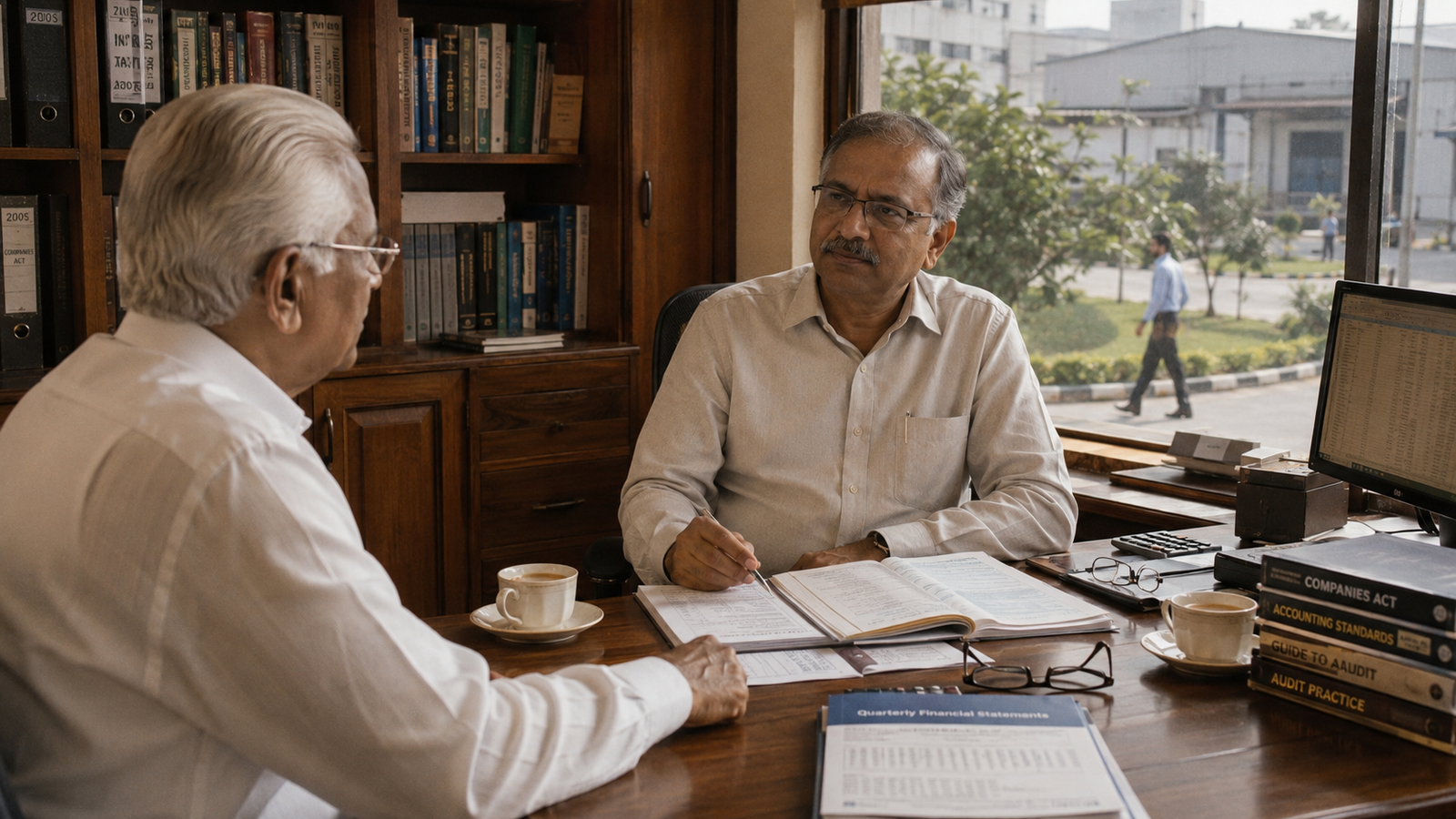
He asks the auditor. The auditor has done their books for nineteen years, and somewhere in the last two he became something else. There was no day on which it happened. When the elder wants to know whether Ranjangaon is going ahead, he asks the auditor, and the auditor raises it with the younger brother in a way that does not look like being sent, and comes back with the answer made softer on the way. He asks about the blood pressure the same way. Whether he took the second tablet. Whether the Bangalore doctor said anything about the stent.
That is the part nobody who watches this from outside understands. The affection has not gone anywhere. It is intact, and it is being routed through a man with a spreadsheet, because the two of them have not found a way to put it in a room together. Eleven months on a decision that needs four weeks. The younger brother worked out a sentence in the car in March. Four words. He has not said it.
Every room they have already has a purpose
The board meets and there is an agenda. An agenda is a promise about what will and will not be discussed. Nobody breaks one in front of two independent directors and a company secretary taking minutes. The house is worse, not better. Eleven people at lunch and four of them are children. The temple. The weddings. The hospital corridor in February, when their mother was admitted and they stood four feet apart for six hours and were perfectly civil to each other, and each of them went home and could not sleep.
Every one of these rooms is for something, and the something is never this. And their mother, who is ninety and was in the business before either of them was born, has not been asked one question about any of it, because there is no room in which asking her would be normal.
What a man says in the fourth conversation
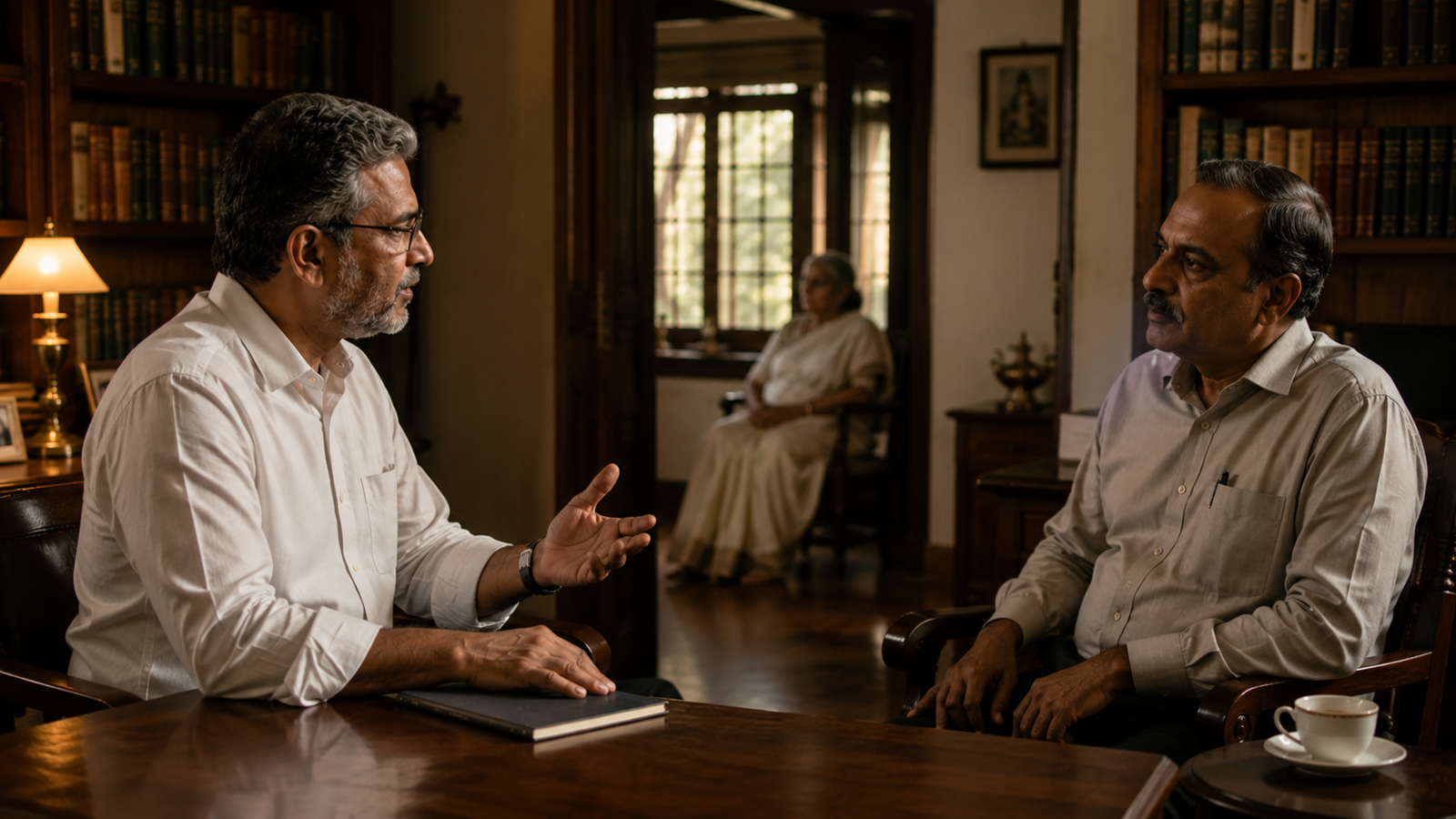
Praveen Saanker sees each of them alone. Not once. Four months, sometimes six, several conversations each, and some of them run long. Nobody sits with a man a fourth time unless the fourth conversation is expected to hold what the first three did not. In the second one, the younger brother explains the Ranjangaon numbers again, thoroughly, with the projections, because he is a careful man and this is the ground he is sure of. In the fourth he says that his brother has not asked him a question directly since 2018. Then he says something about their father, and stops in the middle of it, and looks at the window for a while, and Praveen does not fill the silence. When he starts again he has changed the subject and his voice has not quite come back.
The elder, separately, in his own fourth conversation, says that his brother is the only person alive who remembers the first shed at Hosur. He says it and then he does not say anything else for a moment. Nothing from those months is repeated to anybody. Not summarised, not characterised, not hinted at in a meeting. What the months are for is to find out whether the thing being argued about is the thing. It is not. It never was.
Sometimes it is not about the plant at all

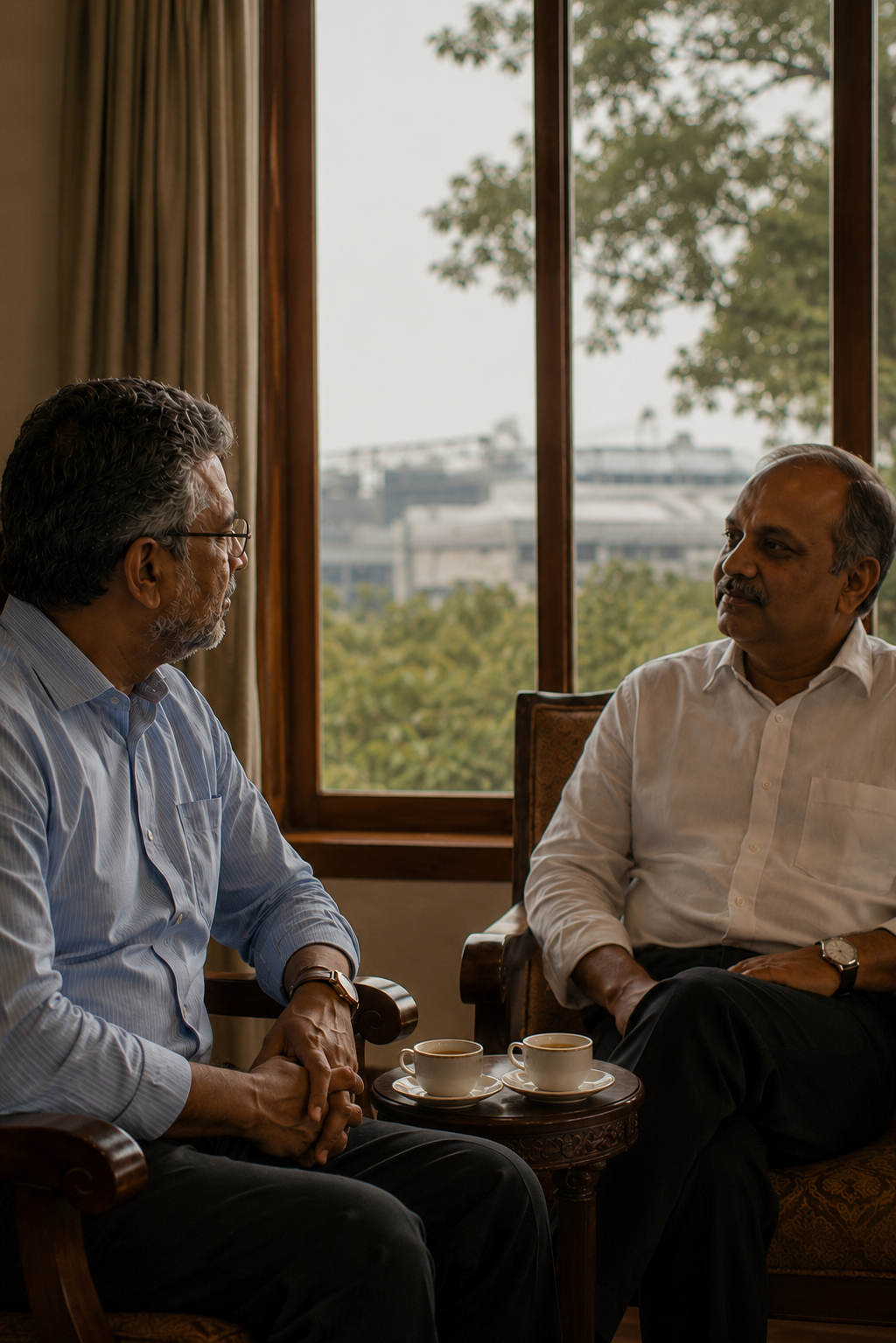
A man who will not agree to Ranjangaon may not be arguing about Ranjangaon. It can be a marriage nobody in the family knows is in trouble. A diagnosis he has told no one. A son who has stopped speaking to him. A humiliation from 1996 that everybody else has forgotten and he has not. None of it will ever appear on an agenda.
Sometimes what a person needs is coaching, and sometimes what a person needs is therapy. When it is the second one, Praveen says so, once, to that person, privately. What they do with it is theirs. He recommends what he believes is right for them and he respects the answer. He does not raise it again, and he does not tell the family. The work does not stop while somebody decides. He is there for the family. That is what the family asked him for.
Who is not in the room
Who sits is settled before anyone sits, and the difficult half is who does not. Not everybody entitled to be there should be in the first one. A person with no part in the disagreement will be read as having taken a side by noon, and there is no way to un-take it afterwards.
The ones kept out are told why beforehand. In person, by him, not by the family. He goes to them, at their office or their house, in the week before, and it takes as long as it takes. Their mother is in the room. She was told a week ago and she has thought about very little else since.
He says it himself
The thing that cannot be said is said by him. Out loud, in the room, in his own words, near the start. This is the whole mechanism and it is not a clever one. He is not more perceptive than they are. Everyone in that room already knows the thing, and two of them have known it for eleven years. What he has that they do not is that he is not implicated. Nothing he says costs him a brother. He is not seated beside anyone at a wedding in November. He says it, and then he goes home. So he says it.
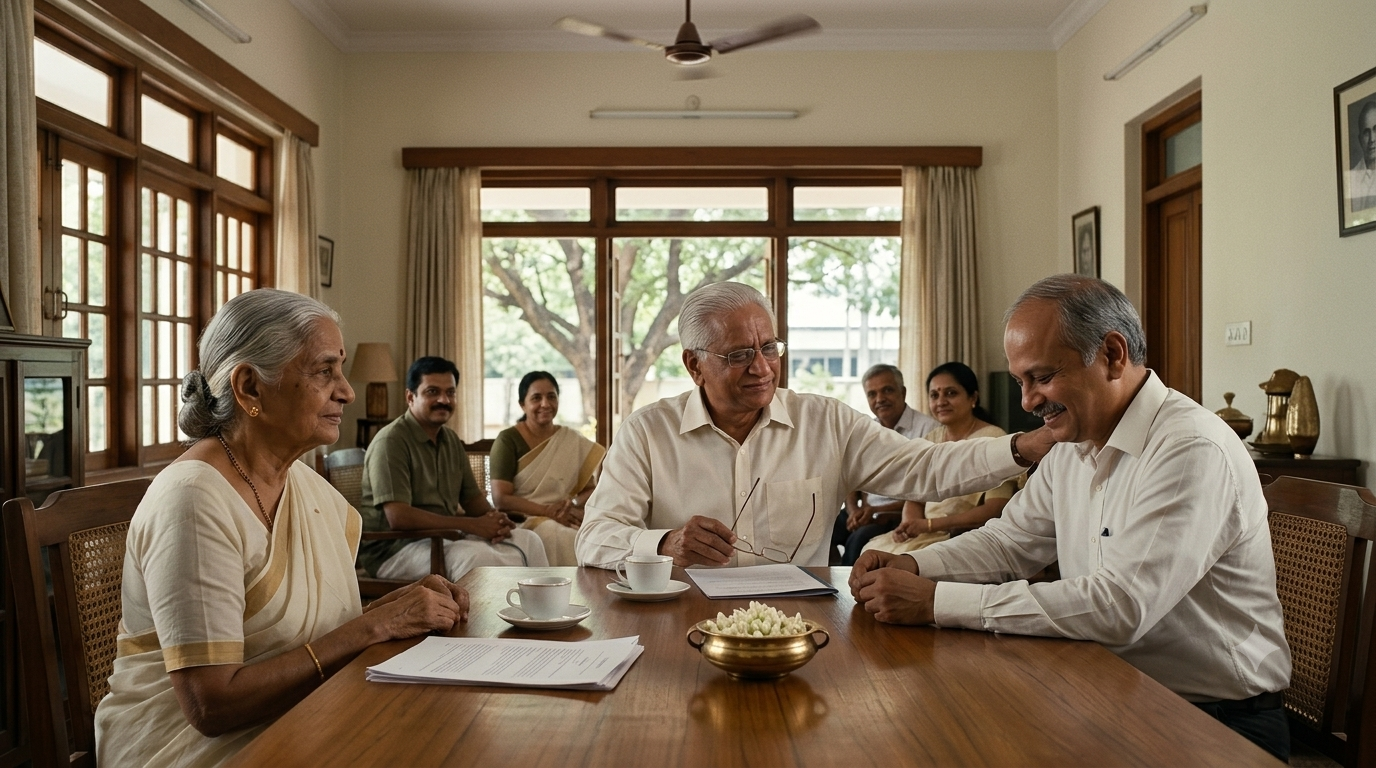
Nobody moves. The air conditioner cycles and somebody's chair takes their weight and neither of the brothers is looking at anything in particular. Then the younger one says the four words he worked out in the car in March. He gets three of them out properly. The elder has both hands flat on the table and he is looking at them, and he keeps looking at them for what is much longer than it sounds, because a man who has not cried in front of his mother since 1971 is not going to start on a Saturday morning in his own dining room. Then he looks up at his brother. That is all he does.
What their mother has been waiting eleven months for
She is asked a direct question about the business. It is the first time in some years. She takes a while. Then she talks for six or seven minutes about 1994, and nobody interrupts, which has not happened in that house in a long time. Their father and his own brother did not speak for two years over the second kiln. Then there was a wedding. After the wedding it stopped, and nobody ever referred to any of it again. She is not telling them what to do. She is telling them it is older than they are, and that it ends.
Then somebody mentions the Fiat. It is not even a funny story. It is 1981, and a Padmini that would not start outside the Hosur shed, and their father shouting, and the younger one pushing it in his good shirt because the elder had told him to and he was nineteen and did what he was told. They cannot stop. The younger brother is laughing the way a man laughs when he has not for a long time, which does not look entirely like laughing. The elder has taken his glasses off. He is saying the bit about the shirt again and he cannot get through it either, and he is holding his brother's shoulder, which is the first time in eleven months that either of them has touched the other. Their mother watches a man of seventy and a man of sixty-two. She does not say anything. She has waited eleven months and she is not going to interrupt it.
Nobody agrees to anything
Agreement is not what the morning was for, and pushing for it is how these end badly. Nothing was settled about Ranjangaon. There is still a decision to make and it is still difficult and the numbers have not changed.
What changed is that the weight came off. It had been sitting on top of something that was never damaged — two men who have loved each other for sixty years and could not find a room to do it in. The love did not have to be repaired. It had to be let out from under the thing that was lying on it.
The call, three weeks later
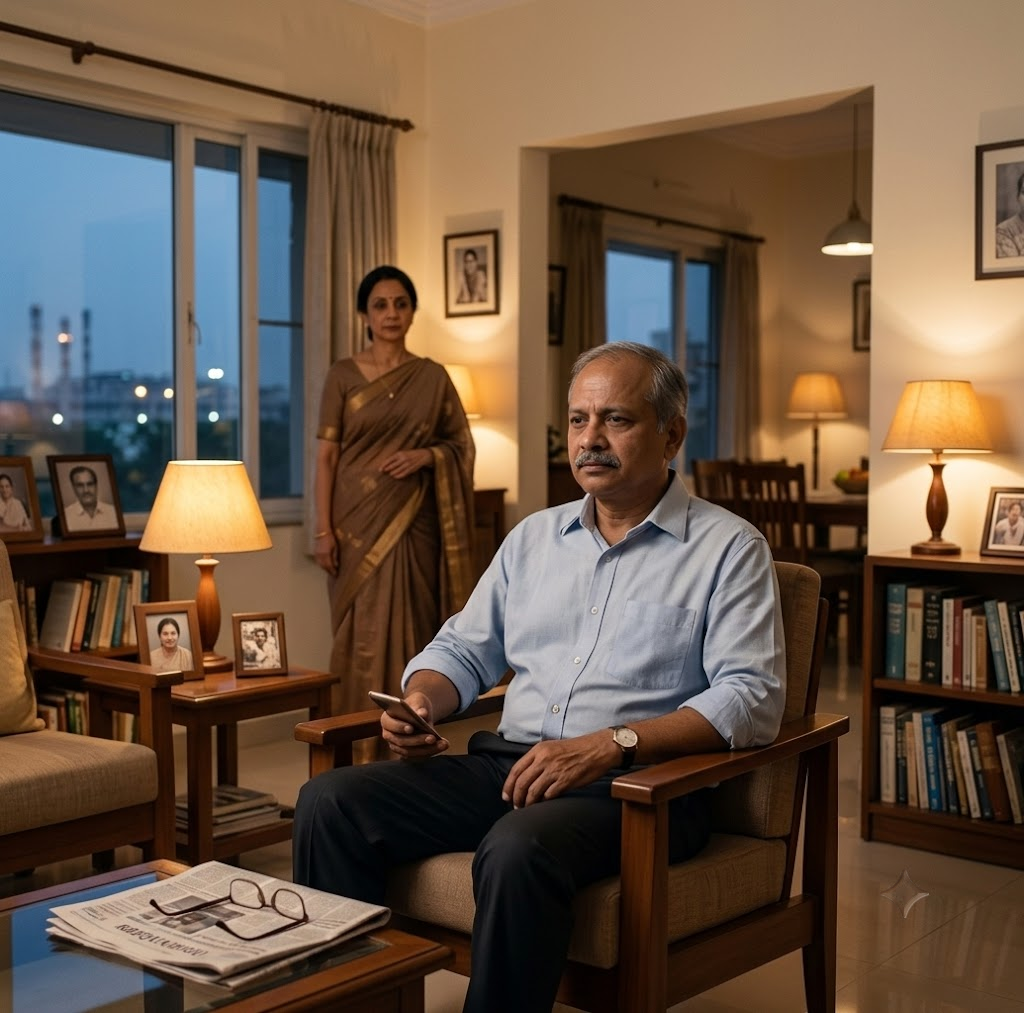
The elder telephoned his brother on a Wednesday evening. Not about Ranjangaon. Not about the plant, or the audit, or their mother, or anything that needed a call. He had seen something in the paper about a supplier they both knew in 1988 and he wanted to say so. They talked for eleven minutes. Afterwards the younger brother sat in his chair for a while with the phone in his hand, and then he got up and went in to his wife, and she asked him who that was, and he said, it was Anna.