Giving
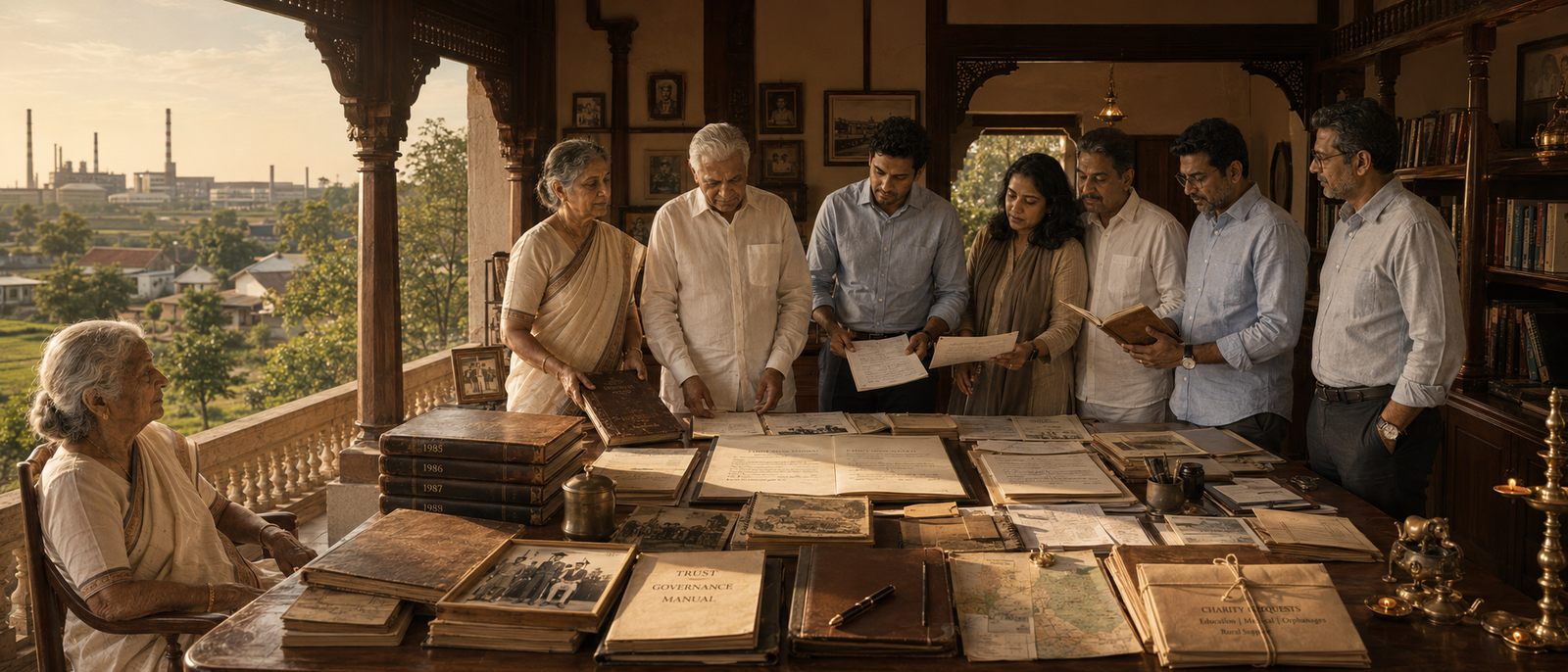
The intent is real. There is no institution.
Twenty-two crores
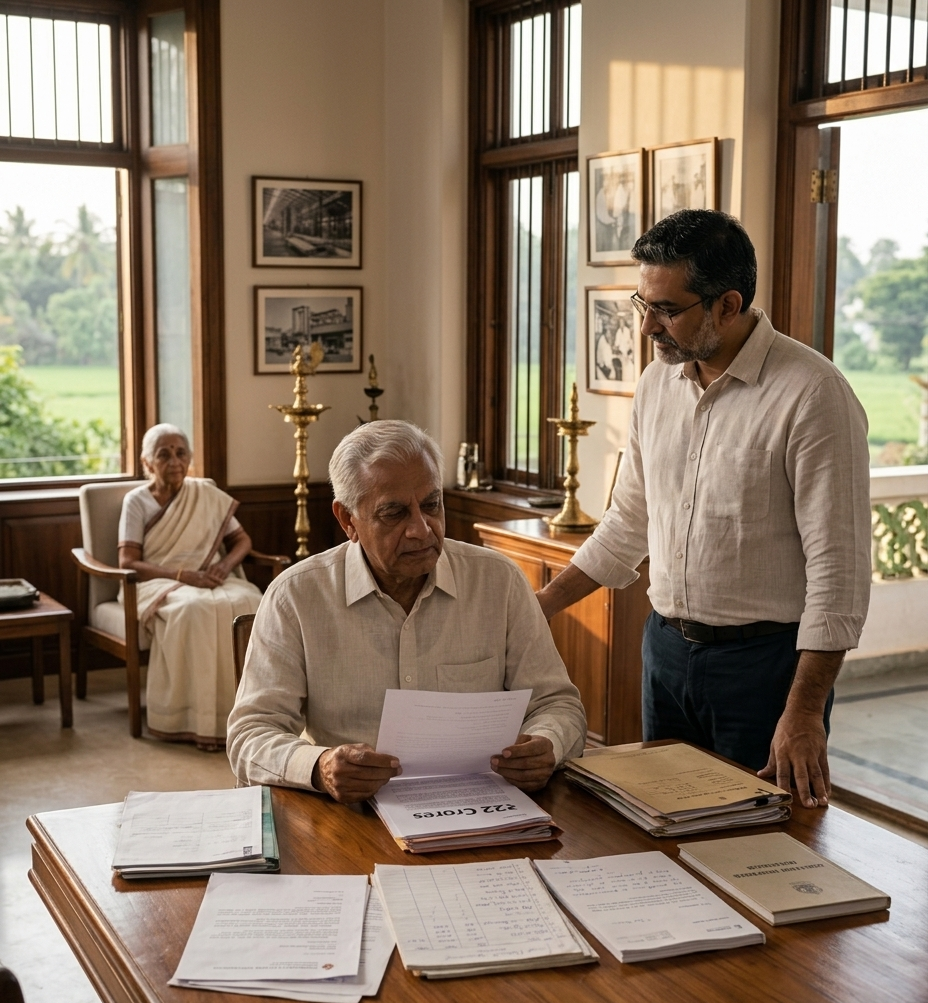
He had thought it was about four. The auditors had put it together for the first time, across the company, the family and six sets of personal accounts. Twenty-two crores. Around twelve hundred requests a year reach the four largest plants from the villages they sit in, and those are only the ones arriving at a gate. The rest come to people. Referrals from men they have known thirty years. Orphanages that write every June. Elderly care homes.
He was not shocked at the size. He said it was probably right, and that his mother had been doing it since 1964, and that nobody in that house had ever thought of it as a thing needing thought. Praveen Saanker had worked with that family for some years by then, on other matters. He was in the hall because the founder had asked him what one does about this. He asked who was getting it.
Name one
Of the children whose fees the family paid last year, how many finished the year. Nobody knew. How many of those went on. Nobody knew. How many were being paid for twice over by two people in that room. Two of them had been supporting the same two orphanages for six years and neither had known. Then he asked them to name one person whose life was different. The founder is seventy. He has given away more than most institutions in that district. He sat in his own hall with his son and his daughter and his brother in it and could not answer.
His mother answered. She is ninety, she was in the chair by the window, and nobody had expected her to say anything. She gave three names. Nineteen sixty-four, when there was one shed and eleven men. One became a compounder at Dharmapuri and died in 2011. One has a daughter teaching at Krishnagiri. The third she lost sight of in 1979 and has wondered about since. Nobody in that room had heard any of those names. Nothing had gone wrong in between. The giving got larger every year for sixty years, and nobody was ever put in charge of it, because there was never a year in which that would have seemed necessary.
What he asked them, one at a time
Over some months he saw each of them alone, several times, and asked a version of the same thing. Not what they wanted to give to. What they wanted to be different. The founder said education, in the tone of a man giving the correct answer. In the third conversation he came back to the eleven men in the first shed, four of whom he can still name, and said he did not want their grandchildren doing that work.
He has handed over most of the operating business, and there is a part of him that used to be taken up and now is not. Something else came out later, and not in front of his wife. His mother is ninety, and he wants the thing to exist while she can still be told about it, and said aloud that sounds like a man who has decided his mother is going to die.
The column that was never there
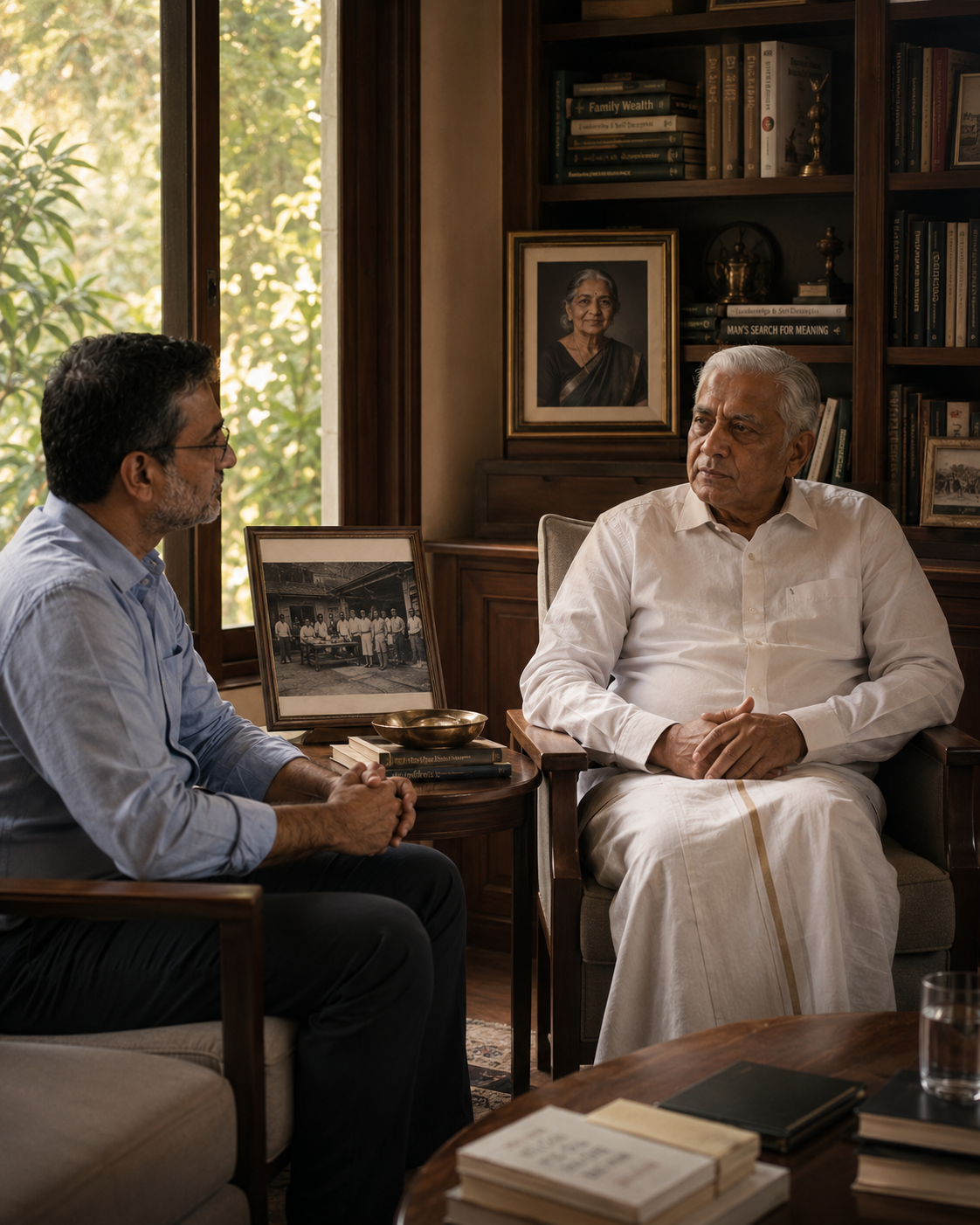
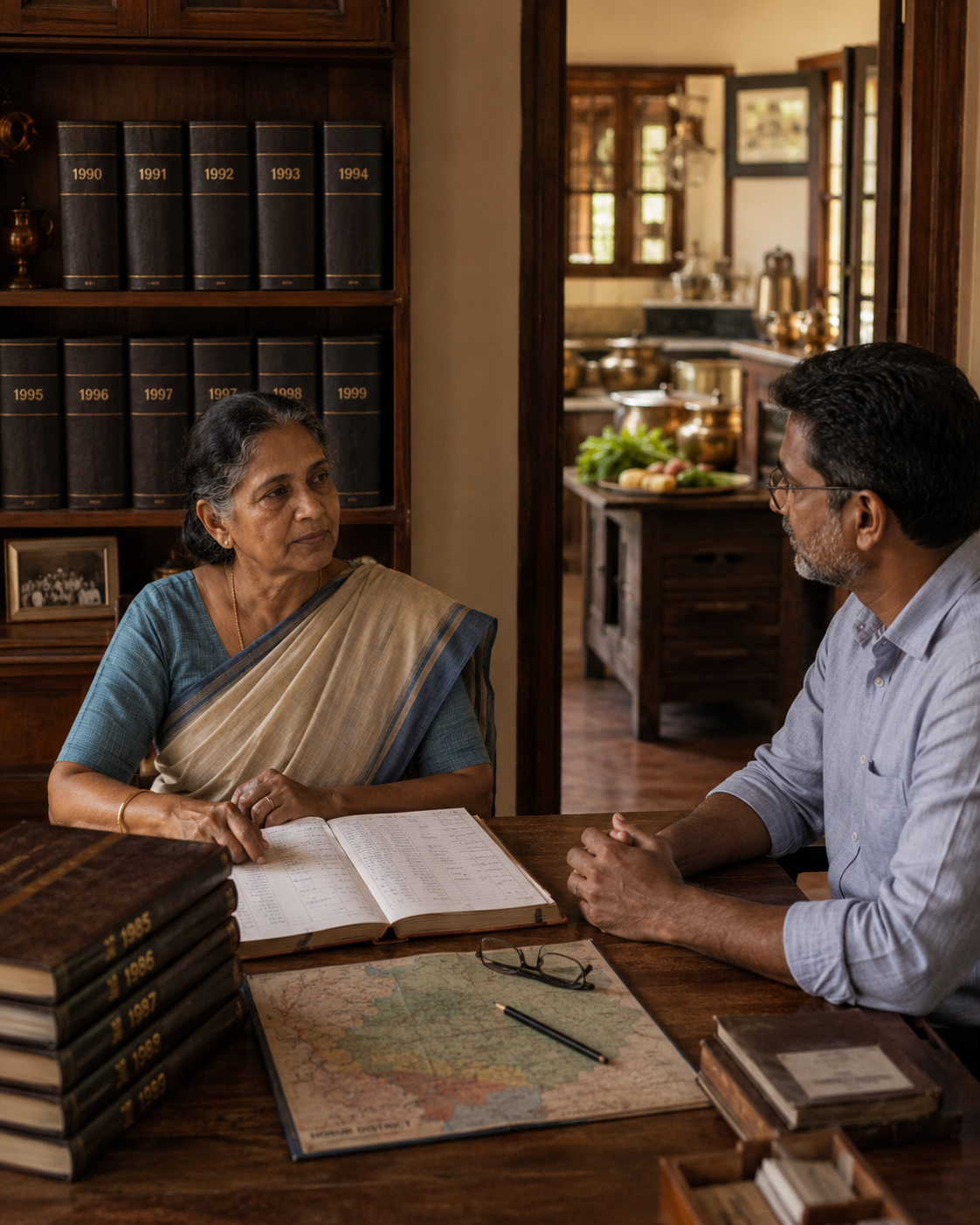
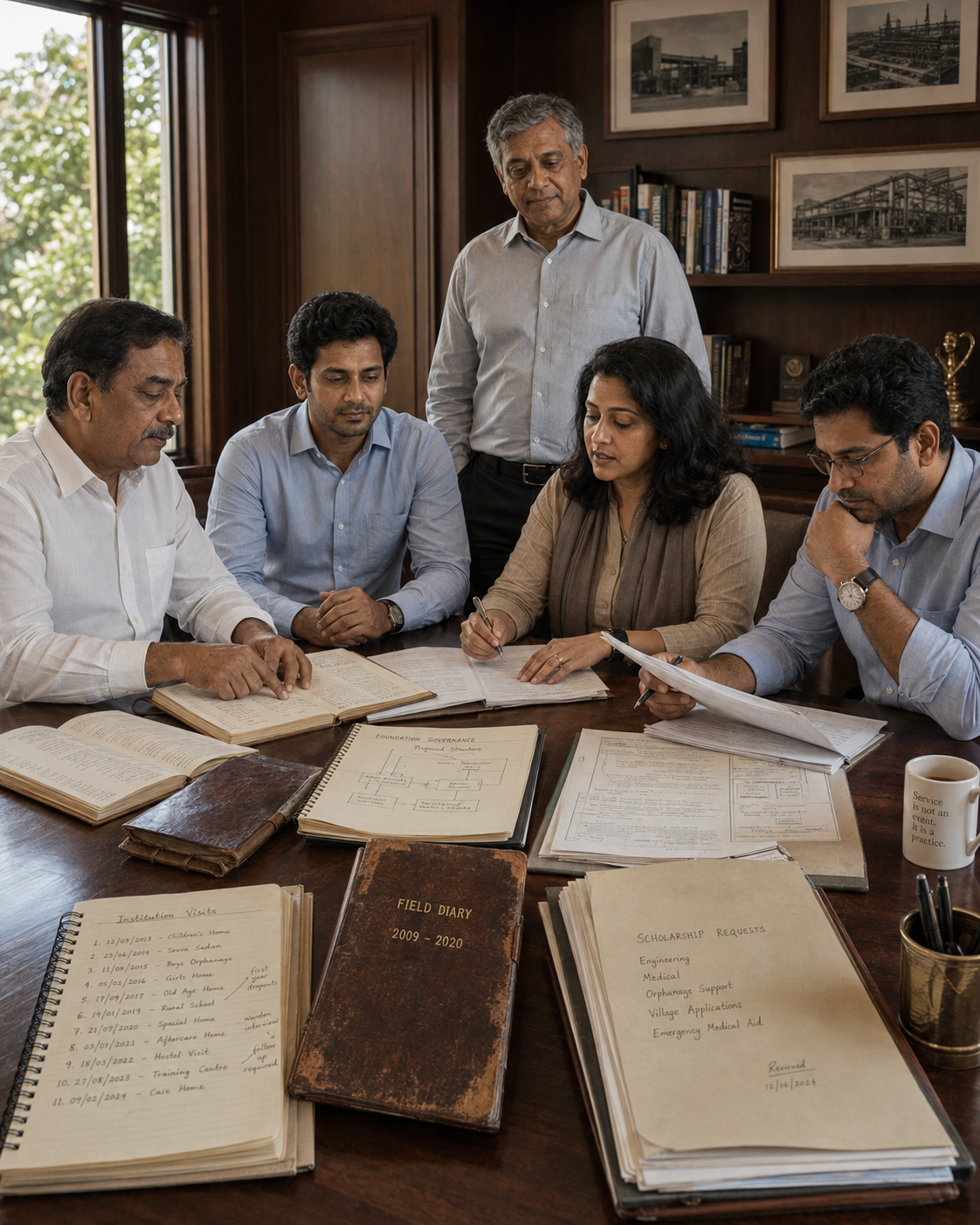
His wife has kept it in a hard-bound book since 1985. Name, place, amount, date. Nine books on the shelf in the room off the kitchen, and no column for why, because the person writing the entry was the person who knew. Praveen asked her what would go in that column if there were one. She did not answer for most of an hour. Then she said girls in the four villages nearest Hosur who stop after the tenth, and gave the number, and the number was accurate. She has known it for eleven years. Nobody had asked her.
The ones nobody had asked
He asked the brother who he had been paying for. The brother is sixty-two and has been in the second chair for forty of them. Since 2007 he has put one boy at a time through engineering. Six so far. He can name all six and say where they are. He had never told anyone. He said there had not been an occasion for it.
Their son is thirty-four and asked whether he could do the visits. Nobody had asked him to. He did eleven institutions in the first year and sent nobody in his place, and at each one he asked the warden how many leave in the first year and wrote it in the back of a diary. Their daughter is forty-one and signs off part of the company's spend under the section, and was the only person there who knew where it currently went. She said it should not be run through the company, and gave three reasons, and was right. The son-in-law was asked last, and asked the same question as everybody else, which was the whole of the point. He said it was not his place to want something. He reads every request now. All of them, before anybody else sees one.
What Praveen told them about his own

He was asked, at the end of one of these, what he did about it himself. He and his wife Vandana run the Vedicology Foundation, a Section 8 non-profit they set up in 2024. She holds the finance and programme administration and signs the returns. It funds young women aged eighteen and above through study, and destitute women through vocational training, across Tamil Nadu and Kerala. The founder asked the question a man who runs plants asks. How many of them finish. Praveen told him the number, and the number is not a hundred.
Then he told him about a girl who took a place and left in her second term, because her mother was unwell and there was nobody else in that house to be there. Somebody telephones every scholar every month now. That is a person's job, it is the most expensive line in the whole thing, and no donor has ever asked about it. Two decades in institutional finance sits behind the instruments, at HSBC India and then as a founding-team Director of the family office practice at ASK Wealth Advisors. A doctorate in clinical psychology sits behind the conversations. What mattered in that room was that the man across the table had written the criteria, sat on the selection, and signed the return.
What was written down
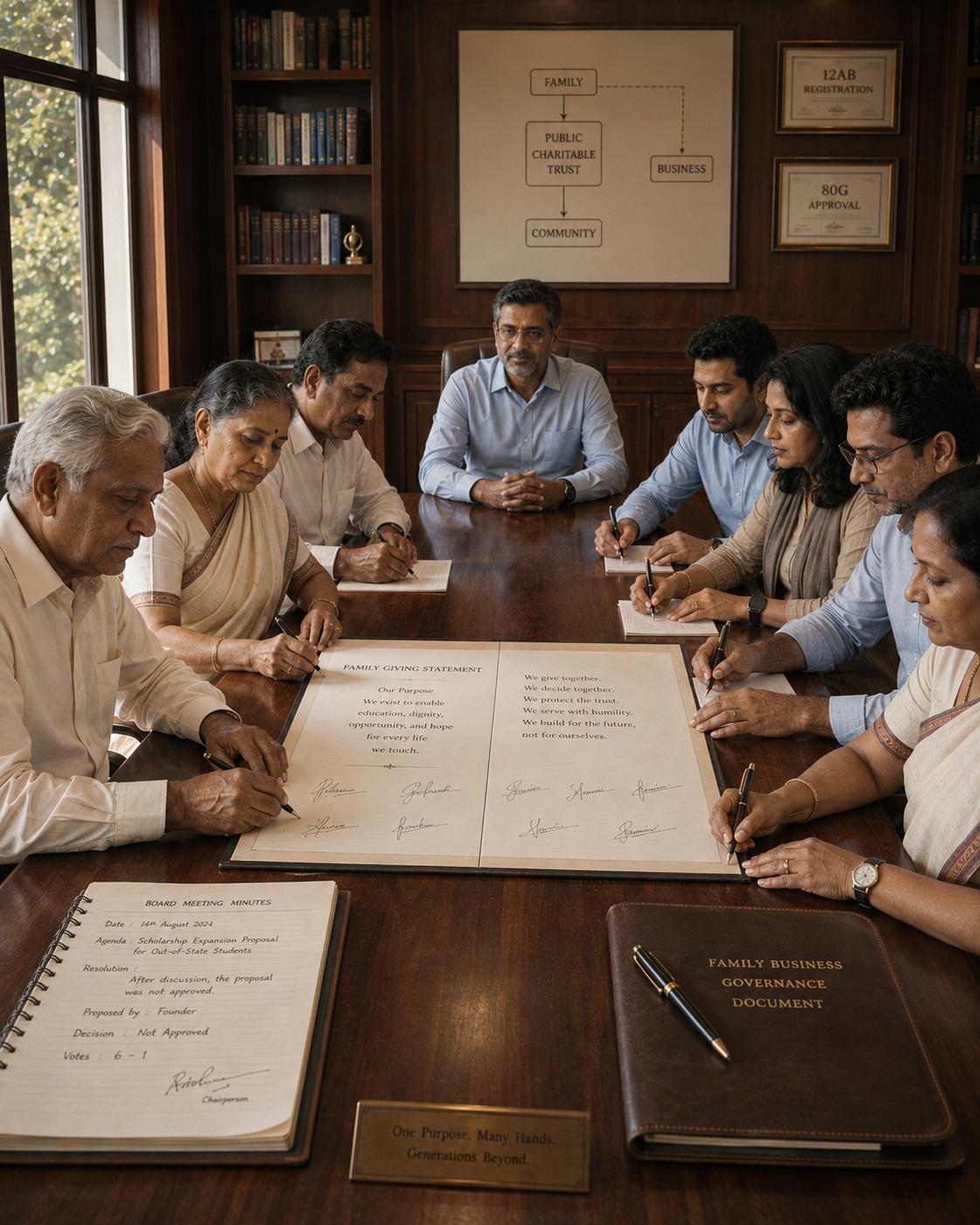
A statement of what the family is giving for. Two pages, signed by eight people. It is kept apart from the document that governs the business, because the day they are one document, a disagreement about a plant becomes a disagreement about a school. Under it, a public charitable trust rather than a Section 8 company, because they wanted simple running and no company-law formality on top of it. Registration under 12AB, approval under 80G, no FCRA. Narrow objects in the deed. Wide objects make every request arguable, and arguable requests come back to the founder, which was the thing they were trying to stop.
Seven trustees, an odd number on purpose, so that a thing gets settled by a vote rather than deferred to the person everyone is waiting on. The founder, his wife, his brother, his son, his daughter, his son-in-law, and one person who is not family. He has one vote of the seven. In the second year something he had asked for was not approved, and it is in the minutes with his name and the date against it. He did not raise it again.
The yardstick
Everything now enters at one place. A single register, whether it came to a gate at Hubli or to the founder at a wedding. Every request is answered inside fourteen days, refusals included, and a refusal carries a reason and the name of the person who made it. Before this a no was silence, and several hundred households a year were left to work out what it meant.
Each is measured on four written tests. What is needed, what evidence exists, what is different if it is paid, and whether anybody else is already paying. Two people decide and one of them is not family. The criteria are hers.
How you know anything changed
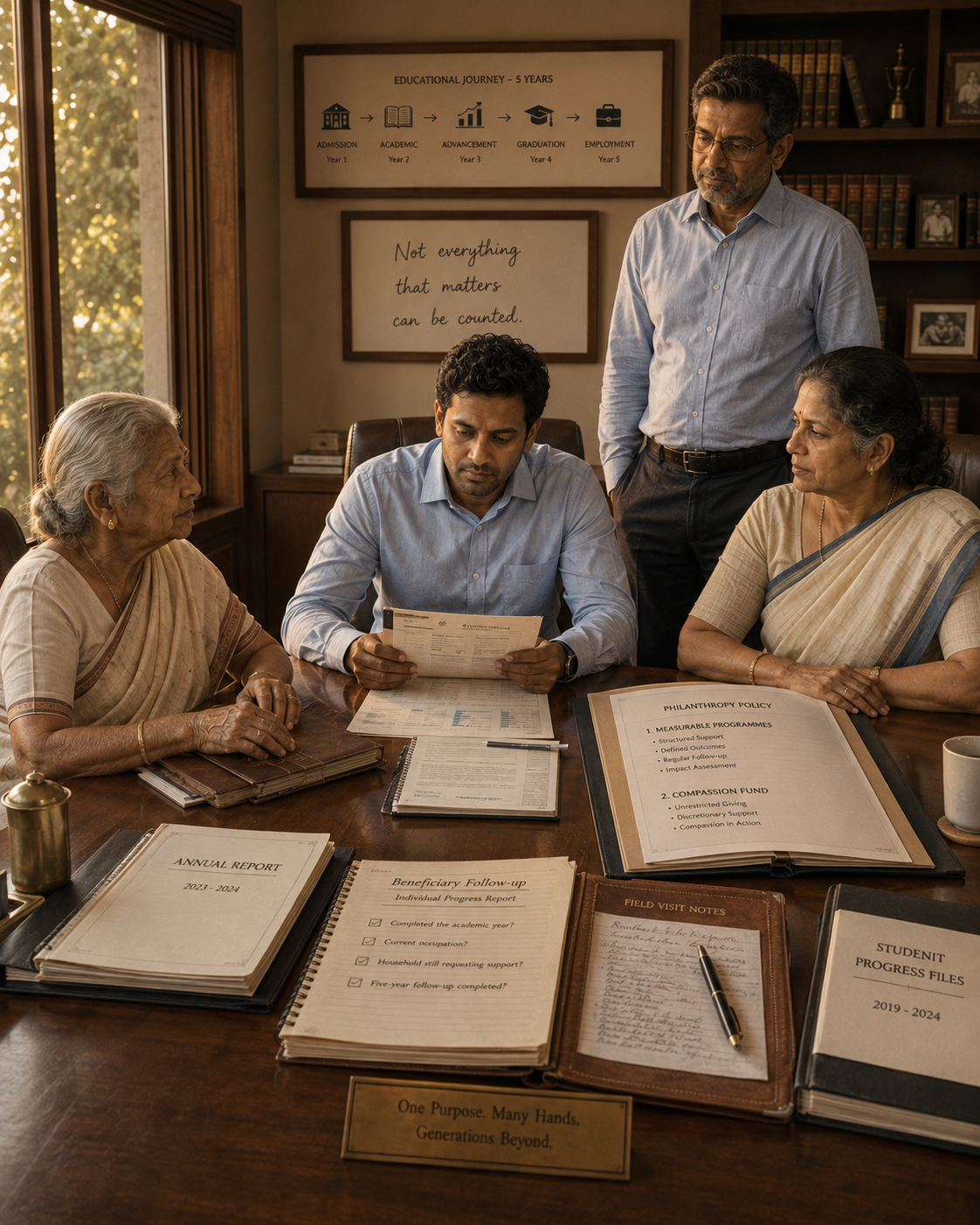
Tracking is not the number of people reached, which was always available and never told them anything. It is whether the year got finished, what is being done now, whether the household is still asking, and at five years, where they are, asked by somebody who goes there.
The son wanted all of it measured. His mother said the part that matters cannot be, and that a family paying only for what it can count will stop paying for what she has been paying for since 1985. Both are in the policy. There is a tracked programme, and there is an amount every year that is not tracked, and it has a number and is not defended to anybody.
The correction
The criteria were read to his mother in the hall, out loud, because she does not read small print any more. The draft said children of employees and former employees. She said, and the ones who were never on the roll. In 1964 they were not employees. They came to the gate. Two of them were the sons of a man who had never worked a day for that family in his life.
Then she said the third name again, the one she lost sight of in 1979, and asked whether anybody knew where those people were now. Nobody did. Her son took the criteria sheet off the table and turned it over and wrote the name on the back of it, in his own hand, and said he would find out.