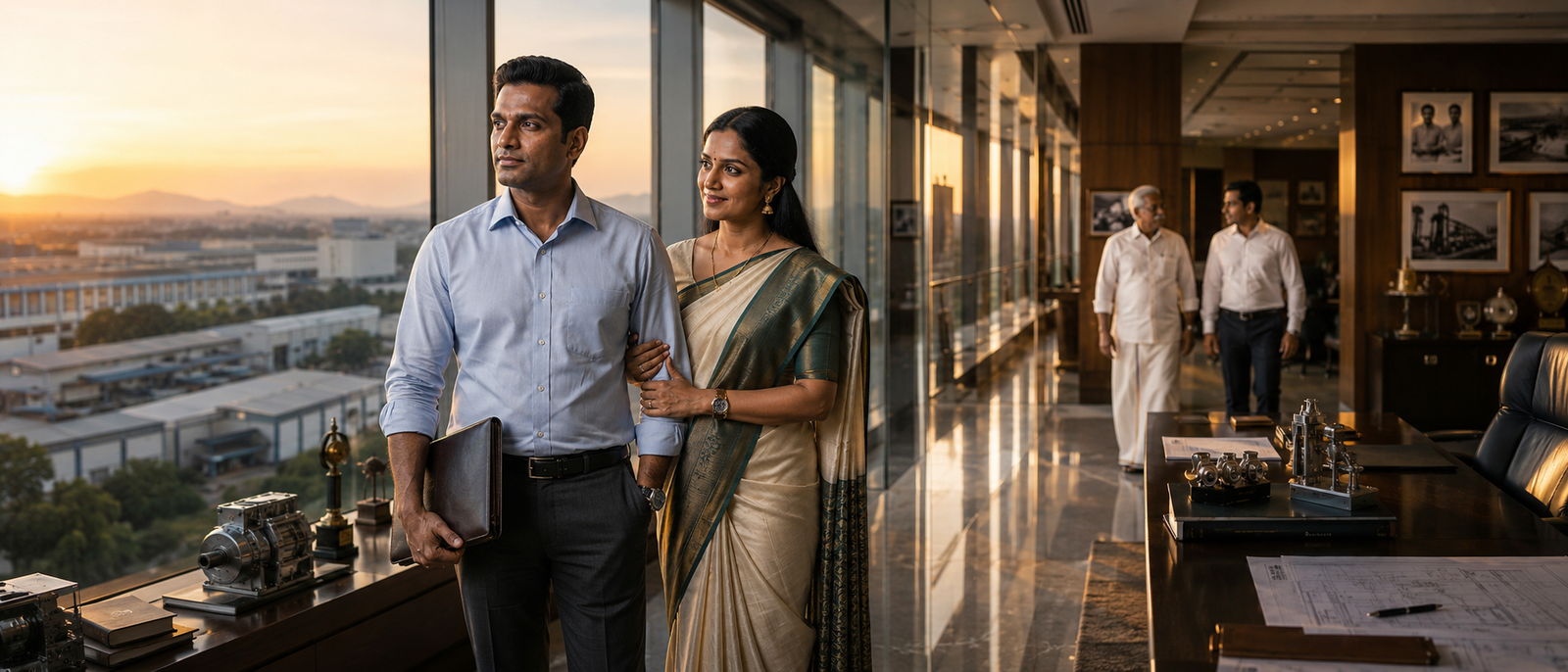
The Son-in-Law
His view is asked for at dinner. It is received the way a guest’s is.
The best answer at the table
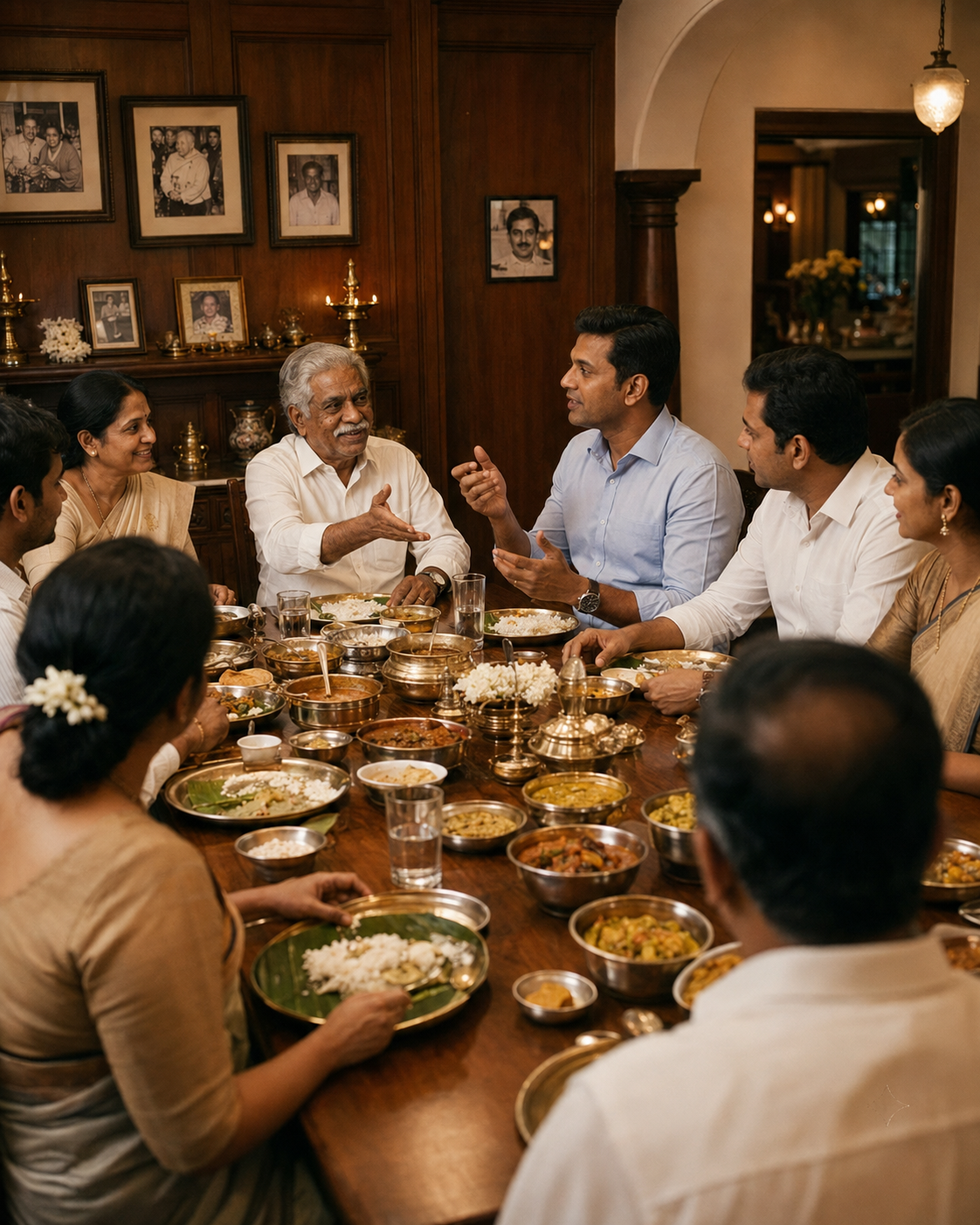
At dinner on Sunday the talk turns to Ranjangaon — whether a southern group has any business putting a plant outside Pune — and his father-in-law asks him what he thinks. He thinks about it properly, because he was asked properly. The freight maths against the Maharashtra incentive. The second customer the location quietly opens. Why the payback looks slower on paper than it is, and why the westward move is the whole point and not the risk. Four minutes, no notes. It is the best thing said at the table all evening, and everyone there knows it. His father-in-law is delighted. You see how he thinks, he says to the table, turning his open hand toward this son-in-law of his. He means it entirely; there is nothing performed in it.
Then he turns to his son and asks him to pull the numbers together for Tuesday. Not unkindly. Not even as a decision. It is the most natural motion in the room — the way the good view at the table becomes, without anyone deciding it, a thing to be admired and not a thing to be done. He passes the curd rice. He is asked, warmly, how the drive up was.
What the son was given

The son is his wife’s brother, thirty-four, and he likes him, which does not help.
He is easy in the house in a way the son-in-law has never once been. He leaves his phone in every room. He forgets his glasses and comes back for them. He argues about cricket with real heat and no stake, and at home he is only a man in his own home. The son was nineteen when he first walked a plant floor as though the noise belonged to him, because it did. He runs the floors and the audits now like a man on his own ground, and everyone treats him as though the ground is his. It is not, yet. The father comes in three days a week where it used to be five; nobody announced it, it became the shape of the week. But the real decisions are still his. When Ranjangaon is settled it will be settled by the father, in his own time, in a sentence to no one. The son runs all of it and waits, still, to be told it is his.
And even unhanded, even undecided, it will be his. He never applied for it. The file arrived on his side of the table when he was a boy, the way weather arrives, and the rest will arrive the same way. He waits to inherit a thing that was always coming to him. The son-in-law, who would have stood in front of anyone, was given a division. Once the son asked him — friendly, meaning it well — why he had never started something of his own. You’d have killed it, machaa. The son-in-law said something light back. The boy had no idea he had laid his whole hand flat on the thing and pressed.
The room they gave him
He was not a small catch.
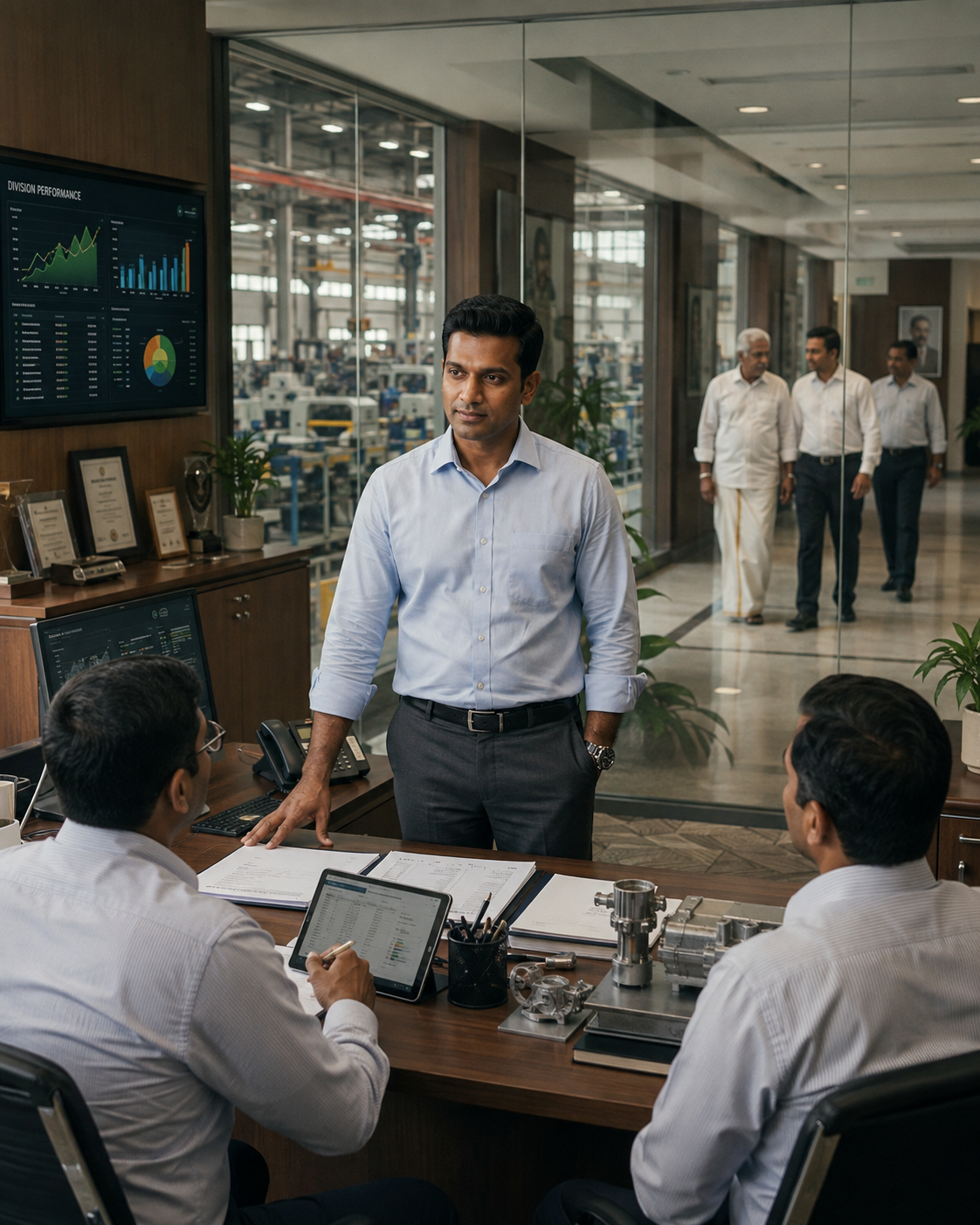
The same institutes as the daughter, a better campus offer than most of his batch, six years turning someone else’s business into something before this family ever heard his name. They do not marry their daughters lightly. They chose him because he was exceptional, and everyone still honours it. They gave him a division to run — a real one, his to steer — and he has run it well for nine years. The P&L is his. The team is his. The results reach the table and are received with genuine pleasure. It is a good room. It is still a room.
The division is a thing they hand a man. The business is a thing a man is born into. His father-in-law asks his view on Ranjangaon and means it and listens — and then the whole of it goes to the son. Not the division. The whole. The part that was never on offer to a man who arrived by marriage, however early he came, however good. He has begun to wonder whether there is any shape a family can take in which a man like him is given the thing itself, and not the run of a room beside it — whether such a place can be made, or whether it is only ever born into.
Is he family, or a guest with a permanent room
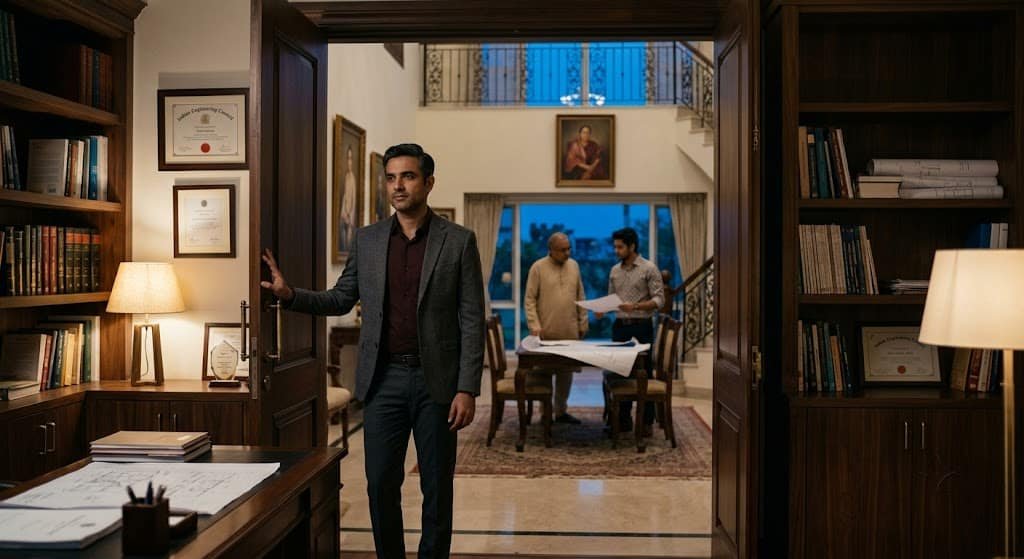
Is he in this house, or is he kept in it — trusted with a division, never with the thing it sits inside?
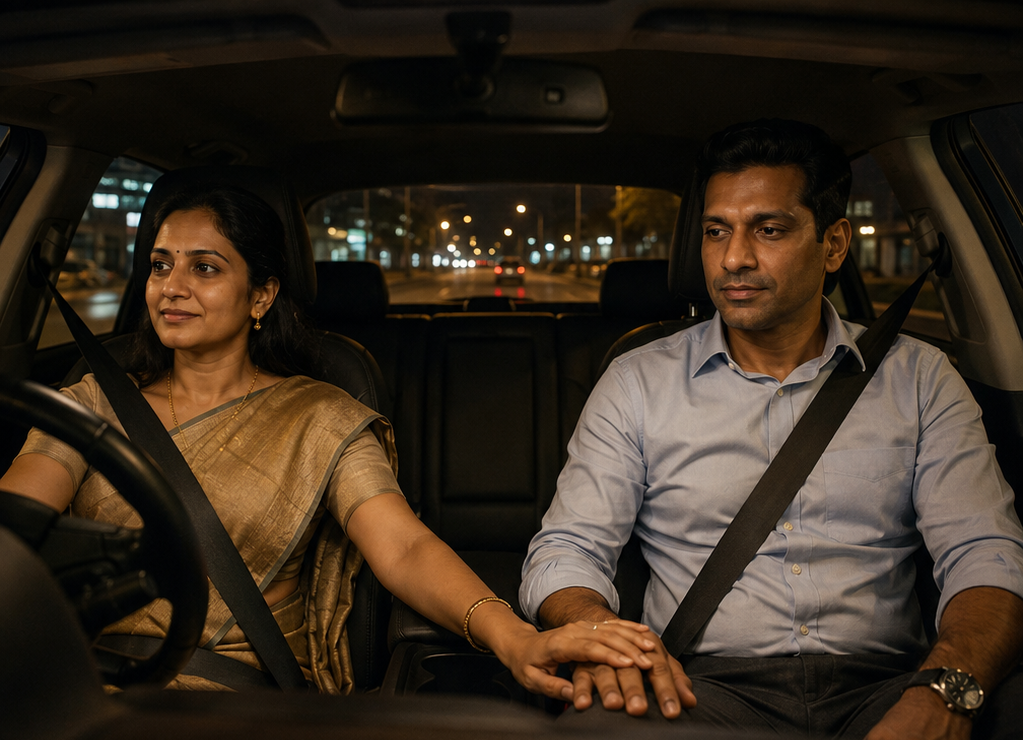
Sunday, the drive back
They leave a little after ten. His wife drives the first stretch, quiet in the good way, full from her mother’s cooking. No one asked her about her week either. She had held a thing at work her father would once have decided, and it did not come up at the table. But that is her evening, and the two of them have never quite found the way to lay their evenings side by side. At a signal she reaches over and puts her hand on his knee, for no reason. He covers it with his. They drive. Appa’s very fond of you, she says, meaning only the good thing. He says he knows. It is true, and he does know, and it is the kindest cage a man was ever kept in.
At home he hangs the car key on the hook that has been his for nine years, in the flat that is theirs, that they chose, that is attached to no one. He stands a moment in his own kitchen, where nobody is a guest. Then he opens the laptop to put the Ranjangaon note down before he loses it — the freight, the second customer, the westward case, all of it — because it is a good analysis and someone should have it. He writes it out in full. He sends it to no one, saves it, and closes the lid.