The Founder
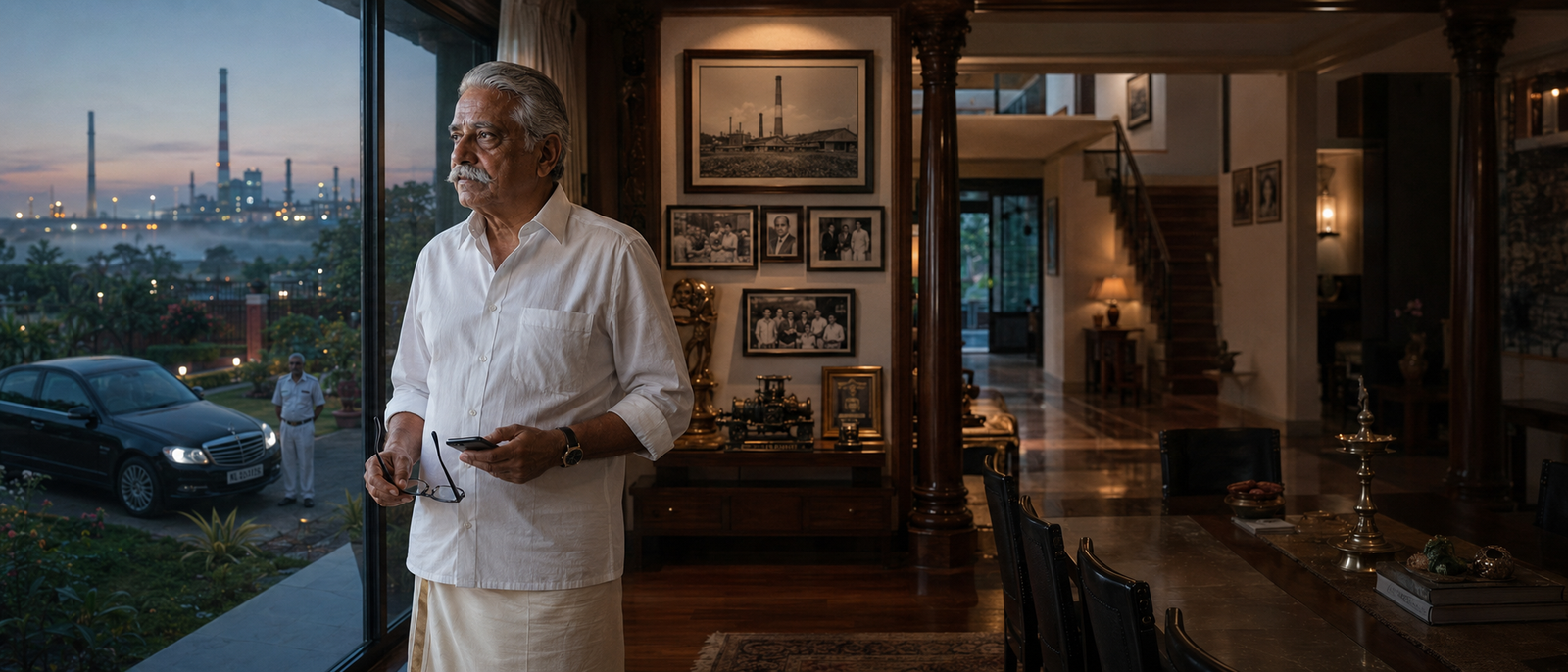
He built it. The house runs without him now. Nobody has said so.
The route
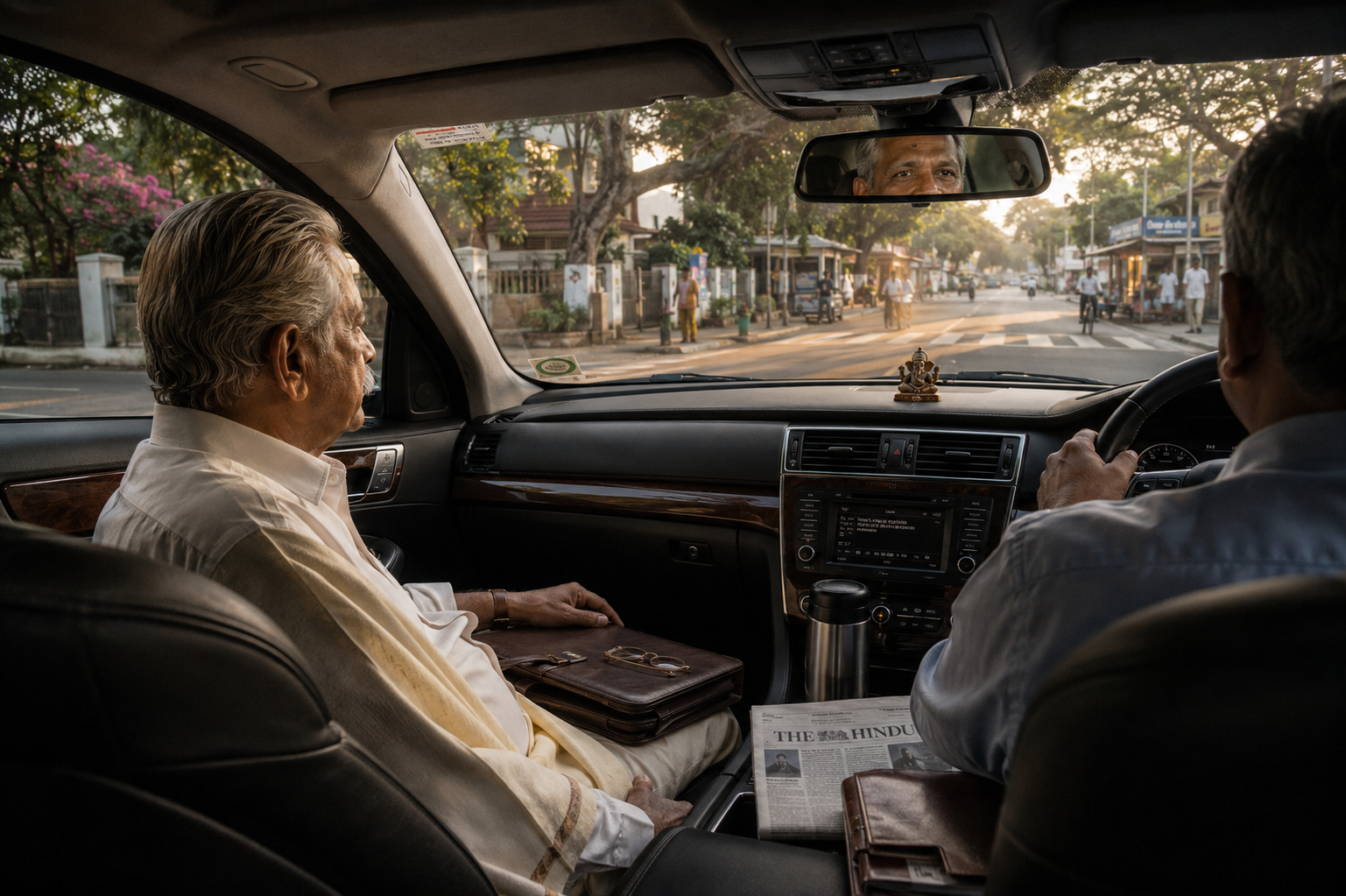
The driver has been with him twenty-six years, and this morning he snapped at him about the route.
Nothing in it. A turn the man has taken ten thousand times, taken again, and he heard his own voice go sharp over it before he could stop it. The voice of a man who needs, at half past six in the morning, for one small thing in the world to be wrong, so that he can be the one who sets it right. Tomorrow he will be warm. He will ask after the man’s daughter, the one doing her B.Com, and he will mean it. The driver will feel the warmth land and know exactly what it is for, and neither will say so. It has happened perhaps four hundred times. It is the closest thing to a conversation he has left with a man he has spent more mornings beside than his own son. He was awake at four again. He is always awake at four now.
The hour with nothing to do
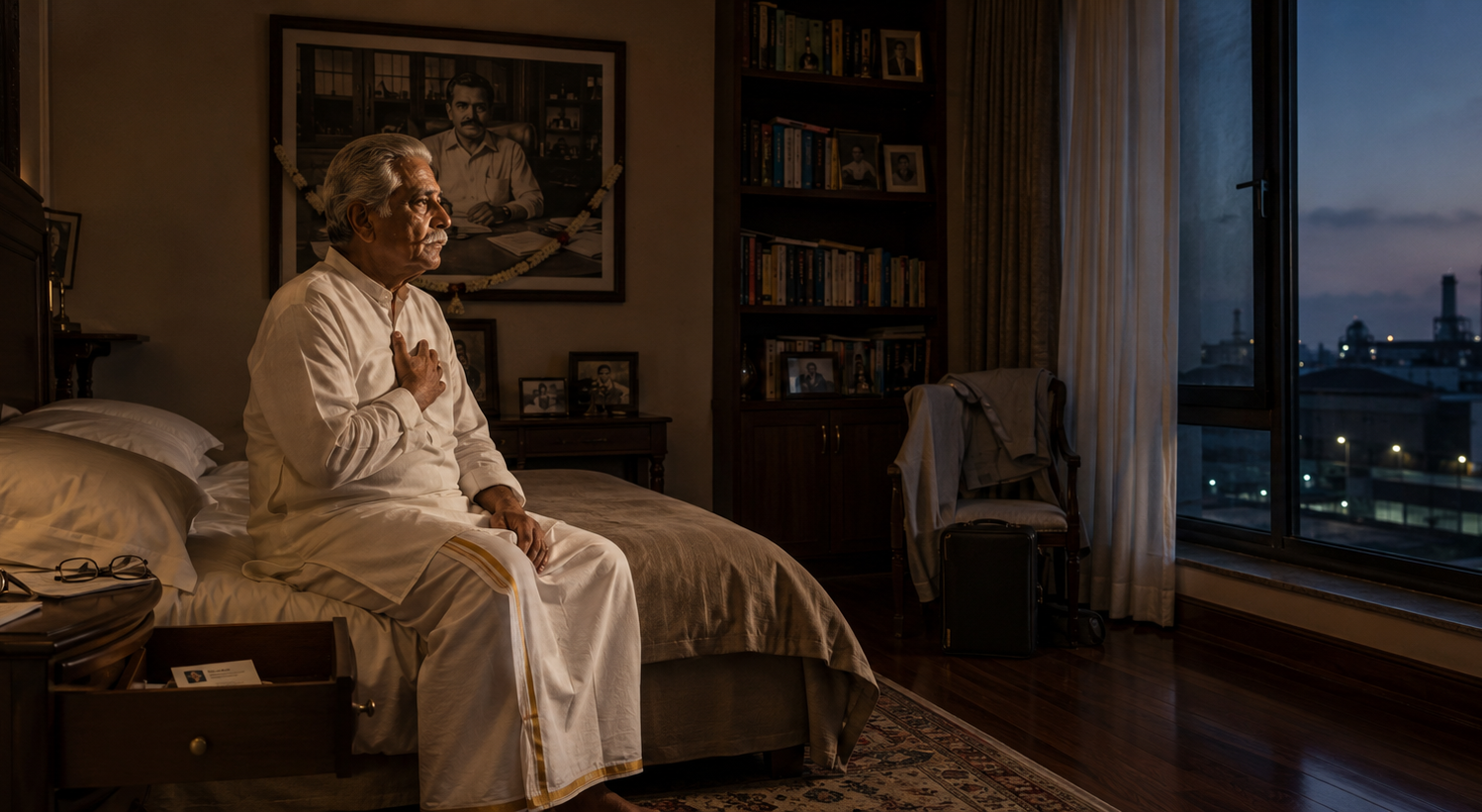
He wakes before the house, the way he has for forty years, out of a habit the body kept after the reason for it left. There used to be a reason. A plant that would not run unless he stood in it, a payment that would not clear unless he made the call. Now he lies in the dark and the house breathes around him, running perfectly, needing nothing, and the hour has nowhere to go. He reads the group on his phone. His son has approved something in the night. It is fine. It is not what he would have done.
He types a message to the boy, reads it back, and it is too much, a man reaching over his son’s shoulder for a wheel the son has both hands on. He deletes it. He types it again, softer. Deletes it again. The third time he sends it with a small smiling face at the end, the kind his grandchildren use, so it will land as nothing. He puts the phone face-down. He has made himself smaller in his own house so as not to be a weight, and it is not yet five.
The boy he was never home for
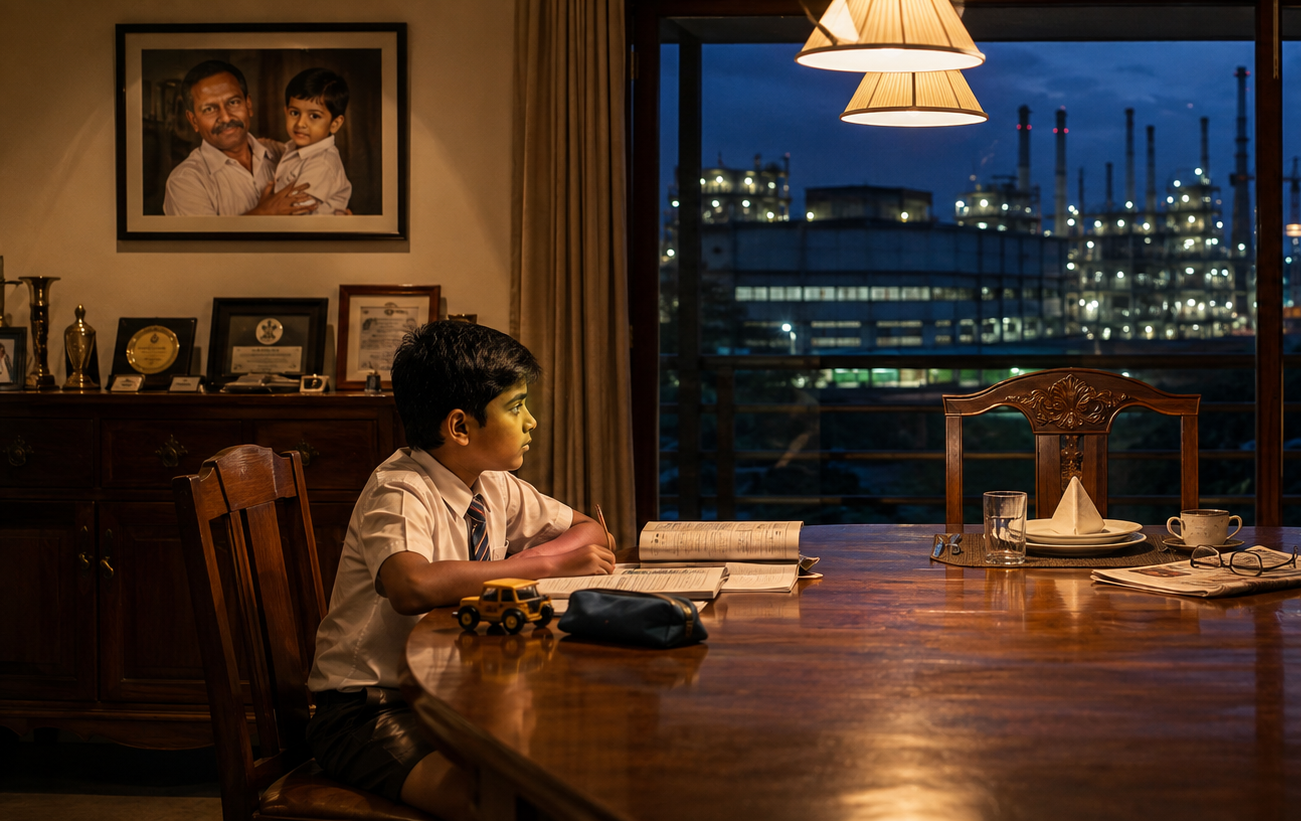
He gave his son the thing, and he was never once there.
He knows it the way he knows the figures. Every beam of the plant is a night he did not come home. Two years in a shed so the boy would never sleep in one, then twenty more of coming in past the child’s bedtime, because the thing was young and hungry and would die if he loosened his grip. He built his son a fortress out of his own absence and handed it to him. He never asked, until far too late, whether a fortress was what a boy wanted, or a father at the table on an ordinary Tuesday for no reason at all. And now the boy is good. Careful, clean, has never lost. And he lies awake and cannot tell whether the boy is good because he is his father’s son, or good because he was never allowed to fall the way a man must fall to find out what he is. He gave him everything, and so gave him nothing to push against. He does not know his own son’s true weight. He is the reason it can never be known, and there is no one alive he can tell.
The girl who was born after the war
The other one is the harder thought, and it comes at three, when the first has worn him out.
She was born after the shed, after the debt, in the years he was finally, sometimes, home. She got the father the boy never had, a man with an hour to spare, a man who laughed. And she grew up sharp, sharper than her brother, more of him in her than in the boy. He has watched her turn a failing vertical around with a steadiness he knows, because it is his own. He built her a real thing of her own to run, and it was justice. It was also, he knows this where a man does not lie to himself, a way of not answering the question. Of giving her something magnificent near the centre, so the centre itself could stay closed.
The language of this business was built for a son, decades ago, by him, and he has never found the way to unbuild it. Every day she is admired beside the thing instead of handed it. He is proud of her the way you are proud of a guest, and he knows that pride is the smaller, safer, cheaper feeling, and he does nothing. To hand it to her now is to unmake his son in front of the whole house. He has looked for the third door for years. There is no third door. He wronged one child by being absent, the other by being present. The same love, in opposite directions. There is no arithmetic in which both come out whole, and he has done the arithmetic ten thousand times.
The one he was not allowed to keep
There was a girl, before any of this.
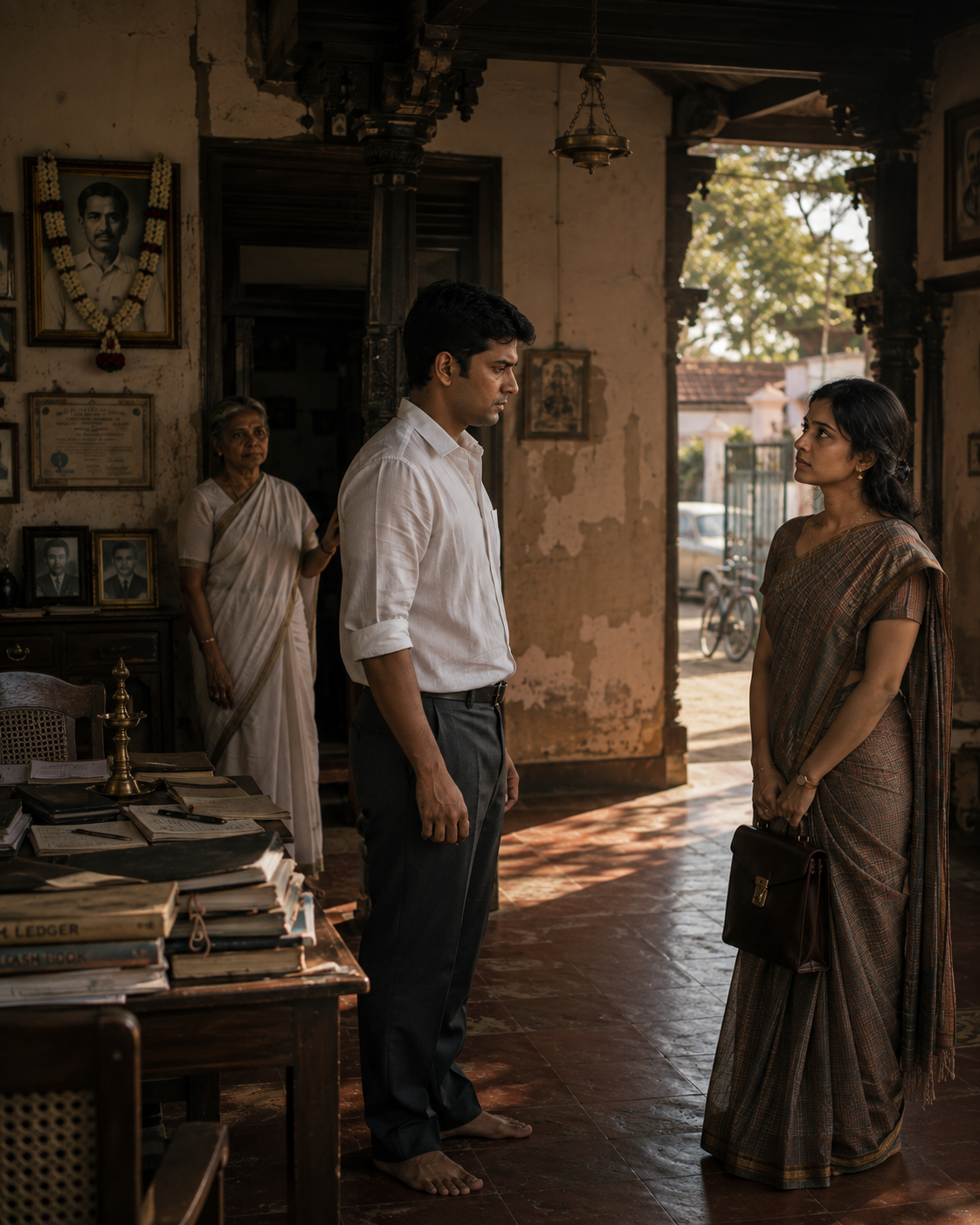
He was twenty-eight, with nothing but debt and his father fresh in the ground, and he loved her the way you love only once, before you learn what it costs. His mother said no. There was a house to save and a suitable match in mind, and she was right, and he knew she was right. The girl did not go quietly. She asked him why. She asked him to choose her. She stood in front of him and asked, and he looked at a man who owed money he had not borrowed and a mother holding a family up by her spine alone, and he let her go.
He has told himself for forty years that he had no choice. He knows it is a lie. He chose. He chose the debt and the name and his mother’s straight back over the one person he wanted in this life, and he has never forgiven himself, and he understands now that he never will, that this is a thing a man carries all the way down, that he will still be carrying it on the last day, in the last hour, whatever else he has by then set down. He does not think of her. He has trained himself out of it across a lifetime. Except at four in the morning, when the mind does what it wants, and it goes, every time, to her face when she asked him to choose her and he did not. He lets it. It is the only sentence he has ever passed on himself, and he believes it is just.
The brother he has carried his whole life

His brother has stood beside him for fifty years, and for fifty years he has made certain no one ever saw where his brother’s reach ended.
He loves him. That has never been in question. But he has known since they were young men which of them the thing needed and which it did not, and he has spent a lifetime of small arrangements, a title here, a seat there, a decision routed so it looked shared, so his brother could stand in the world as an equal and never feel the floor tilt. It was the tenderest work of his life. He never told a soul he was doing it, least of all his brother, because to name it once would end it. And now the thing must be divided, and there is no number that is fair, because no one ever set down what a life spent beside a man is worth against the life of the man.
He will decide it alone, because it is his to decide, and whatever he decides his brother will thank him for, and take, and something in the thanking will be the sound of fifty years of protection finally costing what it always quietly cost. He does not know how to give his brother a fair share of a thing his brother did not build, and he does not know how to give him less. Both are wounds. He lies awake holding them both. There is a girl in that branch, too, he pulled back once from the edge of a thing that would have taken all of them down, and settled, and made safe, and no one will ever know it happened, and he would not have it any other way, and it is one more thing he carries alone.
Who it goes to, and everyone waiting for the answer
Son, daughter, brother. Every night the three of them, and every morning no answer.
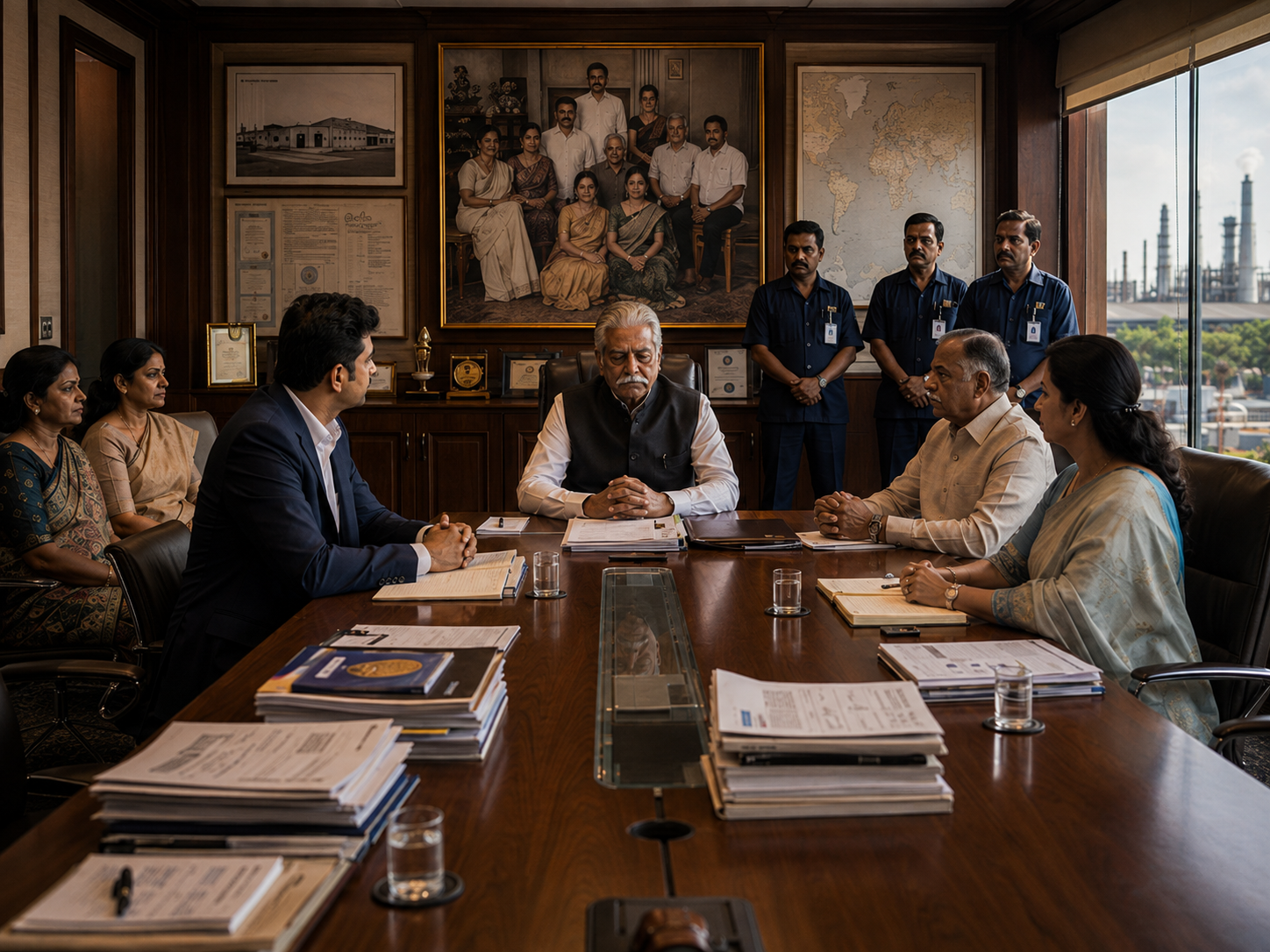
If it goes to the boy, he wrongs the girl who is better. If it goes to the girl, he unmakes the boy and breaks the language of the house. If it is split, he sets his children against each other for a lifetime, and their children after them. And around that, the whole house leaning on him, and the leaning never stops. The son waiting to be trusted all the way, unable to say so. The daughter waiting to be handed the thing instead of admired beside it. The brother waiting to know his share without the indignity of asking. The wives, who have opinions now, and press them through their husbands. The buyers, who ask when they will meet the next sir. The old men on the floor who slept beside him in the beginning, waiting to know their people will be safe. Every face in his world is turned toward him with a question, and the questions are gentle, and loving, and constant, and they do not stop when he closes his eyes.
Forty years ago the weight was debt, and debt he could lift; you work, you sell, you do not sleep, the number comes down. This weight has no number. Every person leaning on him is right to lean, and owed an answer, and he is the only one who can give one, and he has none. And there is no one holding the other end. No elder above him, his own father sixty years in the ground. Nothing built to catch any of it the day he is not in the room. The whole thing held together by him alone, standing in the middle of it, not sleeping, feeling the way he once felt a bad quarter coming that a man is not a structure, and that he will not always be in the room.
If he stops, was the thing he built the only thing he was
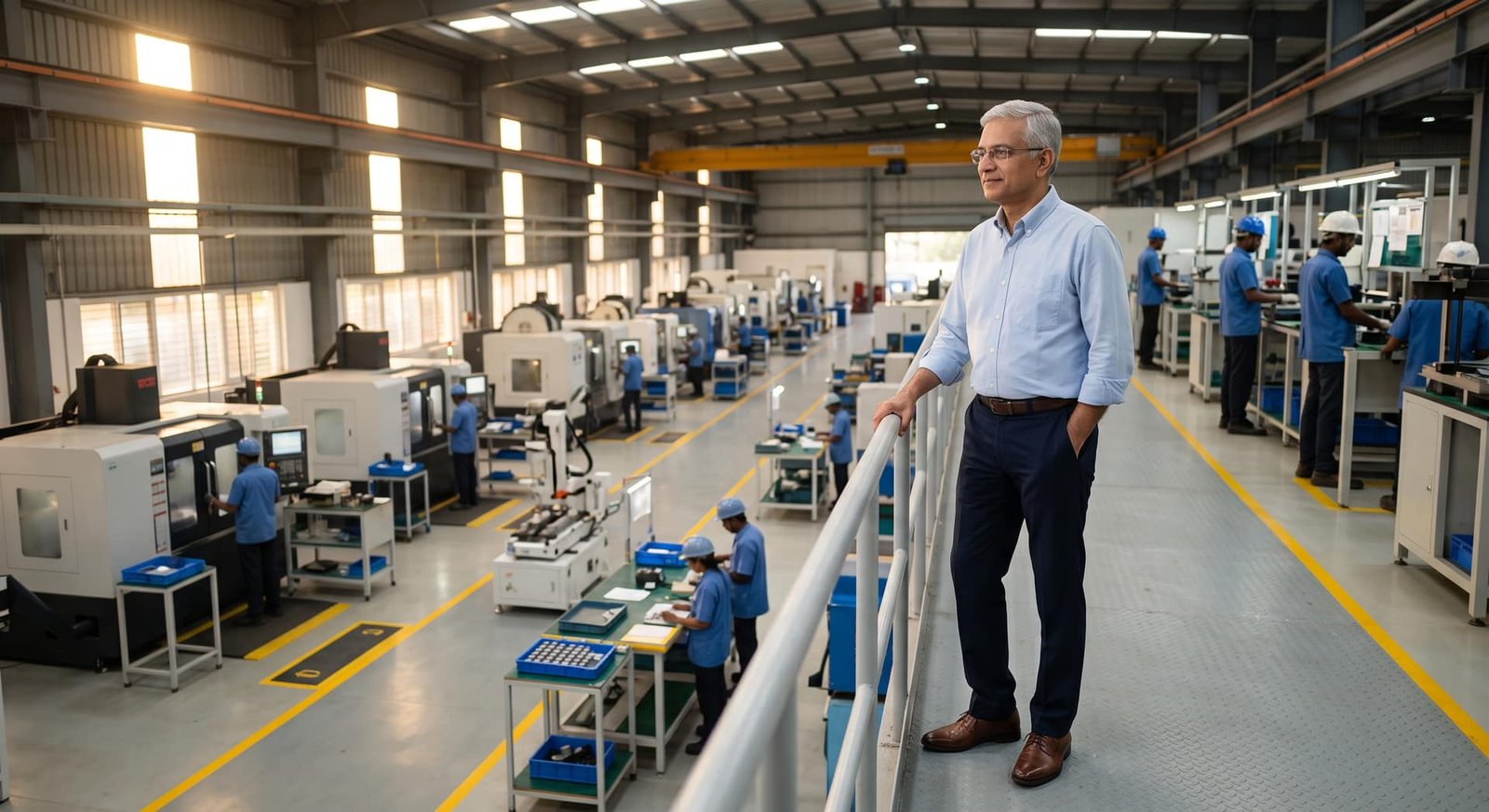
He cannot find out. To find out he would have to stop, and no man in his blood has ever stopped. They were taken at their posts, still needed, never made to learn who they were without the thing.
The four o’clock light
His father died at fifty-eight, in debt, in harness, at his desk on an ordinary afternoon with the work unfinished.
For most of his life the founder thought of it as a tragedy. Lately he has begun to think of it as a mercy, and the thought shames him, and he cannot make it go away. His father never had to face the empty six-forty. Never lay in the dark in a house that ran without him. Never watched a good son be gently managed by people who loved him, with the deference he himself had built. Never had to decide, alone, which of the people he loved to wound. Death took him while he was still the answer to a question. And the founder is not sure, at four in the morning, with his heart doing the new uneven thing it has started to do and the doctor’s number in a drawer he has not opened, that he will be so lucky.
He gets up. There is no reason to, and he gets up anyway, because lying there is worse. He will be at the office by eight, in the room on the good floor, and people will walk past it and decide whether to come in, and he will watch them decide. His brother will forward him a joke, because a joke is the only thing left between them that is safe. At four he will call the CFO about a receivable that is not his to ask about, and the CFO will tell him warmly, and then tell his son. And tomorrow, in the car, he will be gentle with the driver about the route, and the driver will understand exactly what the gentleness is, and neither will say it, and it will be, again, the truest exchange of his day.