No One to Tell
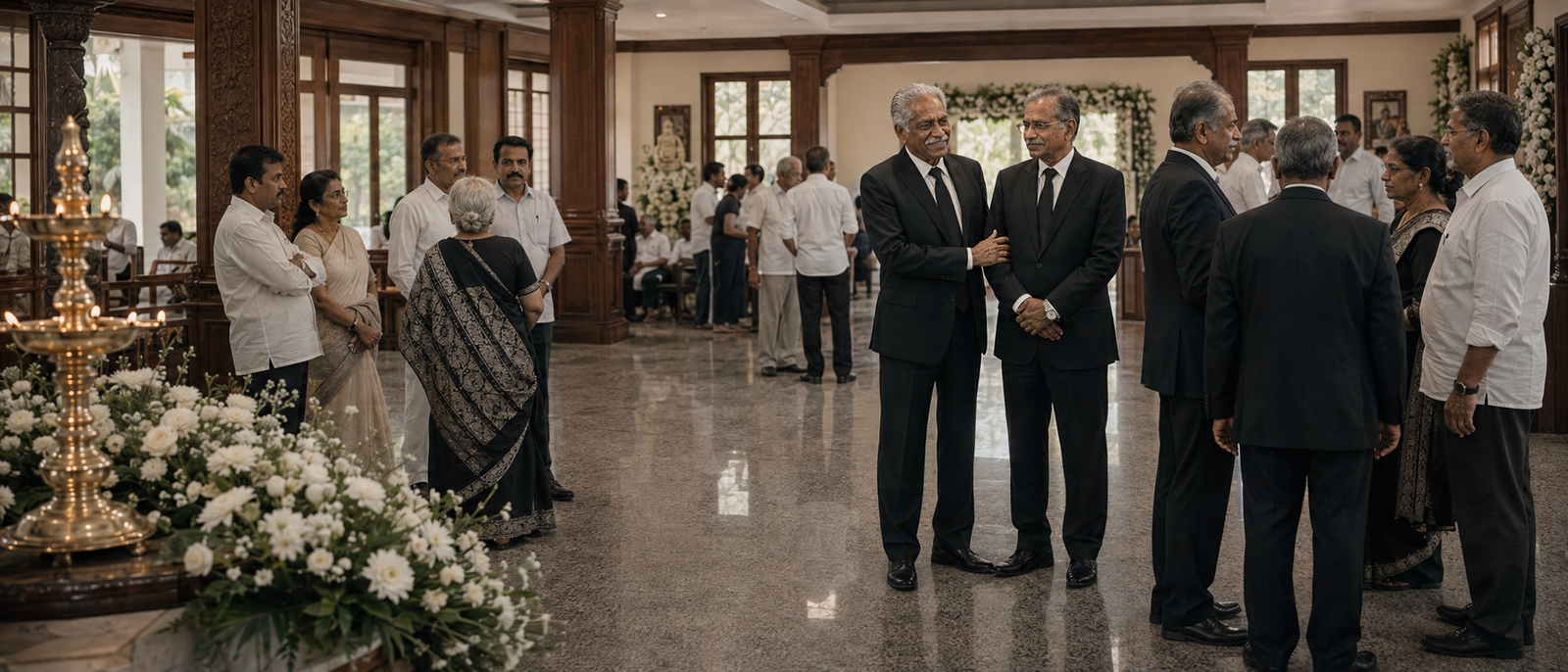
Nobody has been unkind. There is no one in the house to tell.
Two years of getting up at four
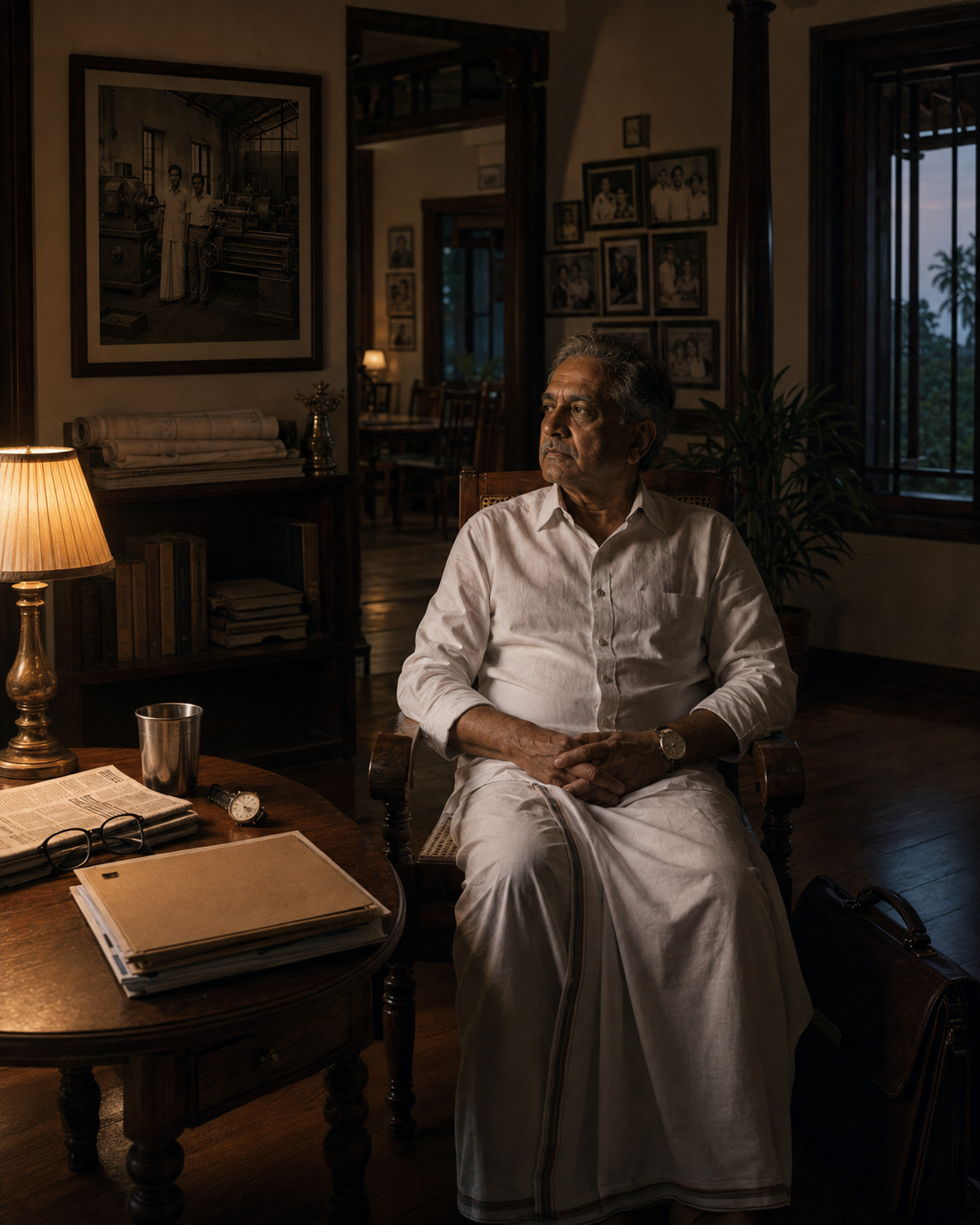
Shankar is sixty-two, and for about two years he has been waking at four in the morning and going down to sit in the dark. Not over anything. He goes in, and signs what is put in front of him, and comes home, and eats, and it is Thursday again, and he could not tell you what he did with Tuesday. He was in the shed with his brother when there were two lathes and a debt. He gave forty years to that company from the second chair, and can no longer find what any of it was for.
And nobody has been unkind to him. He needs to be exact about that, because it is the whole trouble. Not his brother, not his wife, not his mother, not once in sixty-two years. Which is why there is nothing he can say in that house. Any sentence that would begin to describe it accuses one of them, and not one of them has ever done anything.
The man he had watched work
He knows what Praveen Saanker does, because he watched him do it for three years. Not the paperwork. The other thing. Sitting alone with his brother, and with the boy, and with a woman of ninety nobody in that house had put a question to in a decade. Shankar sat in two of those himself and came out having said more than he meant.
So he knew there was such a man, and what such a man was for. He did nothing for a good while. He telephoned in May. He said he did not want to talk about the company. He said he had been low a few months and could not find a reason for it, and that there was nobody at home he could put it to.
The first time he is anybody's client
For three years the family was the client. Now Shankar is. He pays for it himself and he decides what they talk about. Nothing said goes to Hosur, or to the house, or to the man he has stood beside for forty years. In the same months the three of them sit at one table twice, and nothing shows.
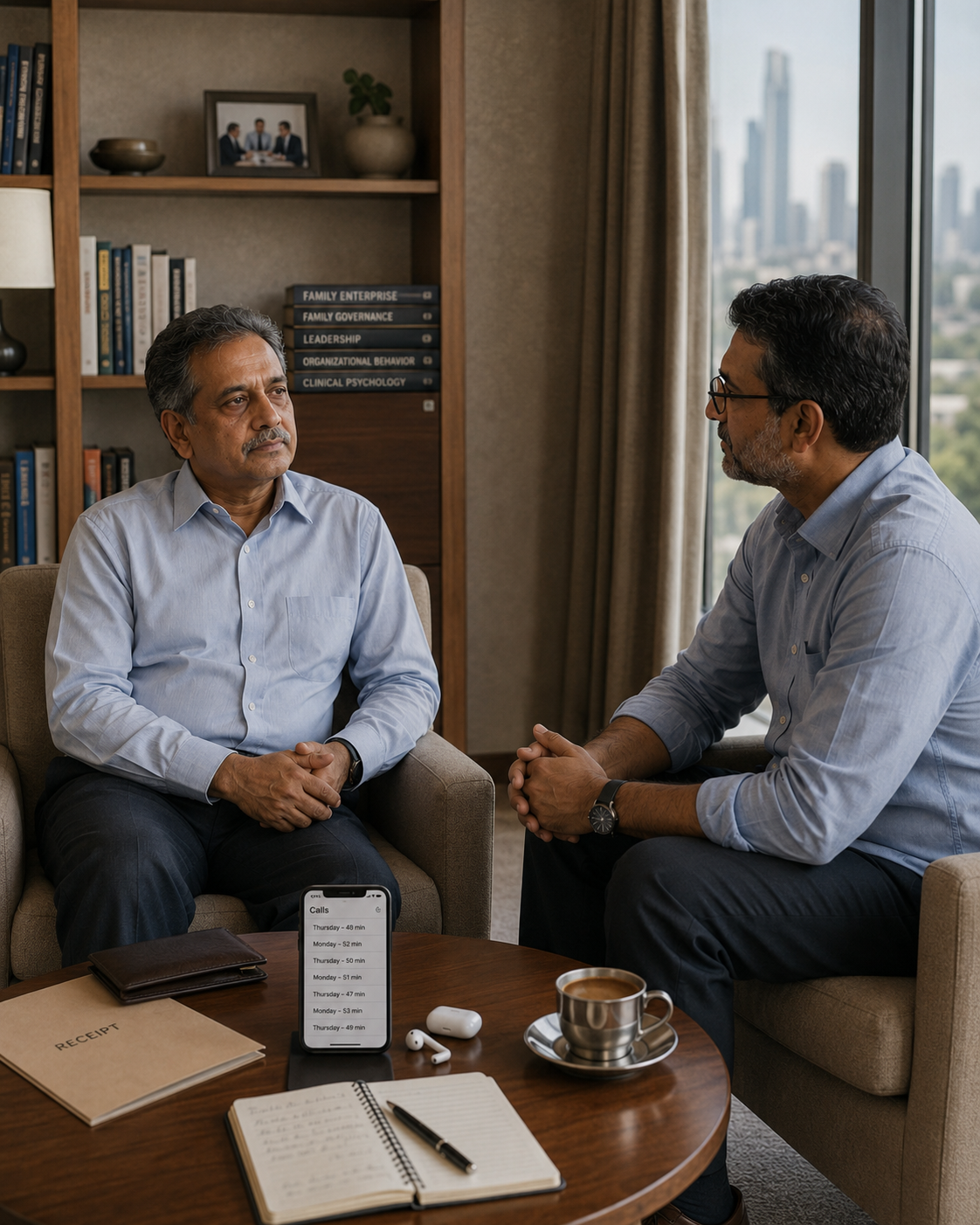
At sixty-two, this is the first time anybody has worked for him rather than for the thing he stands beside. Praveen is in Dubai a good part of the year, and in Singapore, and in Chennai, and they meet where it falls. What holds it is the telephone. Twice a week, three quarters of an hour and often longer, and none of it about the business.
What he had wanted to be

Praveen asks him, in the first of them, what he had wanted to be. Shankar says his brother was eleven when their father died. He gives the year, the debt, and what the lathes were worth. Then he stops, because he believes he has answered the question. Praveen does not fill it. Shankar adds the date they bought the second lathe.
Later Praveen asks him what he would like. He answers well. The westward plant should have gone ahead in the first quarter, and there is a supplier at Hubli who could be brought on. Praveen tells him no. For himself. Shankar asks for the question to be put another way. He is a precise man and he is not being difficult. He would answer it if he could work out what was being asked of him.
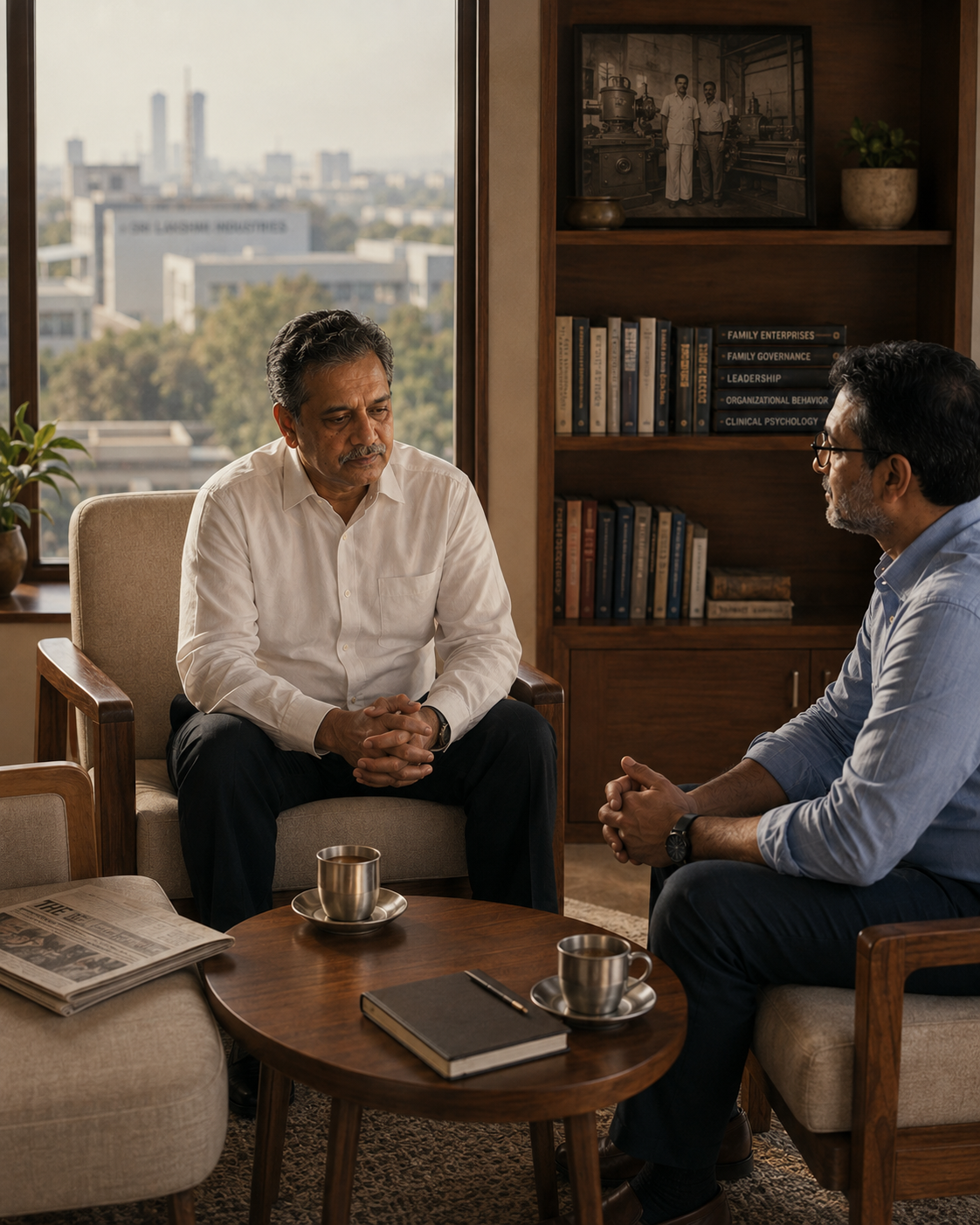
The morning it came out
In the fourth conversation Praveen asks him what he is afraid of. Shankar says the partition. Then he says that is not right either, that he does not mind the money, and has never wanted more than his share. Then he says he does not know what he is supposed to do afterwards.
He has been the second man for forty years and is good at it, and there is nothing else he knows how to be. When it is divided there will be nothing anybody needs him for, and he will be a man of sixty-four in a house with a newspaper. He says it evenly, the way he gives a figure, and then he stops talking and does not start again for a while.
Sixteen years
It comes out sideways the following month, about a house. The Marbella property was bought in a year Shankar did not take an increment. He says it flat, in passing, and moves on. Ten minutes later he says he should not have said that, and defends his brother at length, and every word of that is true too. His brother telephones him now about suppliers from 1988, for no reason, the way he used to. On the fifth of those calls Shankar caught himself wondering whether somebody had told him to.
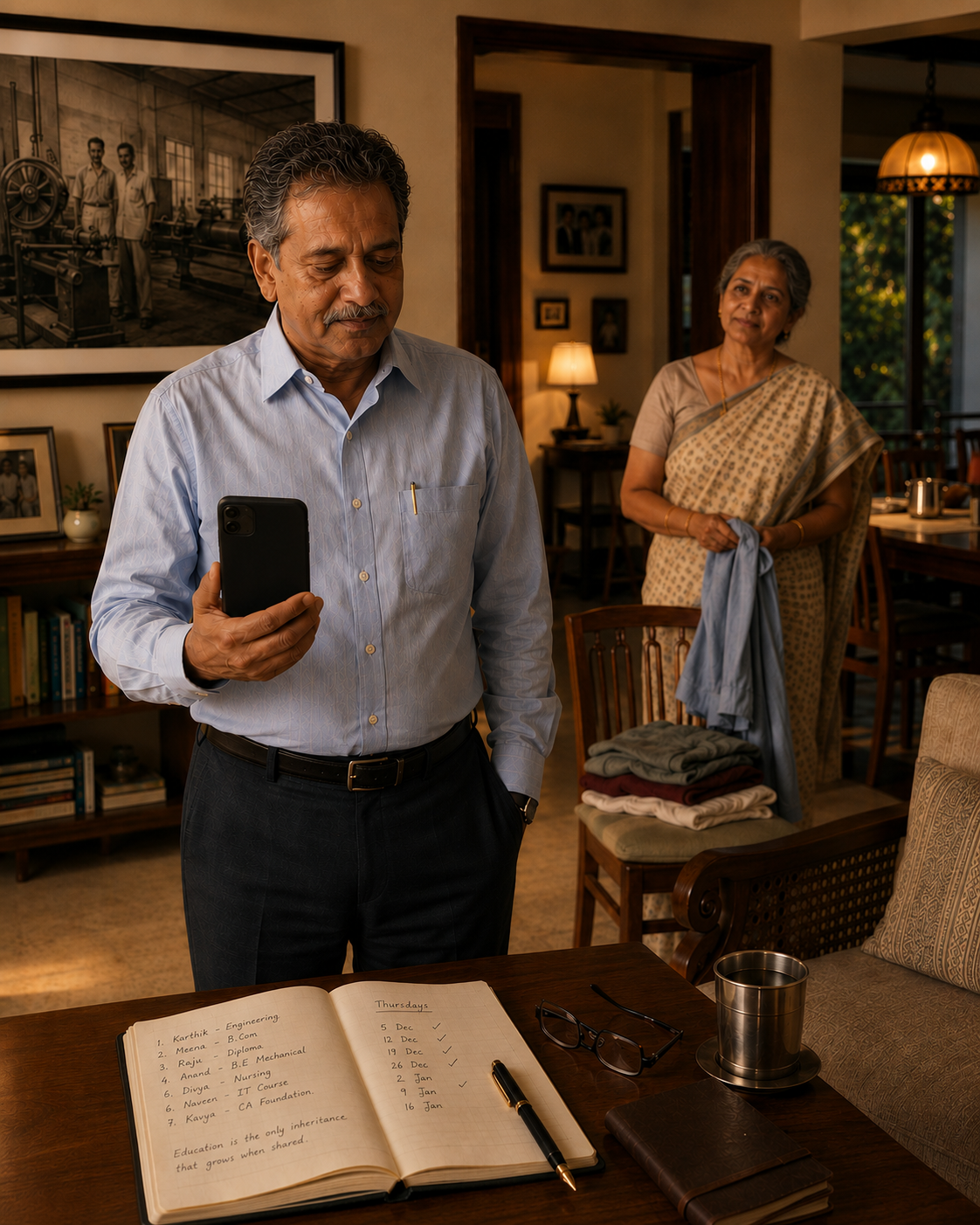
Then, about the six boys he has put through engineering since 2007, one at a time, all of whom he can name: that nobody in that house asked him about it for sixteen years. He stops in the middle of it. He had named all six an hour earlier and said where they were. Praveen lets it sit there and does not pick it up.
What he would do if it were put right
Praveen does not tell him he is wrong about any of it. He does not take the other side and he never suggests Shankar has it out of proportion. He asks him what would be different if it were put right.
Shankar starts with the arithmetic, because the arithmetic is there and he built the columns it stands in. Then he stops, because the arithmetic is not what was asked, and there is nothing behind it. He sits for a while. Then he says he does not know, and he says it the way a man says a thing he has found out. Praveen does not tell him what it means.
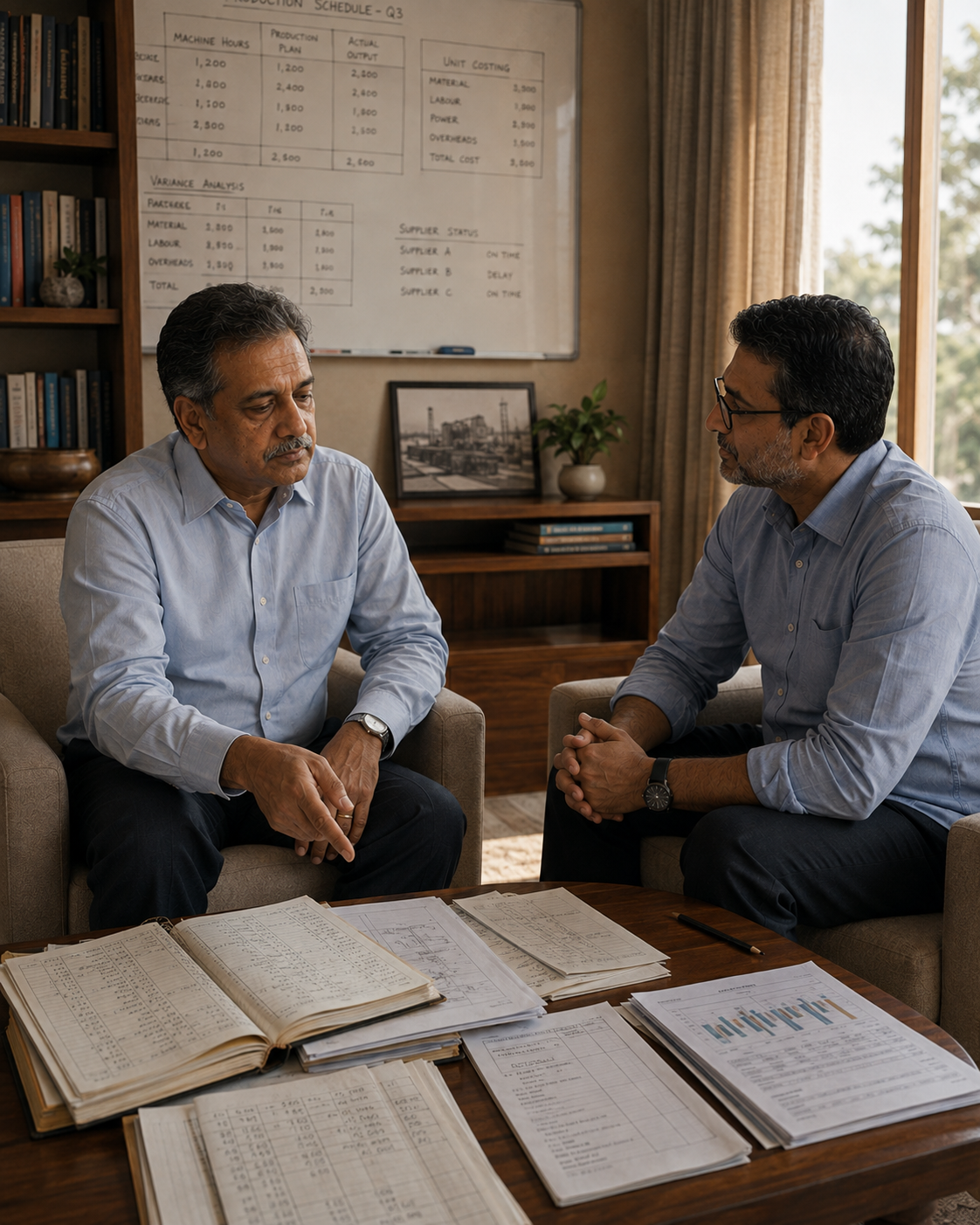
A list of names, and what it costs in a year
This gets spoken about, and it changes. Four things get worked on over that year and not one of them is the business. Praveen brings the six boys back the following week, and they do not leave again. The names first, written down, which has never been done. Where each of them is now. What Shankar did for the two in their late twenties, which was not the fees. It was a call to a man in Coimbatore, a place to stay for four months, and a suit. Then how many he could carry, and who chooses them.
The partition has frightened him for two years because it takes the work away. It will also put a very large sum in his own hands, in his own name, with nobody to route it through and nobody to thank. There is no trust, and Praveen does not build him one. No trustees, no register, no statement of purpose. One man, a list of names, and his own money.
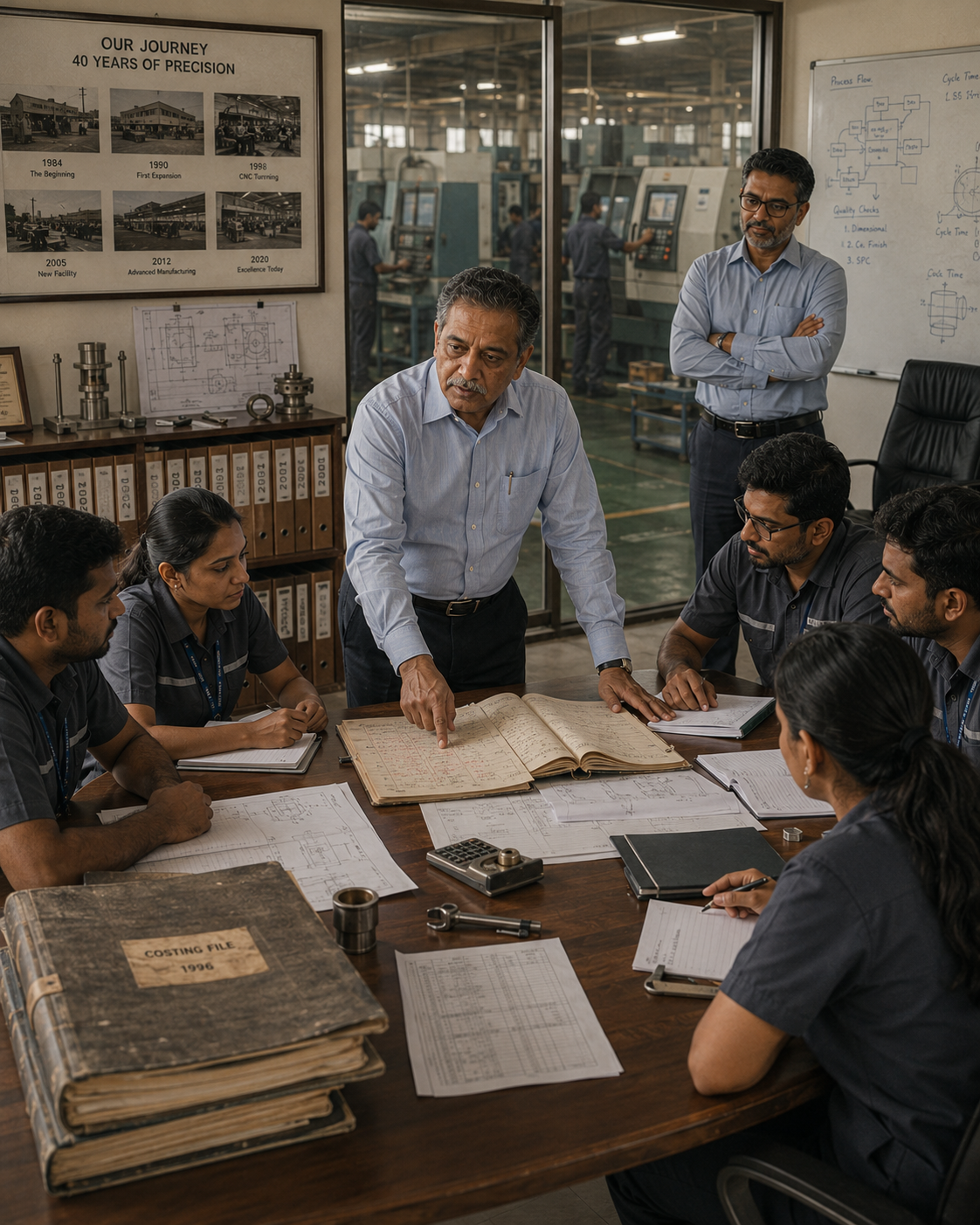
Two mornings a month
He knows that company from the second chair better than anybody alive, and none of it is written down. Praveen does not offer him a seat, a title or a role. He asks whether Shankar would spend two mornings a month at Hosur with the people there who are thirty. The first is arranged before he has decided whether he wants it. He takes them through a costing from 1996 that went wrong, and what the man who caught it looked at.
The brother is not touched until the ninth month, and it is not finished when it is. Once, directly, Shankar asks what he should do about him. Praveen does not answer. He puts another question instead, and Shankar is annoyed and says so, and comes back a fortnight later.
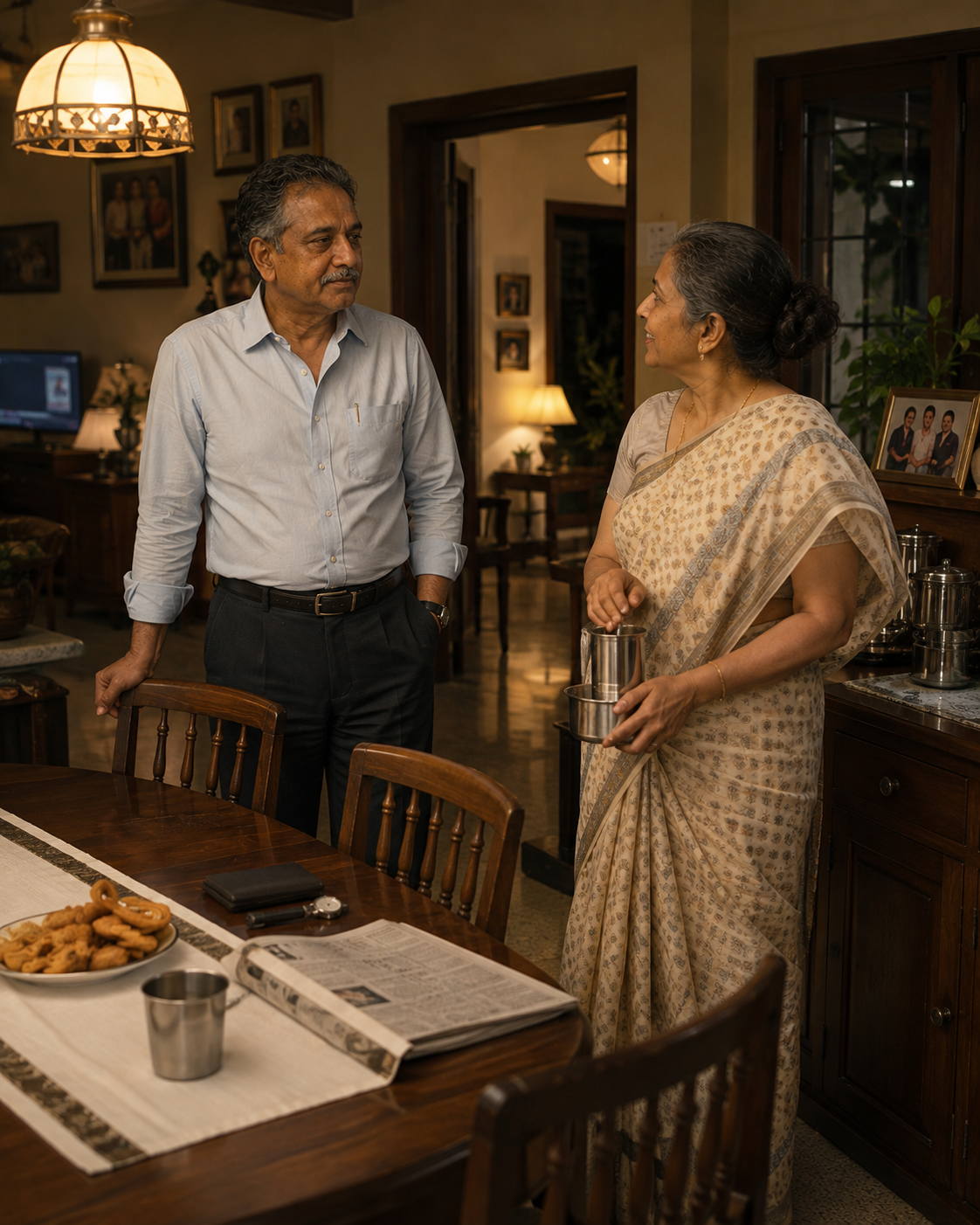
The Thursdays
His wife asks him what the Thursdays are. He says he has been talking to somebody. Then, because that sounded like something, he says it is the same fellow who did the mentoring with the boy, and that it is a coaching thing, and asks whether there is coffee. She has been married to him for thirty-four years, and she does not ask him anything else, then or afterwards.
December
In November he telephones Seattle himself. He does not say the aunts are asking after her, or that the cold must trouble her chest, or that a house is a strange thing to keep for no one. He does not say it to her mother first to be softened on the way. He asks his daughter to come in December. She says ten days. Nothing has been solved. The partition is still coming, his brother will still decide it alone, and there is still no word for what forty years beside a man is worth.
But he sleeps now, most nights and through. The four o'clock stopped some time in the autumn and he did not notice for a fortnight. He knows what he is doing on a Thursday, and what the six names cost him in a year, and he has started on the seventh. When his brother telephones about a supplier from 1988 he takes the call and enjoys it and does not weigh it afterwards. He is sixty-two, and he is easier in himself than he has been in years, and nothing in that house has changed at all. Shankar puts the phone down and sits with it a moment. Then he gets up and goes in to where his wife is, and tells her before she has to ask. She puts down what she is holding.