The Siblings
They love each other. That is what makes it insoluble.
Two lines about a plot
His brother texts him about the land near Hosur, for the new plant. Two lines, no punctuation to speak of, the way he has always texted him. He reads it four times. Once for what it says. Once for what it might mean. Once for what his brother might think he will take it to mean. By the fourth he is not reading the words at all, only looking at them, the way you look at a face you have known so long you can no longer see it. He sets the phone down. He picks it up an hour later and writes back something warm and the right length, and hates that he weighed it. Forty years ago he would have answered in nine seconds. He knows the year that stopped. He cannot find the day.
The one who kept the books
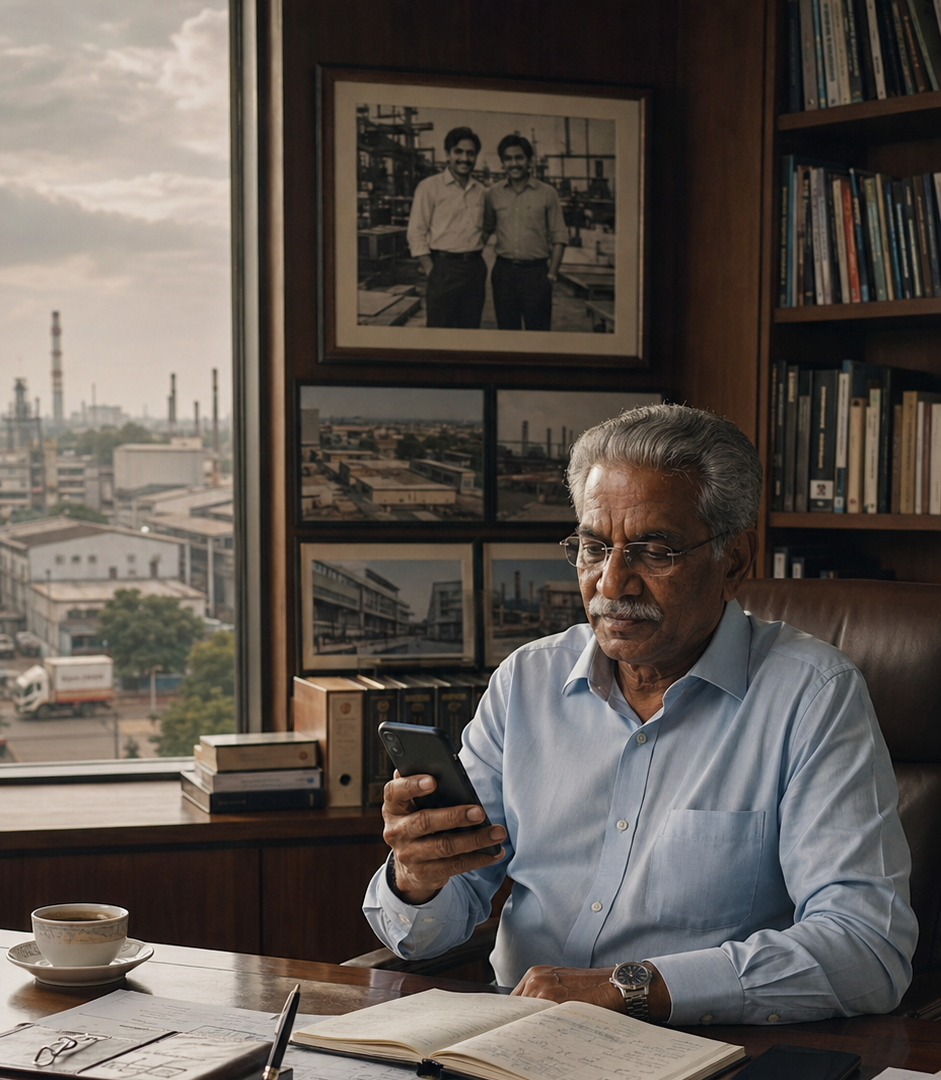
For forty years he was the one who could be trusted with the true number. His brother built it: the shed, the two years of nights on a cot behind the first line, the orders that were never sure to come. Beside him for every hour was the younger one who kept the figures straight and said the exact thing that was so, whether or not it was the welcome thing. That was his place. He was the one you could not flatter and could not frighten, and his brother knew it, and for forty years it was the most trusted thing about him. He is not that man now.
He has become the other kind. The one who carries a sentence from one room to the next with its edges filed down, who holds both halves of a quarrel and softens each to the other, who is called into the room because he is the last man both sides will still sit with. Nobody made him this. There was no morning it was decided. The auditor had become a diplomat before he noticed he had changed his coat, and a diplomat is only a man who has agreed that the plain true thing can no longer be said in the room. He counts things for a living. He has started counting the silences.
What a life beside him was worth
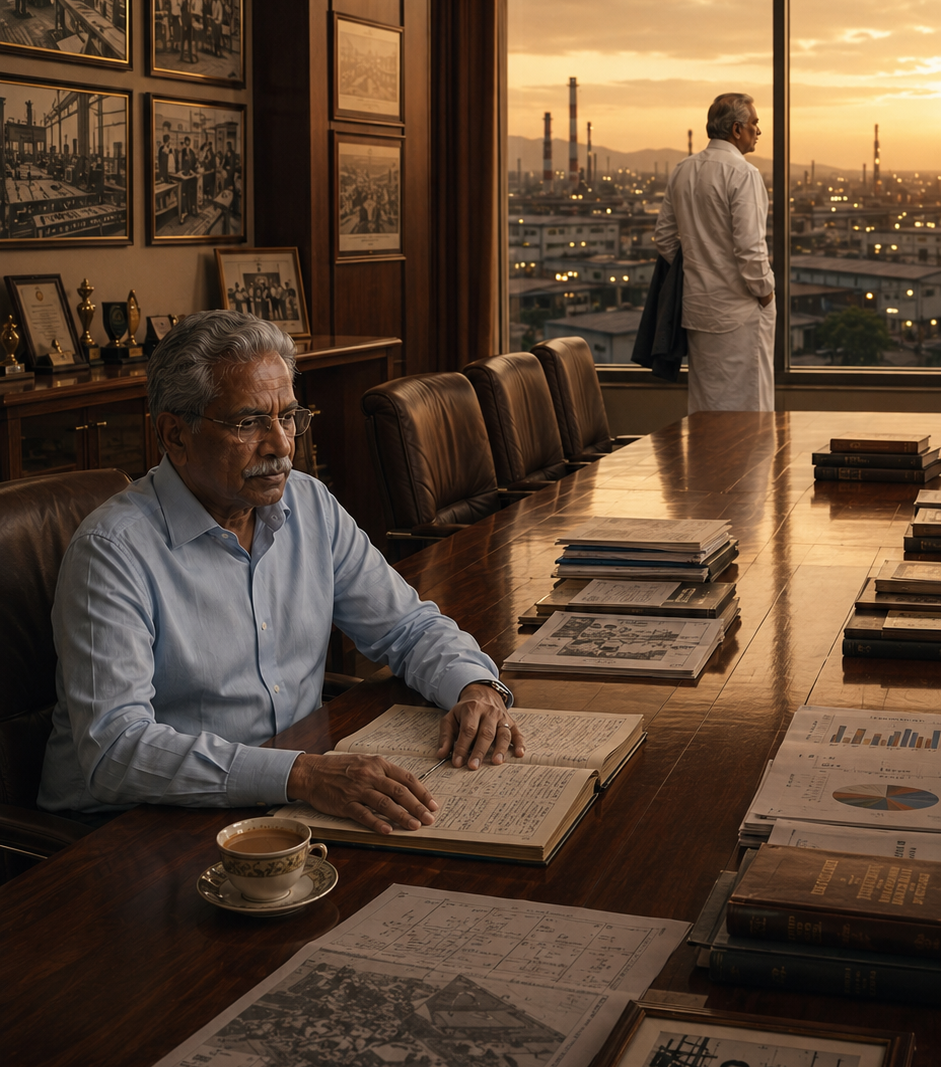
Three thousand crore, and more each year. He knows the figure to the decimal; he built the columns it stands in. When it is cut, his brother will cut it. That is not in question, and it is not a wrong. He built it; it is his to divide. But in forty years no one ever set down what a life spent beside a man is worth against the life of the man himself. There was never any need. They were two hands of one body, and a body does not invoice itself.
So now, against three thousand crore, there is no figure at all for the thing he gave. The hours. The standing next to. The forty years of being the one who did not sleep in the shed but did not sleep much either. Whatever number arrives will land as alms or as theft, because no one ever agreed on a third thing it could be. He does not want more than his share. He wants there to have been a word for his share before the arithmetic began. There never was one. There is only his brother’s goodwill, which is real, and which he cannot appeal, because there is no appeal against a kindness.
The apartment in Seattle

His brother’s son has a mansion in Marbella. His brother’s daughter has a villa in Dubai, a full acre of it, walls and lawn and blue water, the kind of house strangers slow their cars to look at. He has seen it all. It is beautiful. The children have done well, and none of it is undeserved. He has never raised it, and he never will, because his own daughter, the one who will not come home, lives in an apartment in Seattle that his brother bought for her. Bought it outright, in the years she was finding her feet, said nothing, has never once mentioned it since, and would be wounded to the bone to learn it was being counted.
There it is. The thing that seals his mouth. He never had to count what passed between them. You do not audit a brother. But a column has opened behind his eyes that he did not open, and against his will he has begun to keep the tally. The man who kept the honest books for forty years, now keeping this one, to himself, in the dark. And the cruelest entry he knows by heart: that the kindness done to his own child is the reason he can never say a word about the rest.
The Sunday joke
He still forwards his brother the jokes. A cartoon, a clip, something about knees or grandchildren or the state of the roads. His brother sends the same back. It is the one traffic between them that carries nothing, and both of them know that is exactly why it runs. A joke is the last message that cannot be read for a second meaning. Two old men, guarding the one narrow channel where a word can still mean only itself.
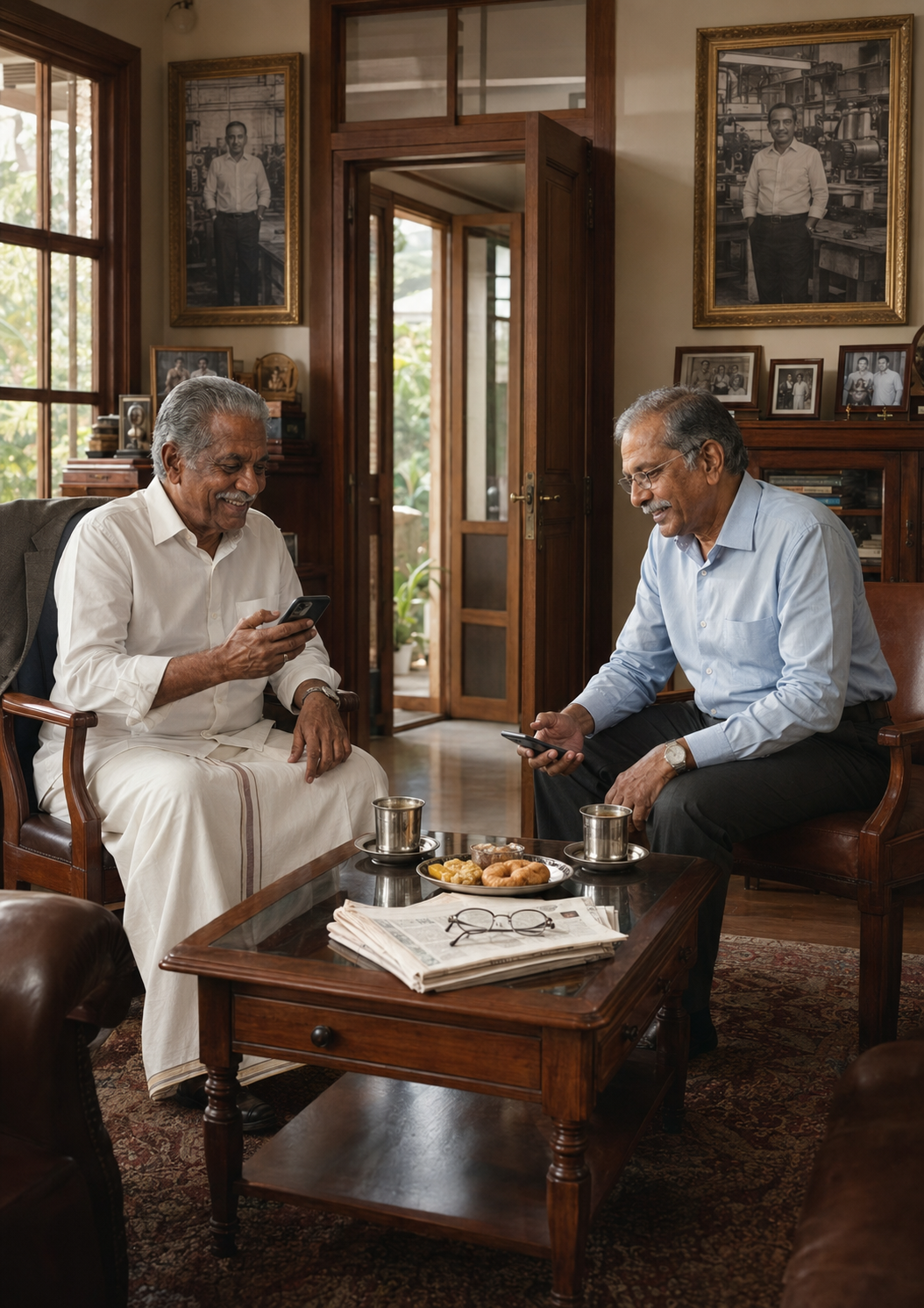
When they meet it goes the same way each time. Twenty minutes of the children first: whose girl is where, whose knee, whose boy has landed well abroad. Then the thing, for as long as it takes, which is never long, because neither can hold it in open air. Then twenty minutes of the children again, on the way to the door, because you cannot rise from the thing and walk out. You lay the warmth back down over it, the way you draw a cloth across a table you would rather your guests did not see is scratched. The same photograph of their father hangs in both their offices. Neither hung it against the other; they were each handed a copy, years ago, and put it up. He has caught himself, on the drive over, wondering which of them their father would have made the sums come out kindly for. He is an old man, and the thought arrives wearing the face of a boy, and he is ashamed of it, and it comes anyway.
The long table
Once a quarter they all sit at the long table: the two brothers, their sons, the daughter who runs a division, the men from the bank, the company secretary with his folder. He sits where he has always sat, to his brother’s right, and says little, and misses nothing. He can feel the whole weather of the room on his skin. His nephew leaning a degree too far forward when the westward plant comes up. His own silence being read by his brother, who does not turn his head but knows. The secretary’s pen waiting over a resolution that every man at the table will sign and no two of them will read the same way. He knows, watching them, that four separate people in this room have already had the conversation about him in private, and not one will ever have it with him. Then his brother asks him, warmly, across the papers. What do you think? The way he has asked ten thousand times in forty years. And for half a second it is 1986, and there is a real question on the table, and a true number to give, and no cost to giving it.
Then he hears it for what it now is. Not the old question but its ghost, asked in front of the bank and the boy and the secretary, a courtesy, a thing done for the room. He gives the answer the room needs. It is a good answer. It is not the true one. His brother nods, grateful, and moves on. And neither of them will ever say that something quietly stopped at that table, between the question and the answer, in front of everyone, and no one saw it go. He used to be the one who broke the tie for them, with a fact. He cannot remember the last time a fact was what the room wanted. And he has begun to wonder, the way he once saw a bad quarter coming from the shape of the figures, what will hold the two branches at all on the day his brother is not in the room to be deferred to. There is no elder behind the elder. No rule they ever wrote down. No third chair. He carries the worst forecast of his working life, and files it, and shows it to no one, because to say what will hold us together when you are gone is to say I have already imagined you gone.
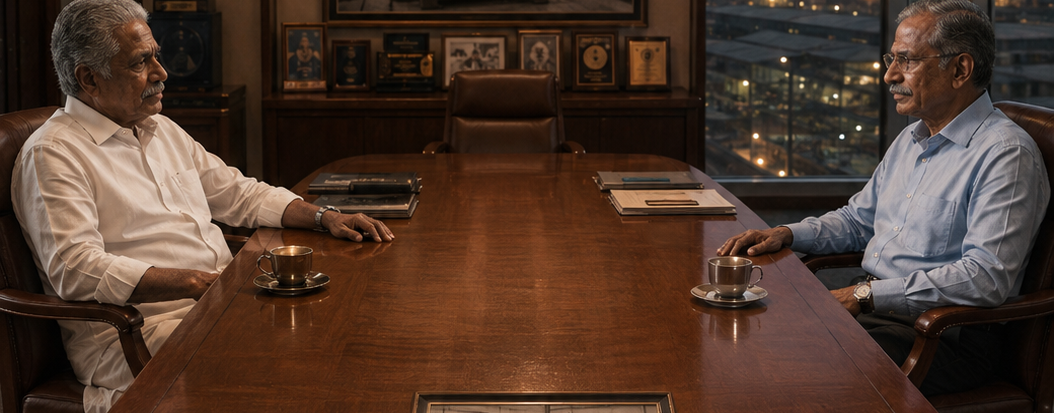
Are they brothers, or is that what they used to be
If they loved each other less, this could be a negotiation. And a negotiation can be closed.
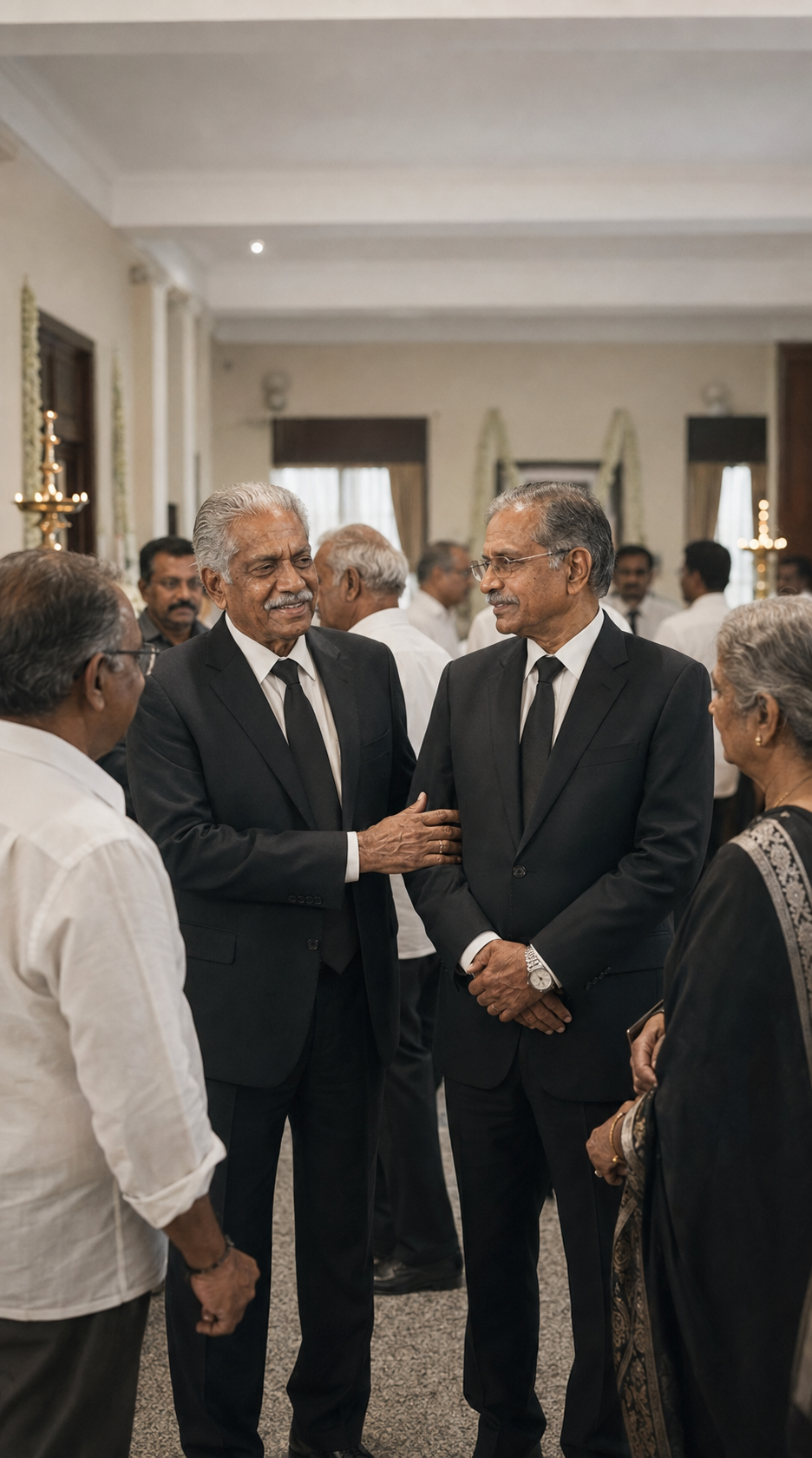
The far end of the room
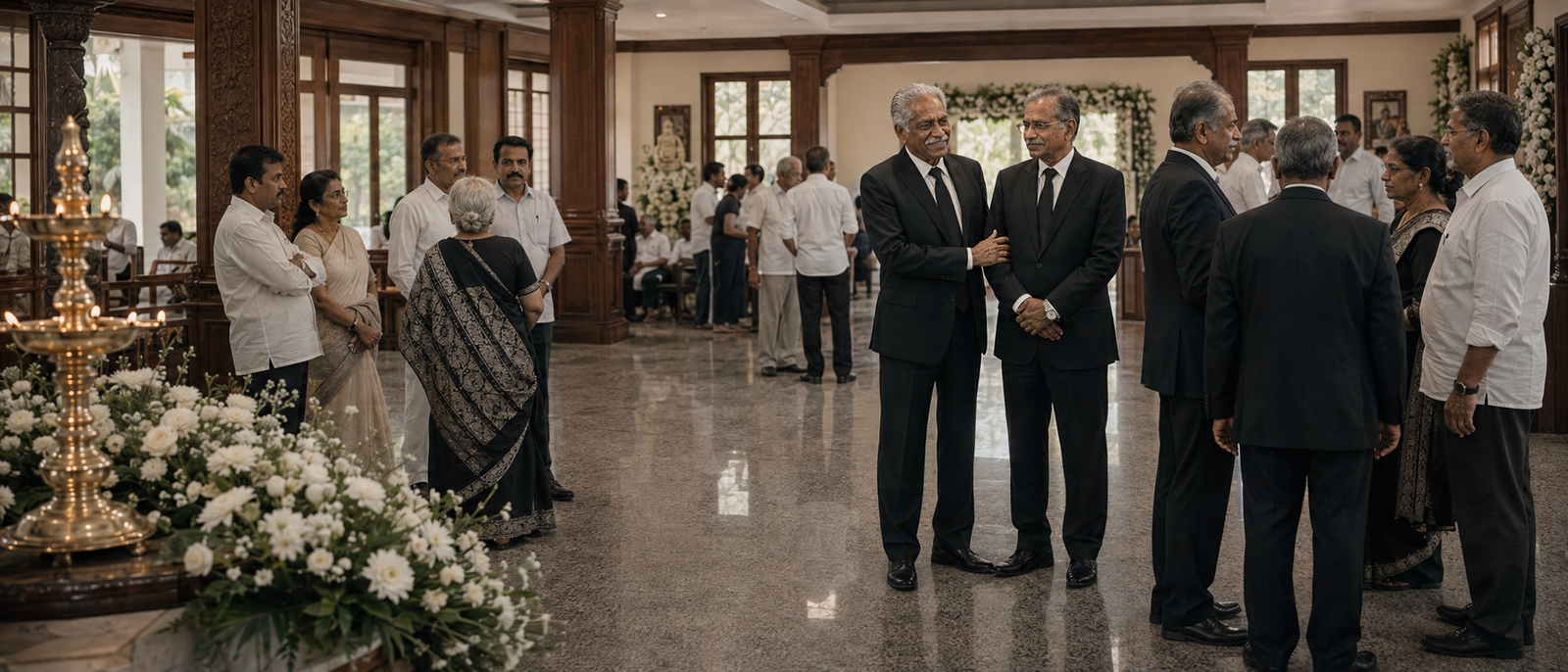
At the funeral of a man they both knew, they stand together at the far end, a little apart from the crowd, and people come and say what people say. That it is good to see the two of them side by side. That not every family stays close like this. It is not false. That is the part no one would believe, so he does not try to say it. Shoulder near shoulder in the good dark suits, they are exactly what they appear to be: two brothers who came up from nothing together, either of whom would still take a blow meant for the other without a half-second’s thought.
Someone asks after his brother’s grandson, the one abroad, and his brother’s face opens the way it always has, the whole of it, unguarded, and for that moment there is nothing between them to read. He answers for him. The boy’s marks, the city, the winters. He has always known them. He has carried the small warm facts of his brother’s family the way he once carried the figures, faithfully, to the last decimal, because that is the one ledger he has never wanted to close. Then his brother laughs at something and reaches, without looking, and puts a hand on his arm, the way he has since they were boys, and he lets it stay, and does not weigh it. And for the length of that one gesture he is not the auditor, and not the diplomat, and not the younger man doing sums in the dark. He is only his brother’s brother, at the far end of a crowded room, near the end of a long life spent side by side. Then the hand lifts, and it is time to go. And already, before he reaches the door, he is drafting the message he will not send on the drive home.