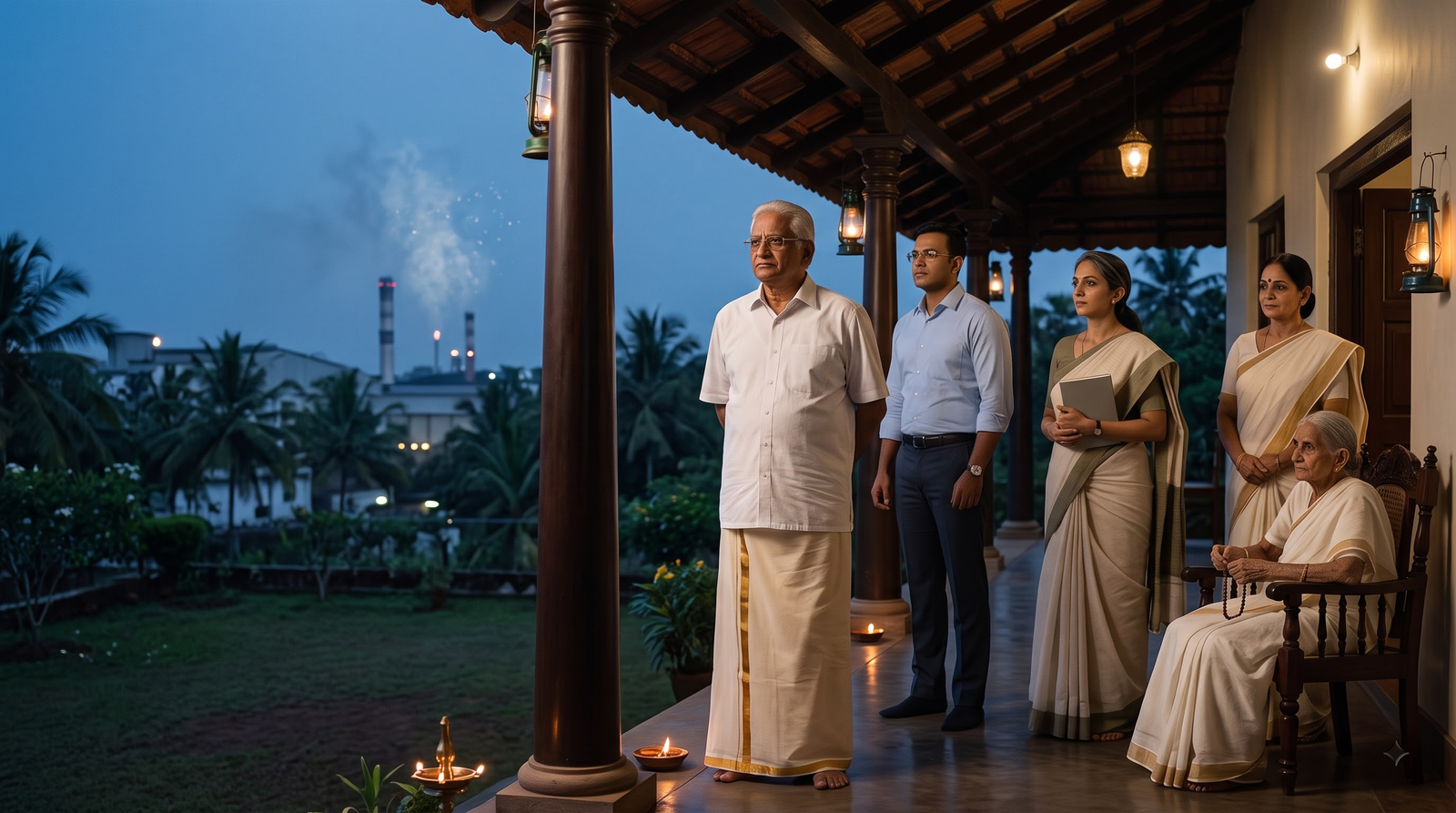
The Next Generation
Eleven questions in four days. Every one about the business.
Eleven questions in four days
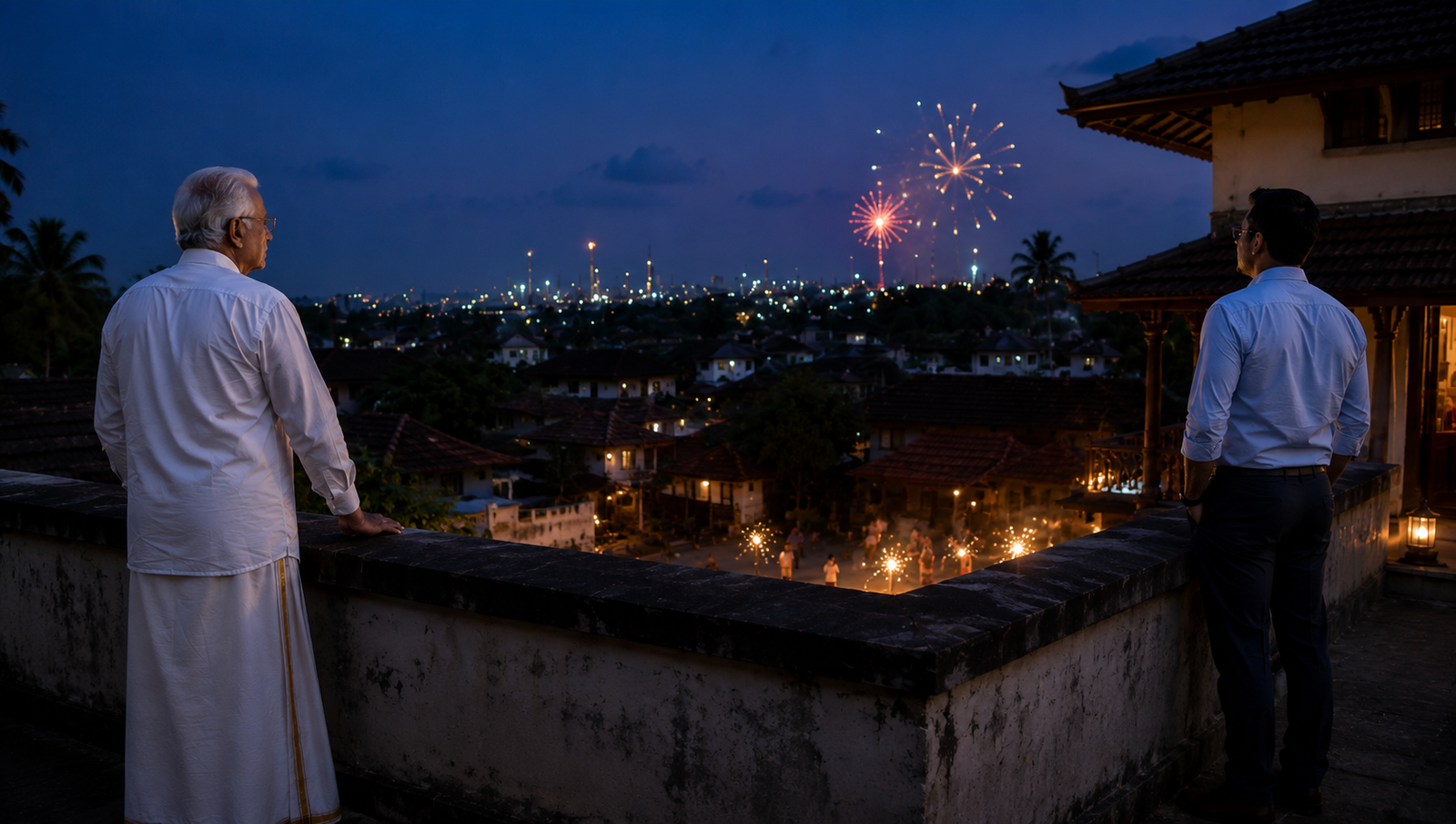
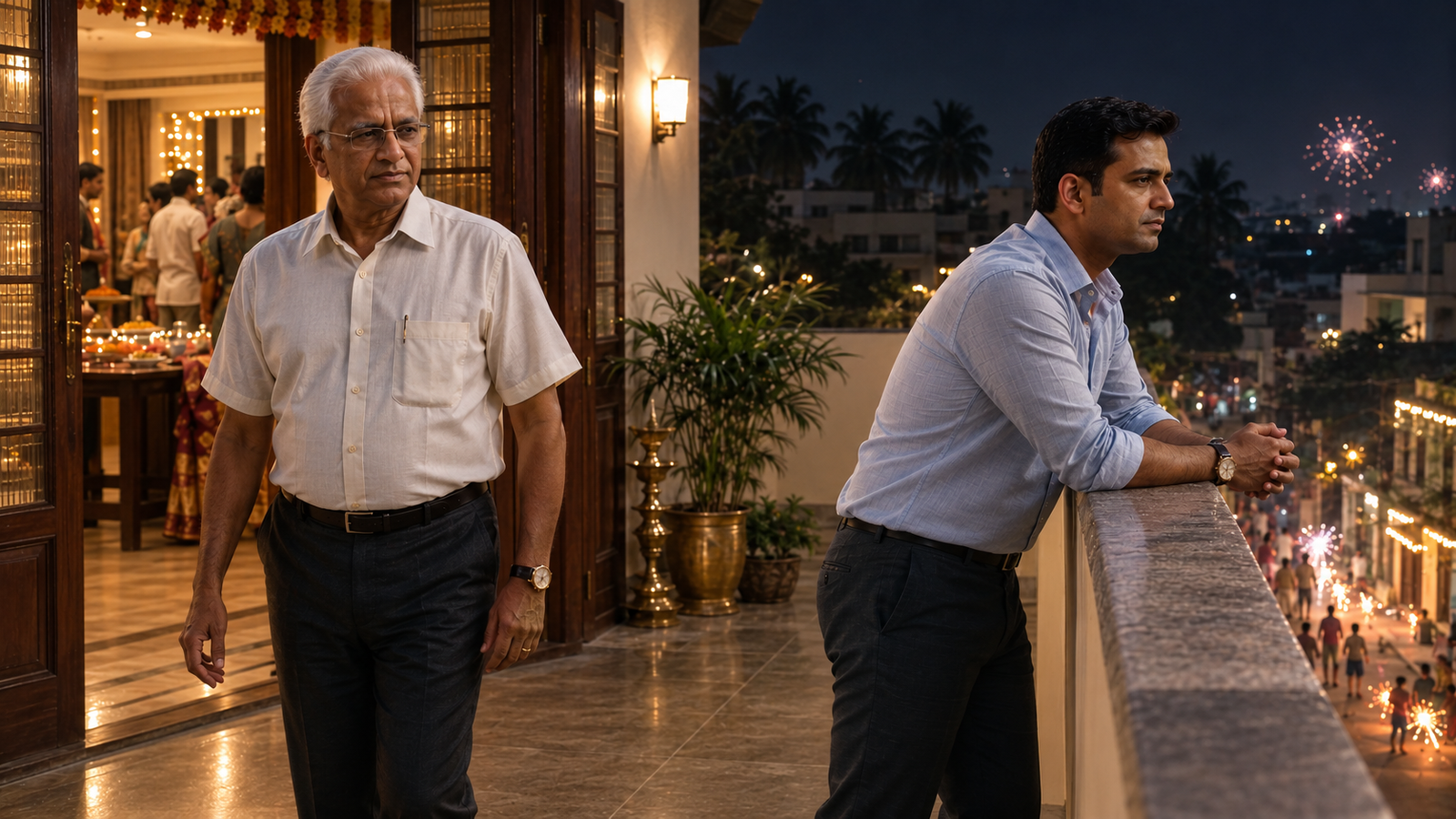
The house was full, so they went up to the terrace, which was the only place left. Below them the street was going off in bursts, and somebody's cousin's children were at the crackers with a stick of agarbatti. His daughter was inside with the sweets, doing what she does at these things, which is everything. Four days the family had been in one house, and in four days he had asked his son eleven questions. Ranjangaon, and what the Pune people had actually said. The Daimler line, and the second shift. A receivable he had no business asking about. Whether the boy had seen what the yen was doing to the import bill. Good questions. His son answered all eleven well, because they were the right questions and he has been answering that kind since he was nineteen. Then the crackers went quiet and neither of them said anything, and it was comfortable, and after a while the father said goodnight and went down. He slept well. It had been a good evening and he was not wrong about that. His son stayed up there another hour.
The door of his son's office
On a Tuesday in October he walked down there with something else in his mouth. The boy was on a call, hand up, one minute. He waited in the doorway and looked at the wall, where the Daimler certificate is and a photograph of the Hosur line from 1994 that he framed himself. When the call ended, he asked about the audit. His son had it at his fingertips, because of course he did, and gave him the whole of it in ninety seconds, with the two exposures at the end where they belonged.
There is nothing wrong with the audit, or with the eleven questions. He built this out of questions like that. What is the number, who gave it to you, when, and what did you do. Forty years of them, asked at four in the afternoon with the line running behind him. He said that was fine, and went back up. He had gone down there to ask something else.
The pencil
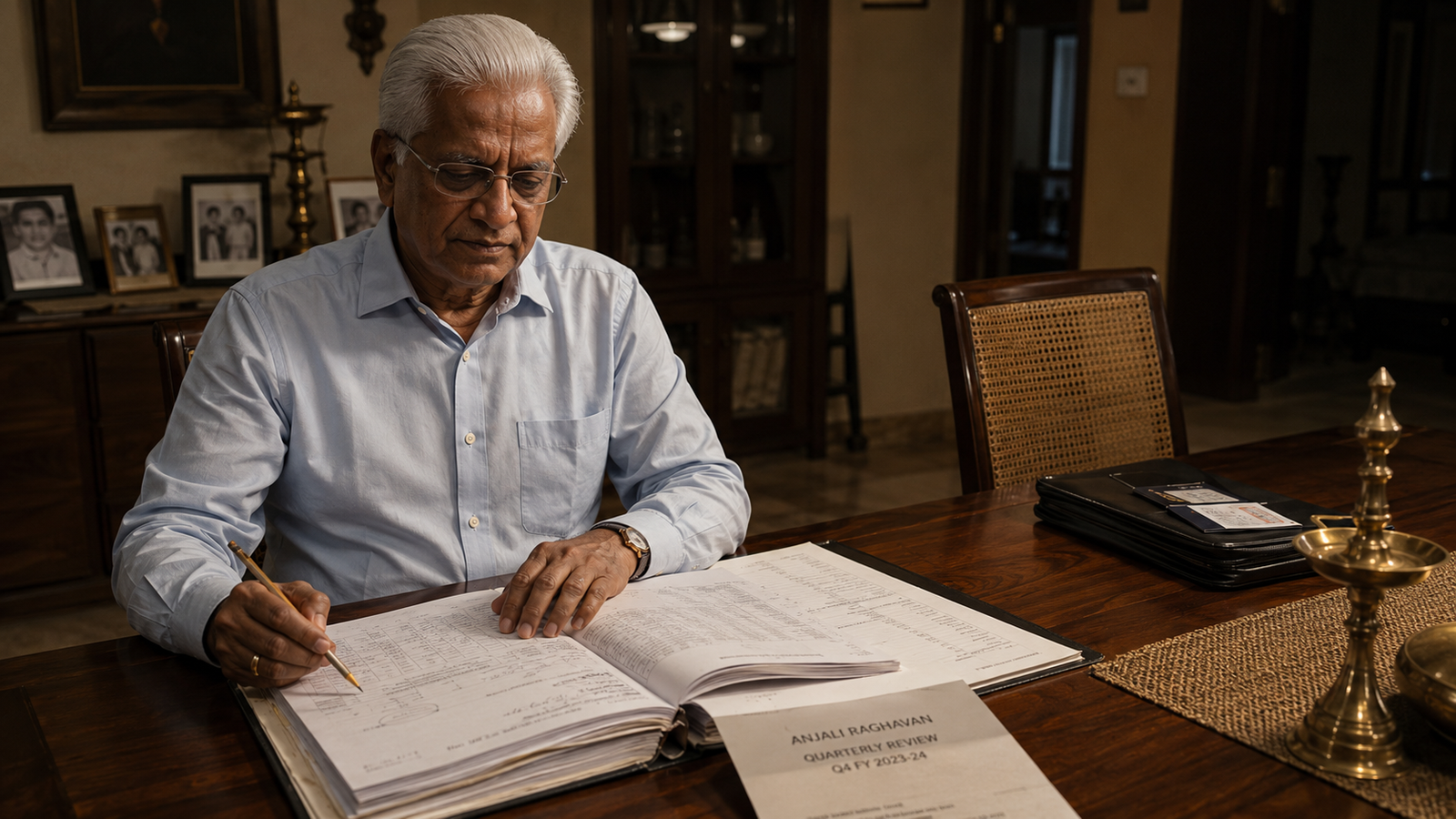
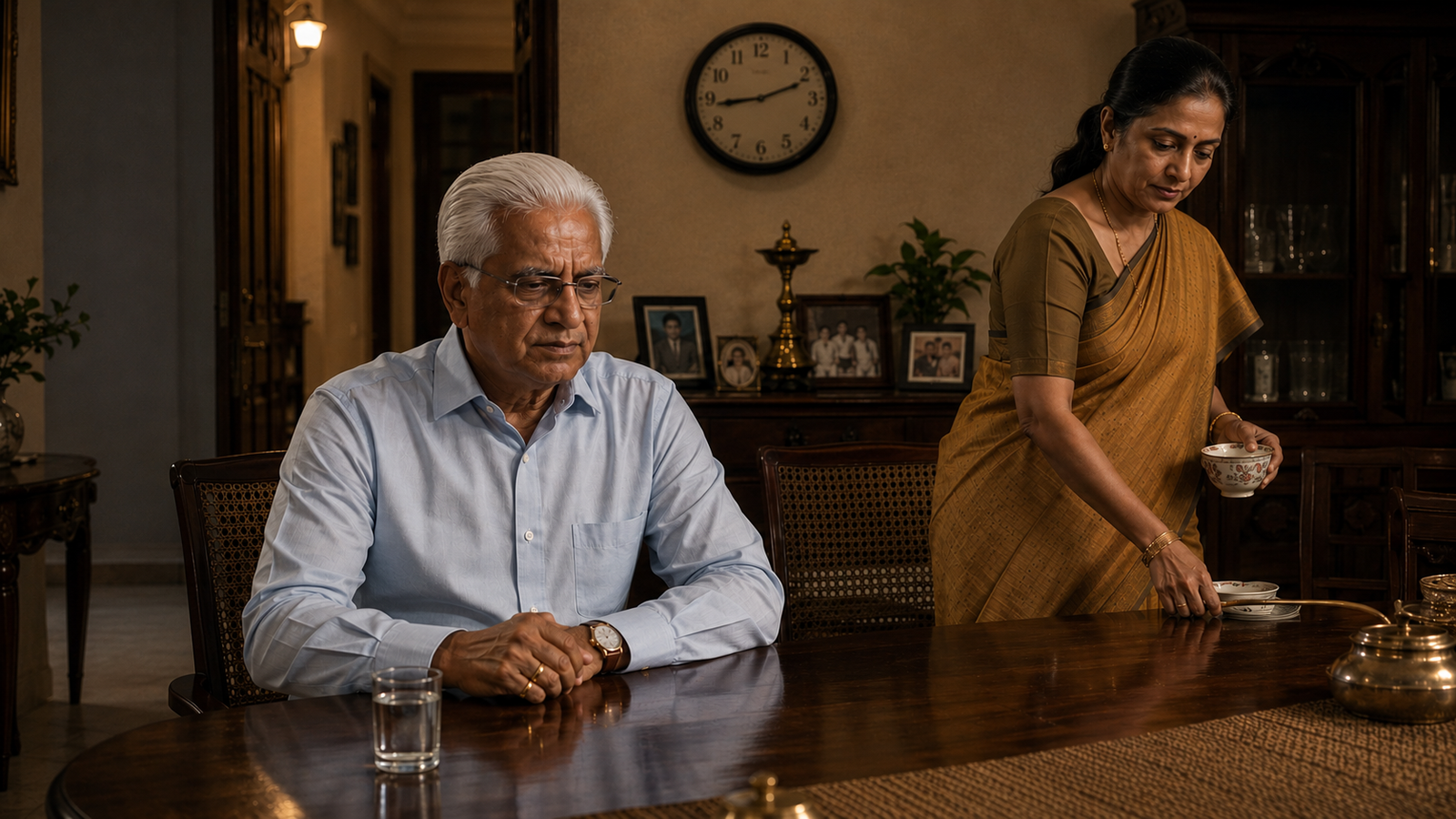
Her file comes every quarter with her name on the front, and he reads them at home, at the dining table, with a pencil. He has read sixty of them. In the margin of the last one he wrote good against the Hubli recovery, then rubbed it out, because she would have seen the pencil mark and there would have been a thing about it.
She flies in for the reviews and takes him through it, and he asks her about the numbers. She has never said anything to him that was not in a file. She cannot. Say she wants more and it is a bid, and there have been fifteen years of bids. Say she does not and fifteen years of good files turn into something else on the drive home. There is nothing she can say to her father in that house that does not arrive as an application.
A name his wife heard once
She heard it at a wedding, from a woman whose family had been through something, who talked for four minutes and then stopped. She said it at the table one night and did not say it again. He did nothing for five weeks. Then in January he rang.
Four months
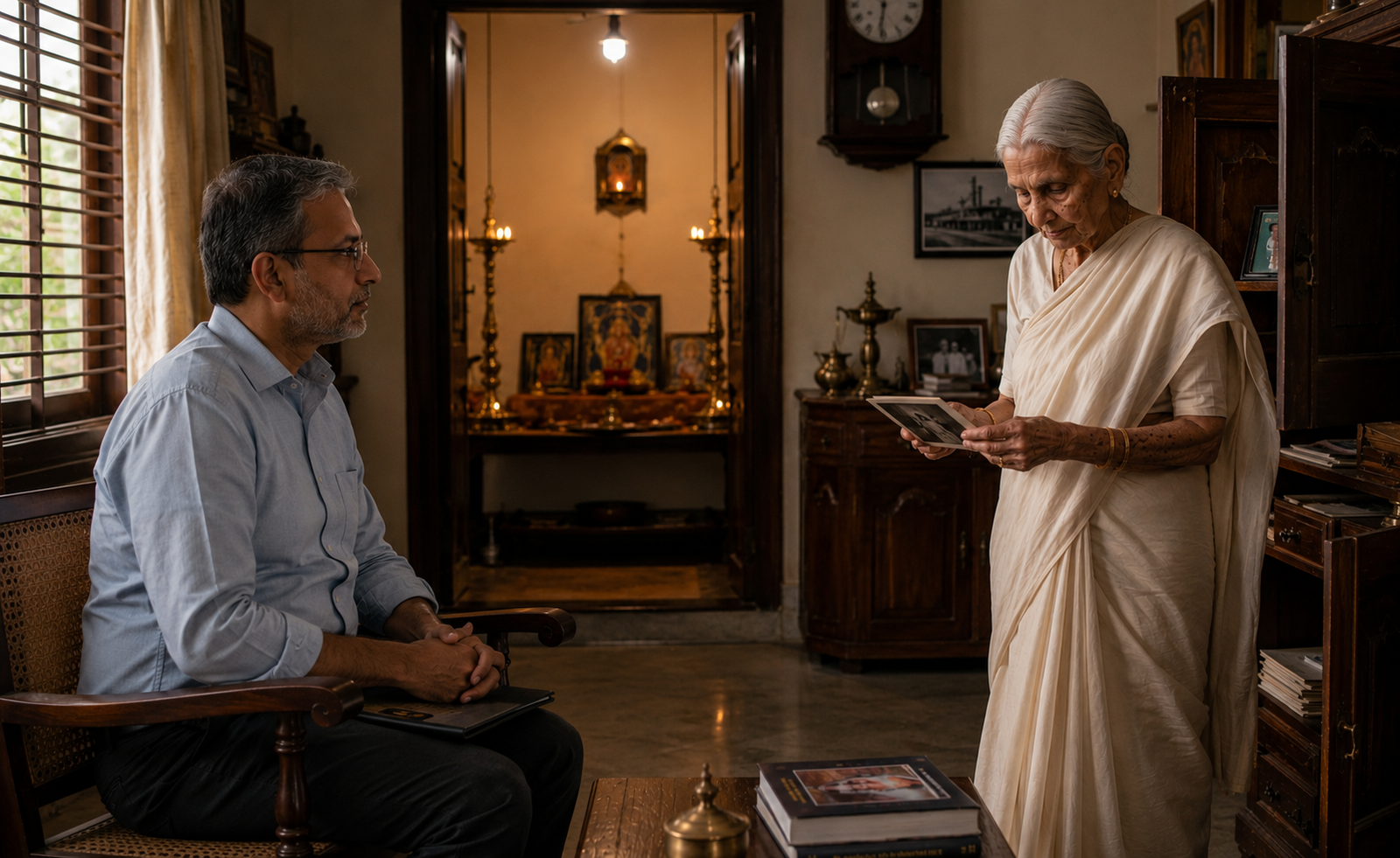
Praveen Saanker sees each of them alone, several times, over four months. Some run for hours and none of them is an interview. He starts with their mother, who has no shareholding and no seat and no part in what is being decided. She is asked what the two of them were like at nine. She talks for an hour and ten minutes, and somewhere in it gets up and takes a photograph out of the almirah, and it is not of either child. Her son-in-law is seen three times, because he runs a division and is in that generation, and because he is the only one of them who chose this family instead of being born into it.
The father's first three are the business, and he could do all of it from memory. In the fourth he mentions the doorway. Then he goes back to Ranjangaon. Nothing from any of it goes anywhere else. Not to the family, not between the two of them, not afterwards. And the reason any of it gets said at all is not rapport. There is nothing in that house the man across the table can be given, so a sentence said to him is not a move.
Four questions with one word for them

What the months turn up is that the question he cannot ask is not a question. It is four. Whether the boy wants to run it. Whether he wants to own it. Whether he wants to work here at all. Whether he wants to be answerable for it when it goes wrong. Four different lives, one noun for all of them. Nobody of seventy can ask that as one question without promising all four at once. So ask the boy and he hears permission to leave. Ask his daughter and it is an offer, and an offer from him is a decision, and the house would have it settled by Sunday.
One of the two will end up more disappointed than the other. He does not know which yet, and will not until he decides. He has been trying to make one decision for three years because there has only ever been one word for it. Nobody tells him the language is defective. It was built for a different job and it still does that job.
What she has never been able to say
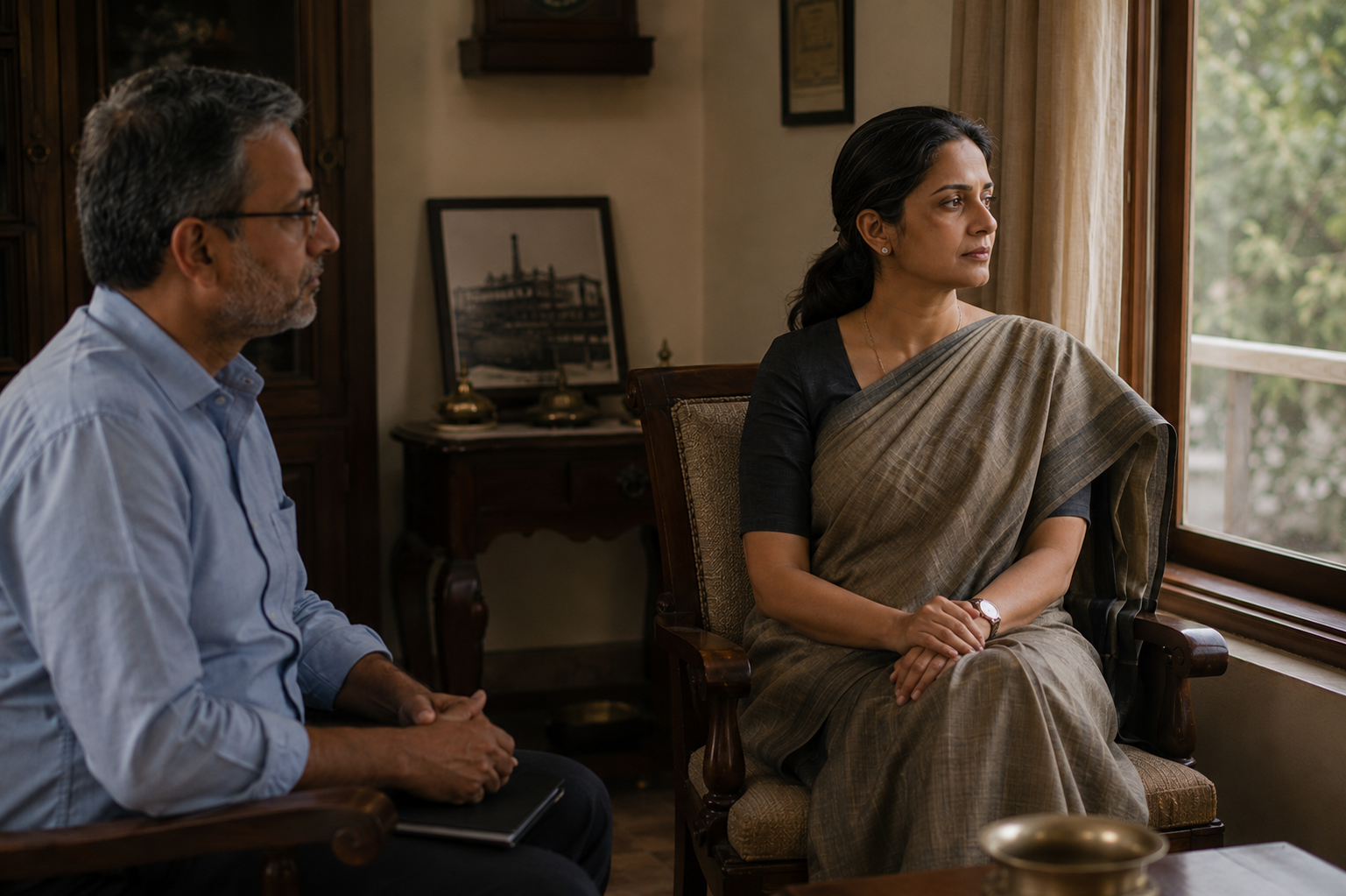
She is not asked what she wants from the business. She has been answering that with results for fifteen years and would answer it the same way again. She is asked what she wants. She says she cannot get at that one. There is another question underneath it, and until that is answered the top one has nothing to stand on. She is asked what the one underneath is. She says it flatly, all at once, the way you say a thing you have had ready a long time. Whether it was ever, at any point, going to be her. Then she says sorry, which she has no reason to say, and looks at the window for a while.
It is the first time in fifteen years that sentence has been outside her. It could not have been said to her father. From her it is a bid, and once it is answered as one it stops being a question about her working life and becomes a matter of who gets what. There is a woman of sixty in that house who has stood in this weather for forty years. What that does is known here. It was heard somewhere else and it cannot be said to her. So the question is put where she might reach it herself. Sometimes it is not reached, and the thing goes in weaker than it should, and there is no way around that.
The Saturday at the farm
They met at the farm, because the outsider put it up, so neither of them had to be the one who asked. She got there first. He was forty minutes late, because of something at Hosur, which she had expected, and she had walked down to the tank and back twice before his car came in. They talked about their mother, and a cousin's wedding, and the tank, which needs work. She had come with the sentence and did not use it. What she asked instead was whether anybody had ever asked him. He said, asked what. She said, sat you down. Whether you wanted it. He said no. He said the file came onto his side of the table when he was about nine, over a calliper, and he has been answering for it since, and that he had never said it out loud, not even to the man he had been talking to for two months. She had spent fifteen years knowing the exact opposite. Her own question got answered sideways, by a man who did not know he was answering it. Nobody had been chosen. There had never been a morning in that house when somebody was considered and somebody else was not.
After a while he asked her about Hubli. Not the numbers, which he knows. Whether it had actually been possible to lose it. She said of course it had. That was the whole point. They gave it to her because it was going down anyway. He sat with that. He said he has never in his life been handed anything that could go wrong. She started to say something about that being a good problem to have, and stopped, because she could see it was not. It was dark when they left. On the steps she said something about their father, small and disloyal and exactly true, and he laughed before he could get his hand up. Then the two of them stood in front of their grandmother's house feeling roughly eleven years old.
What gets signed
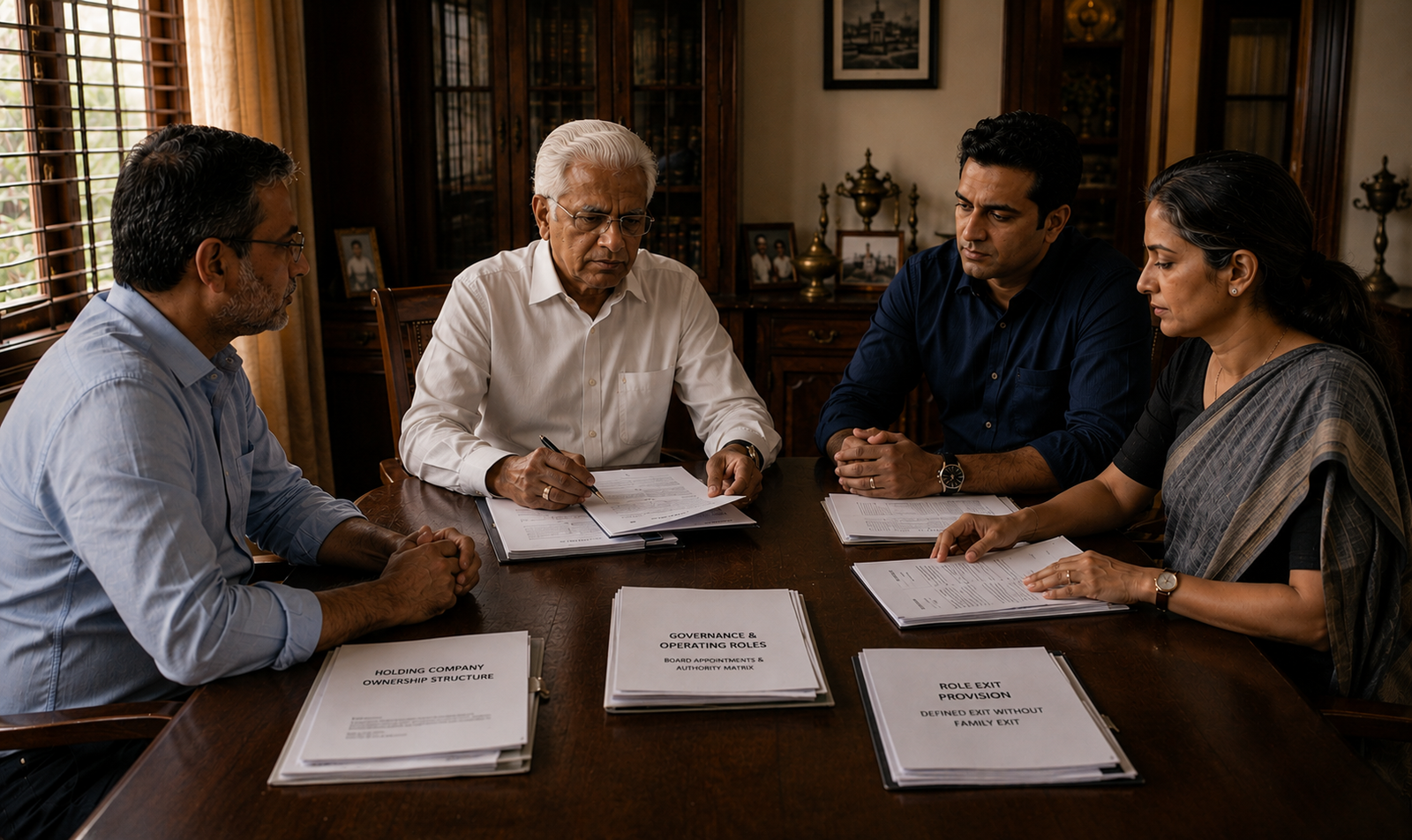
Three things, and none of them says a word about who ends up with what. A holding company, the family's shareholding sitting in it, and appointments to run the operating businesses made by their boards rather than by descent. It had never been necessary while there was one shed and one man in it. Which is what makes the question askable. A man can now be asked whether he wants to run something without being promised the whole of it. Roles written down, for both of them, with what each is answerable for and to whom. Neither had one. Both had a title and thirty years of assumption. And what either of them is paid, set against the role and what it is worth outside, decided once and not revisited every March. Until that is written, what a child earns in that house is their father's opinion of them, arriving once a year as a number.
Then a way out. A defined period, and a written, dated, un-embarrassing exit from it, signed by their father while he is well and in his own mind. It works only because the shareholding is now somewhere else. Leaving the job is leaving a job. Until this year, putting the role down meant putting the family down with it, and no father would have signed that and no son would have used it. It says nothing about the years already served. From the day it exists, every year either of them stays is a year they could have left cheaply and did not. Their father took longest over that one, and agreed for a reason he gave once and did not repeat, which was that he would rather know. Both halves are done by one person in the same room. Two decades in institutional finance sit behind the instruments, at HSBC India and then as a founding-team Director of the family office practice at ASK Wealth Advisors. A doctorate in clinical psychology from the University of Canterbury sits behind the rest.
Forty minutes to Hosur
He asked in March, in the car, which his son drives himself. He asked what he would have done if none of this had ever existed. The boy did not answer until past Attibele. Then he said something about a workshop, and then said no, that was not it, and then that he did not know. Then he said there was a thing he had thought about once and never told anybody and was not going to start in a car. His father said, all right. That was all he said. All right.
A man who has corrected the shape of a sentence, a bearing, a bank covenant and a wedding invitation for forty years, sitting in his son's car with both hands on his knees, not correcting. He did not come back to it for a week. He had been told a week and he took it, and it was the longest working week of his year. He asked his daughter in April, on a Sunday, at her house. She took four days. What she said, he wrote down afterwards in the car, on the back of something, because he wanted it accurately.
The next Deepavali
He has not decided. It is his to decide and he will decide alone, and nothing in the four months made that easier. He asked twice what he should do and was not told. What he has is two answers he did not have in January, from the two of them, rather than assembled across thirty years of dinner tables.
The house is full again and the two of them go up for the same reason as before. He does not ask about Ranjangaon. He has the reports and has read them. Below them the street goes off in bursts and somebody's children are at the crackers, and up on the terrace it is not comfortable the way it was comfortable the year before. Neither of them goes down.