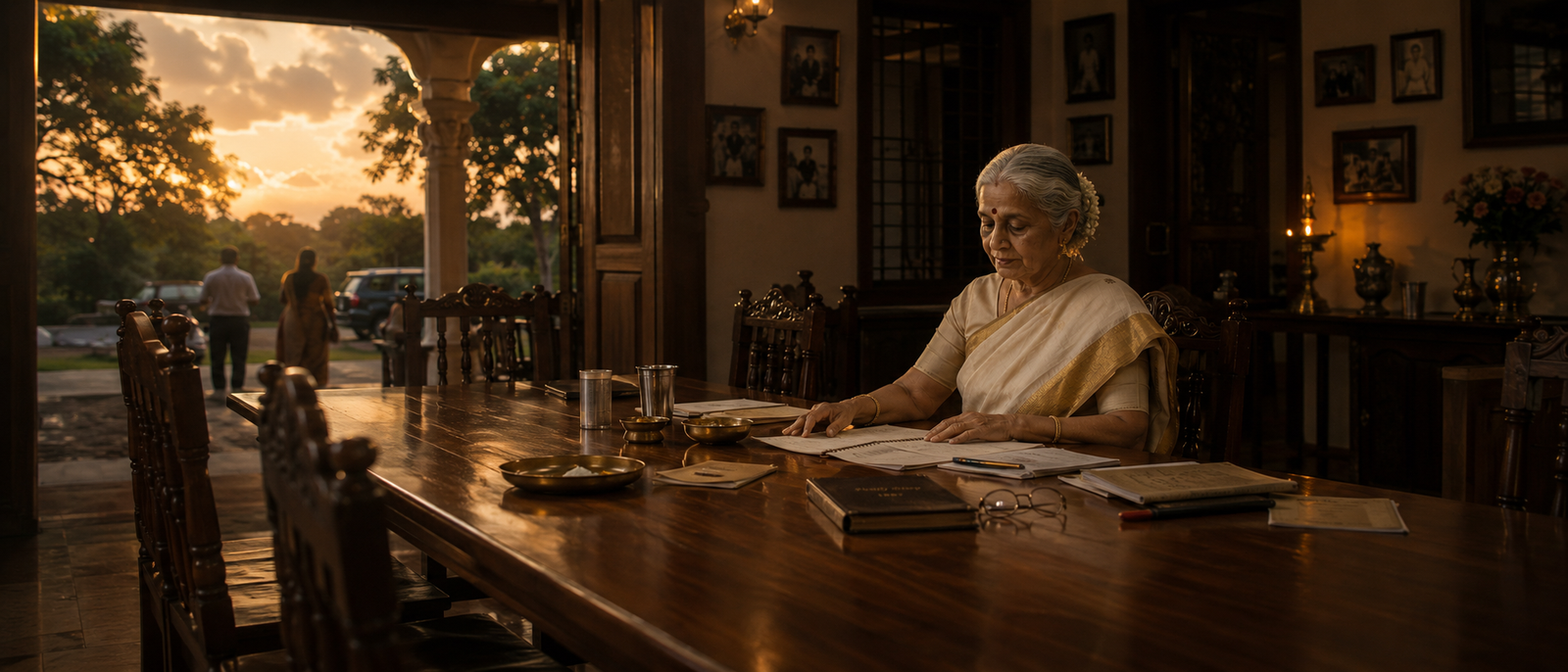
The Matriarch
She has never been wrong about a person. She is consulted about weddings.
What the weather is doing
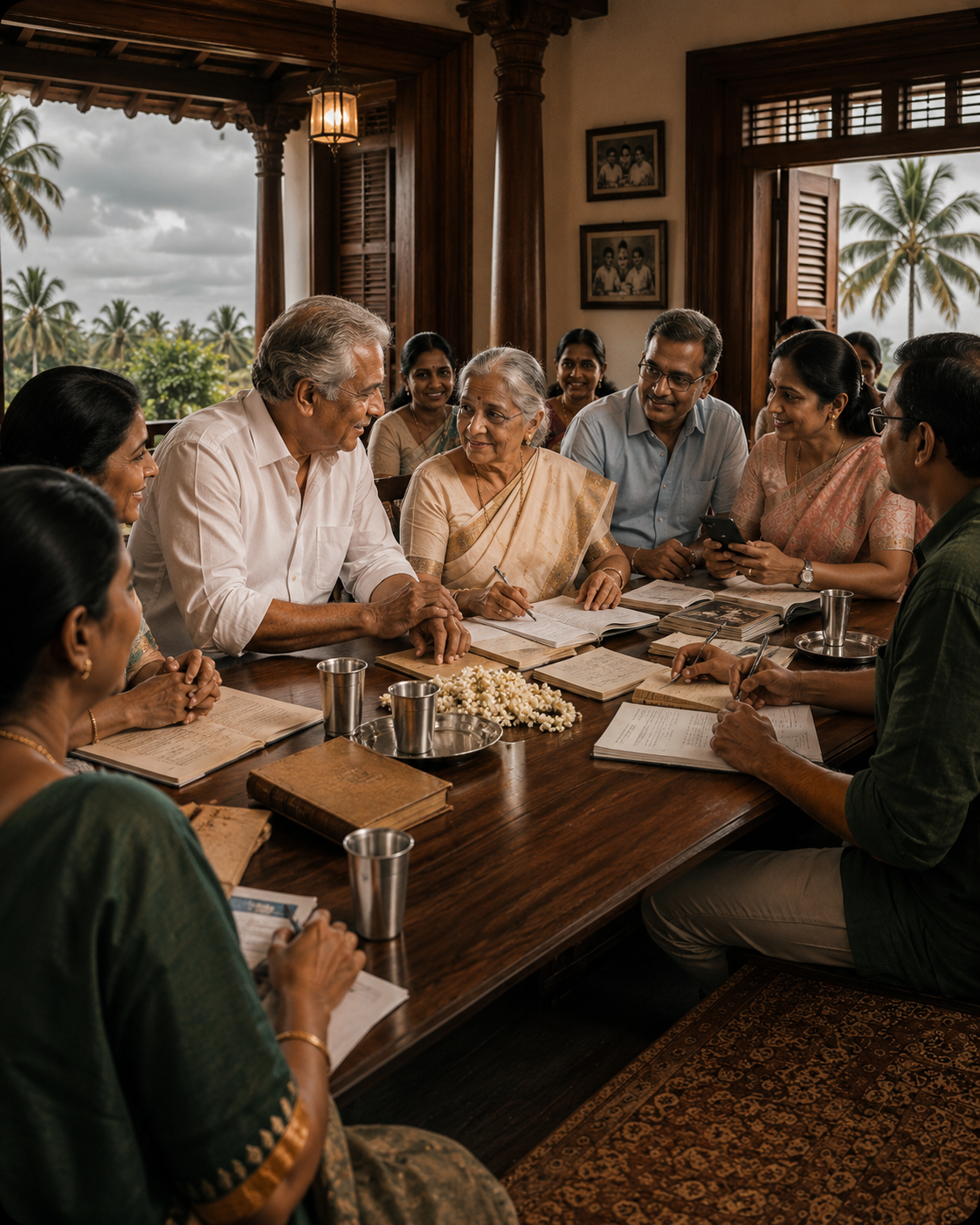
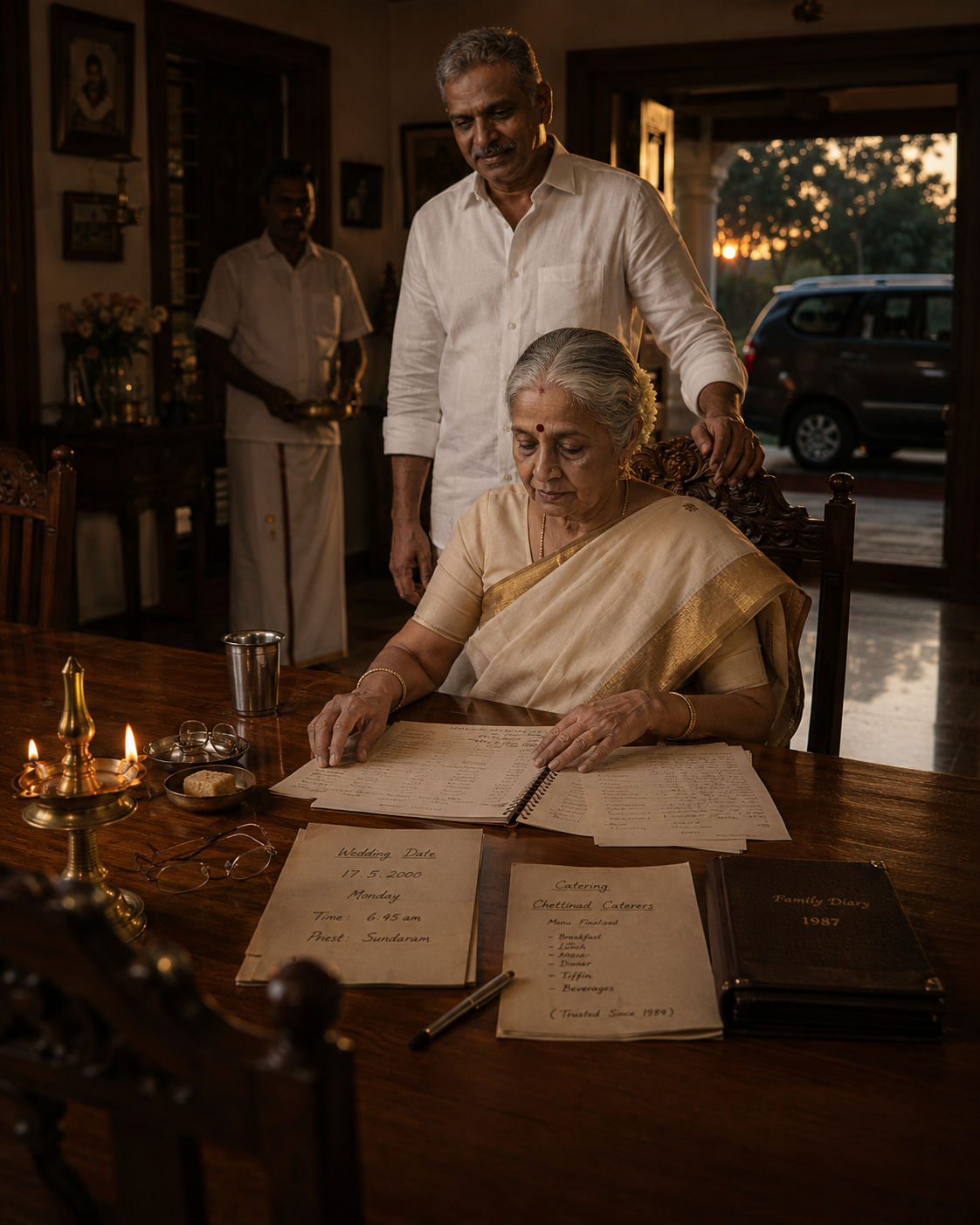
She is at the head of the table on the day they fix the wedding, and the house is full. Her eldest, Raghavan, wants to know whether the reception should be at the farm or the club, and he asks it the way you ask someone you love a question you have already answered — leaning across the cloth, his big tired hand laid flat near hers, waiting for her to choose so that he can be glad she chose, glad in the uncomplicated way he has been glad of her since he was a boy. The younger one, Shankar, wants the caterer settled: the Chettinad man, or the one the daughter-in-law found on her phone. Her granddaughter is on the floor against her knee, thumbing at the screen, looking up once to translate a name the old lady will not know.
Everyone turns to her when a small thing is undecided, the way you turn to check the time. She settles it. The Chettinad man; he has fed three of their weddings and will not be got rid of now. There is a small warm laugh around the table, the laugh a family makes when the elder does the expected thing well. She knows Shankar is not going to survive the split.
The thing no one is asking her
She has known it a while. The way you know weather. Not from anything he said. Shankar tells her nothing; none of them tell her anything that matters. She knows it from how he sits when Raghavan is talking, from a softness in him she raised and can read at forty feet, from the auditors boy who came twice last month and left both times by the side gate. She knows which grandson lied about the car. She knows which daughter-in-law lies awake, and it is not the one they all worry about. She knows the marriage they are blessing today has eighteen good months in it before it turns into a thing they will sit in this room and not discuss.
She could say. She is asked about the pooja date. Sundaram the priest wants the muhurtham confirmed, and on this they defer to her wholly, gravely — the almanac, the auspicious hour, the god-things. Raghavan writes the date into his phone the second she gives it. On this he moves at once. On this her word is law, and the relief in the room is plain: here is a thing they can hand her whole.
Nineteen ninety eight
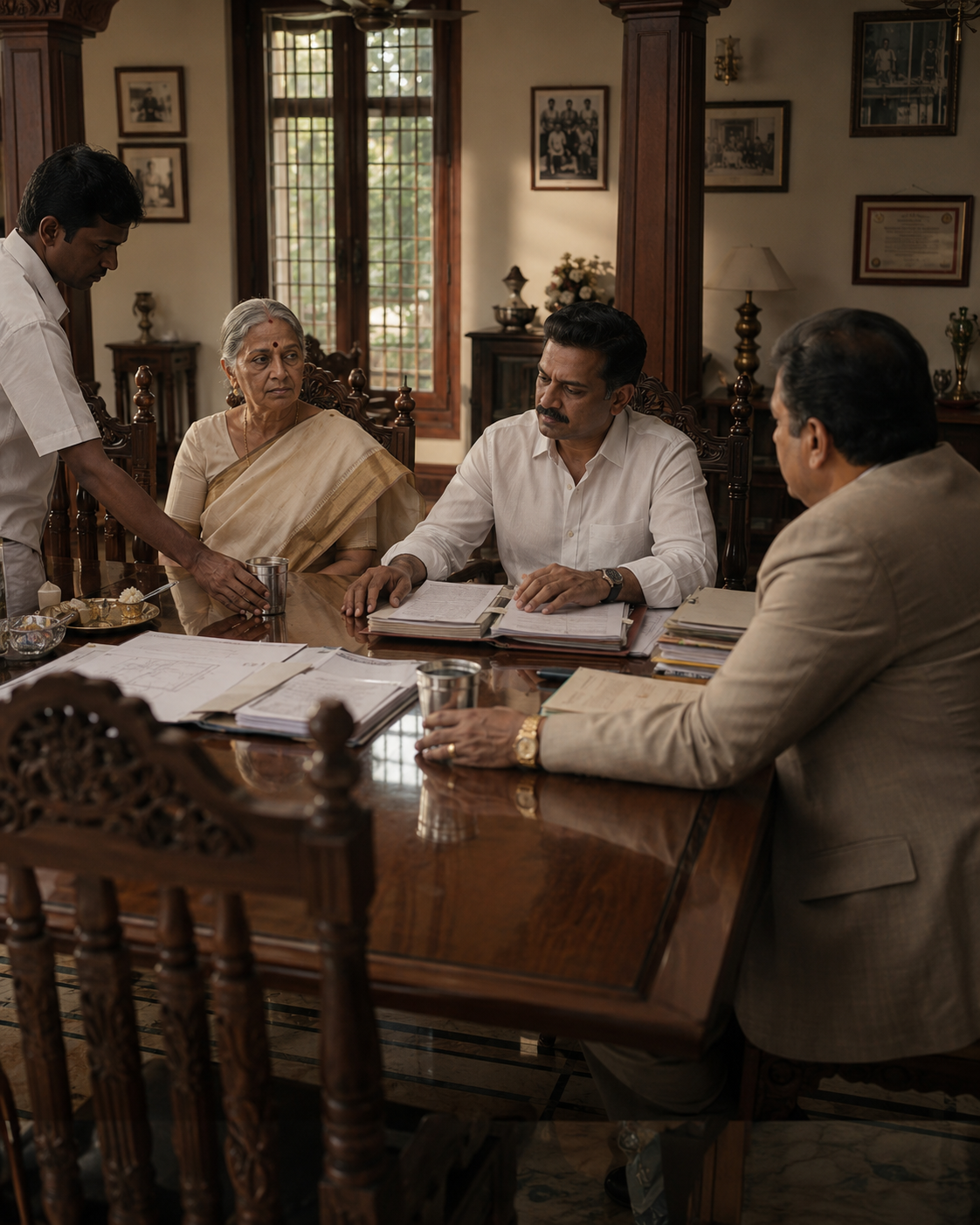
There was a man from Cochin, Premji, who wanted in on the second unit. Her husband was gone by then and Raghavan was forty-two and the whole thing turned on it. She said no. Not with a file — she has never in her life had a file — but flatly, at this table, because she had watched Premji's hands at dinner and heard the voice he used on the man who brought the water. Raghavan did it anyway. A mother's feeling is not a reason a bank accepts. It went the way she said it would. Eleven crore in the money of that time, and a year spent getting clear of the man.
He has never once referred to it. Not to punish her; he is not a man who punishes. He cannot hold what it would mean — to have been kept whole by a thing his mother felt across a dinner table and could not have proved to a living soul. So it sits between them, nearly thirty years old, folded very small. He kisses her head when he leaves. He asks her about the farm or the club.
The gentlest room in the house

They are so gentle with her.
Not one of them is unkind, not once, not in twenty years. They bring her the pooja date and the guest list and the farm-or-the-club, and they bring these warmly, wanting to please her, watching her face for the small pleasure it gives her to be asked. Her sons love her. Her grandchildren touch her feet and mean it. And they bring her these things, and only these things, because these are the ones that are safe to bring — the ones where being wrong costs a caterer's deposit and not the company. She is asked about everything that cannot matter. On the single thing she has never once been wrong about — a person, the true weight of a person, taken across a table in an evening — she is asked to bless the date.
That is the part with no handle on it. There is no unkindness in it anywhere. The love is real, and the sidelining is the same motion as the love, and no one in the room will ever feel the two come apart. She is fond of them. There is nothing in any of them to forgive. So she lets Raghavan have the farm, because he wants it and it is his to want. She tastes the sweet the Chettinad man sends up for approval, says it wants less ghee, and they laugh, and someone writes that down too.
Does she belong here, or did she furnish it
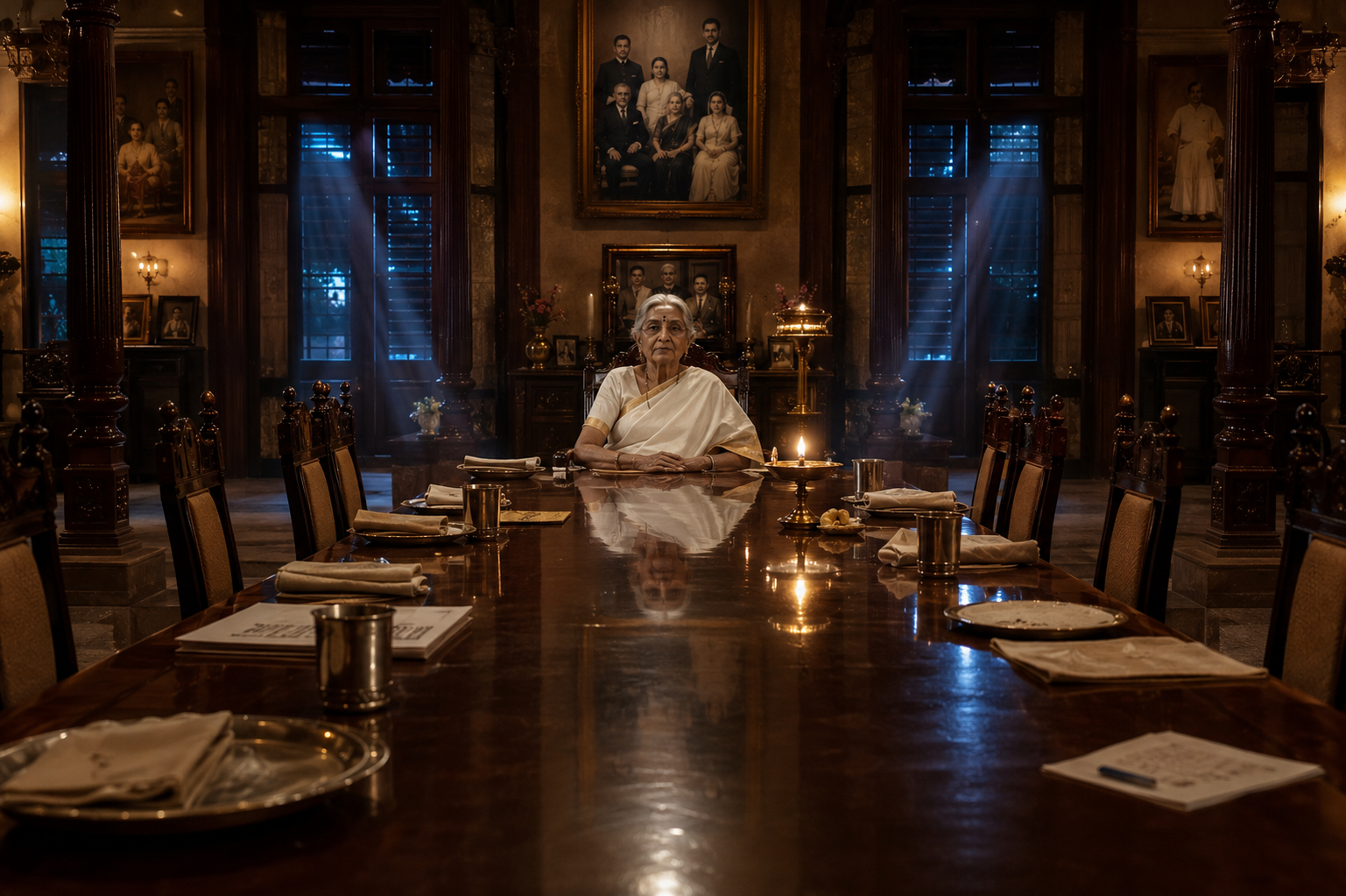
She has sat at the head of this table for fifty years, and she is not sure, tonight, whether she has lived in this house or been placed in it.
The last of the light
The house empties the way it does after these afternoons. The granddaughter first, then Shankar, then the cars. Raghavan is last. He stands a moment with his hand on the back of her chair — this large tired son of hers, right about the farm and wrong about his brother, and easy in his not knowing. A good day, he tells her. She looked well. The Chettinad man was the correct call. She agrees that he was. At the door, already half turned to the driver, he asks whether she thinks the boy is a good match for the girl. She can hear that he means the horoscopes, the stars, the safe register. She tells him the charts are strong, which is true. He is glad, and goes.
She sits on after the sound of the car. The servant comes to clear and she tells him to leave the lamp. She has known since March that the marriage will not hold, and that Shankar will be out of the business inside two years, and that Raghavan will carry both and say, both times, that no one could have seen it coming. She will be in the room when he says it. She will be asked, that evening, about the food. The guest list is still on the table, and the caterer's note, and the date in Sundaram's careful hand. She squares their edges the way her own mother used to, and sets them straight for the morning, so that whatever small thing they bring her next will find her ready.