The Wife
He is home in eight weeks. She has been told this is good news.
The one who came in as a bride and never once ruled
There is a photograph from the year she married, and in it she is standing a half-step behind her mother-in-law, and she has stood a half-step behind her for most of her life since. She came into this house at nineteen. It was not the house it is now — it was two lathes, a debt, a shed her husband slept in — but it already had a ruler, and the ruler was his mother. A woman who had buried her own husband young, held a failing nothing of a business and two sons together on will alone, and did not intend to be argued with in her own kitchen. For twenty-five years the girl lived under that woman. Learned the salt under her eye. Was watched, corrected, measured against a standard that was never once written down and never once relaxed.
And then, the way it happens in these houses, the weight arrived on her. No day. No ceremony. The old woman’s knees went, and her sight, and one festival the girl found the whole thing in her own two hands and understood it was not going back. She had served a twenty-five-year apprenticeship in a throne room. What she inherited was not the throne. The throne is where the money sits, and the money was the men’s. She inherited the work of the throne, and none of its authority, and the old queen is still in the house to see that she carries it. She has ruled nothing in her life. She has only ever held it up.
The thousand things that must not go wrong
There is a dinner: a granddaughter’s engagement, forty at the long table, the good vessels out.
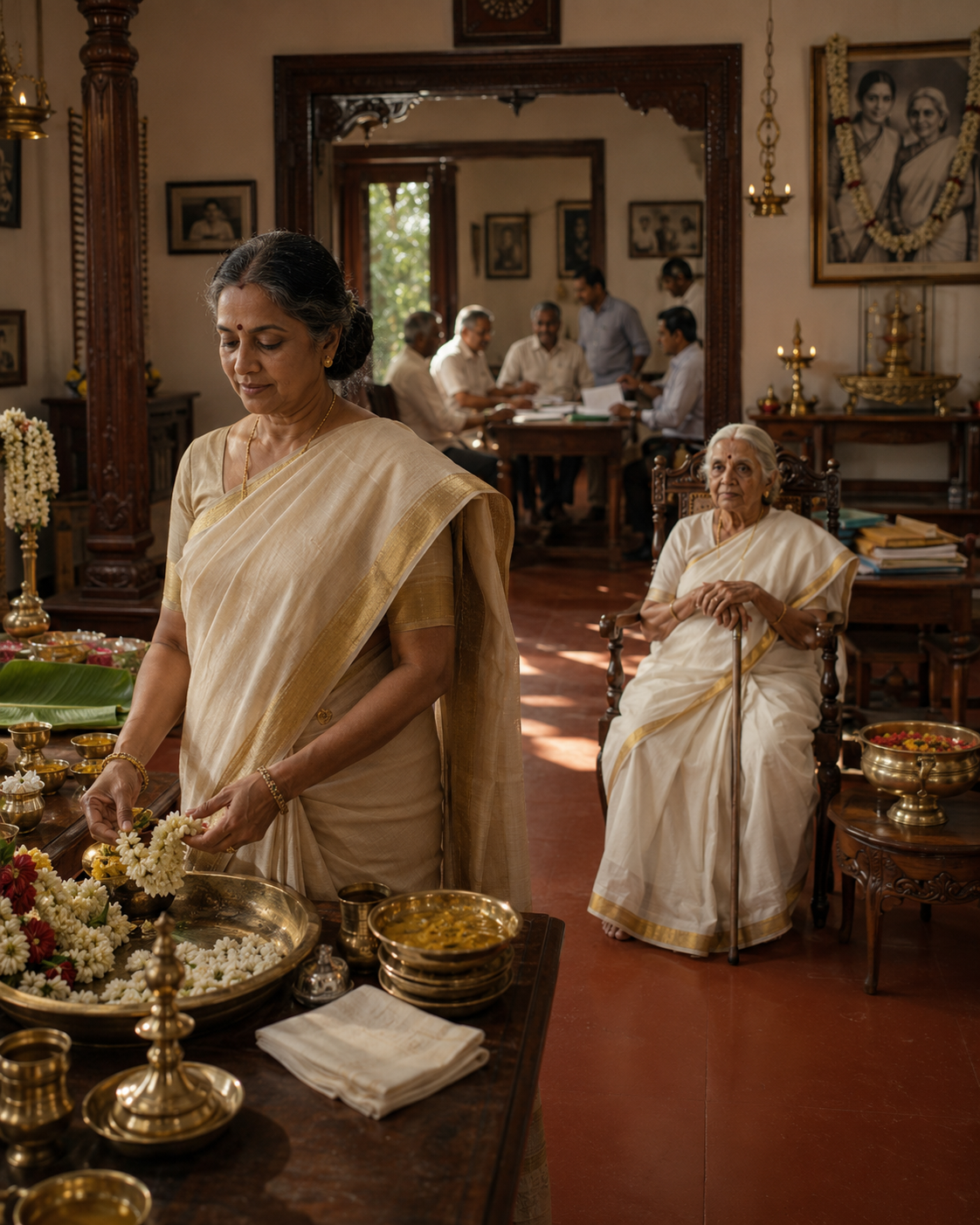
Watch her, and you will see a woman not doing very much. She is near the serving end, not seated yet, a little apart. Most of the table has forgotten she is standing. Her husband’s younger brother is three places down, telling a story about the early years, the shed, the first machine, and he is telling it well, and no one is quite listening. The young ones are on their phones. Her husband is turned to a buyer’s father on his left. The brother’s voice is climbing a little, the way a man’s does when he can feel a table sliding off him. His hand is flat on the cloth. She sees it before he does. She crosses, sets the sweet down in front of him first — before her own husband, before the guests, a small wrong order that no one clocks as wrong — and says, to the table, not to him, that he is the only one who remembers it properly, he should tell them about the flood year. And the table turns back. And his hand comes off the cloth. That is the whole of it, and it is invisible, and it is the work.
His wife, further down, has watched the sweet arrive before the senior branch and understood exactly what it cost and what it was for, and the two women do not look at each other, because looking would name it. Thirty years they have not looked at each other over this. That is how it is kept. The old woman, the mother-in-law, ninety and upright in the good chair at the head, misses none of it. She ruled this table for twenty-five years and she knows the craft when she sees it performed, because she taught it. She watches her son’s wife seat the peace back down at her own table and says nothing, and there is in the not-saying a whole conversation the two of them have been having, wordlessly, for years: I held this by being feared. You hold it by being unseen. No one outside this house can tell the two apart. I can. Then it is done, and it is only a nice dinner, and no one will remember that anything was ever close to going wrong, because nothing did. She has done this for forty years, at ten thousand tables, and she could not give you a single instance of it. It does not survive as instances. It survives as the fact that nothing, in forty years, has ever once burned down.
Name a place
She learned very young that her power was to have no side.
To be the one who bends first, so the thing does not break. To let the sharp remark pass, to give the better room, the better piece, the last word — not because she is weak, but because someone in a house that size has to be the one who does not need to win, or the house comes apart. She became that person so completely, and so well, that it stopped being a thing she did and became a thing she was. And somewhere in the doing of it, she stopped knowing what she wanted.
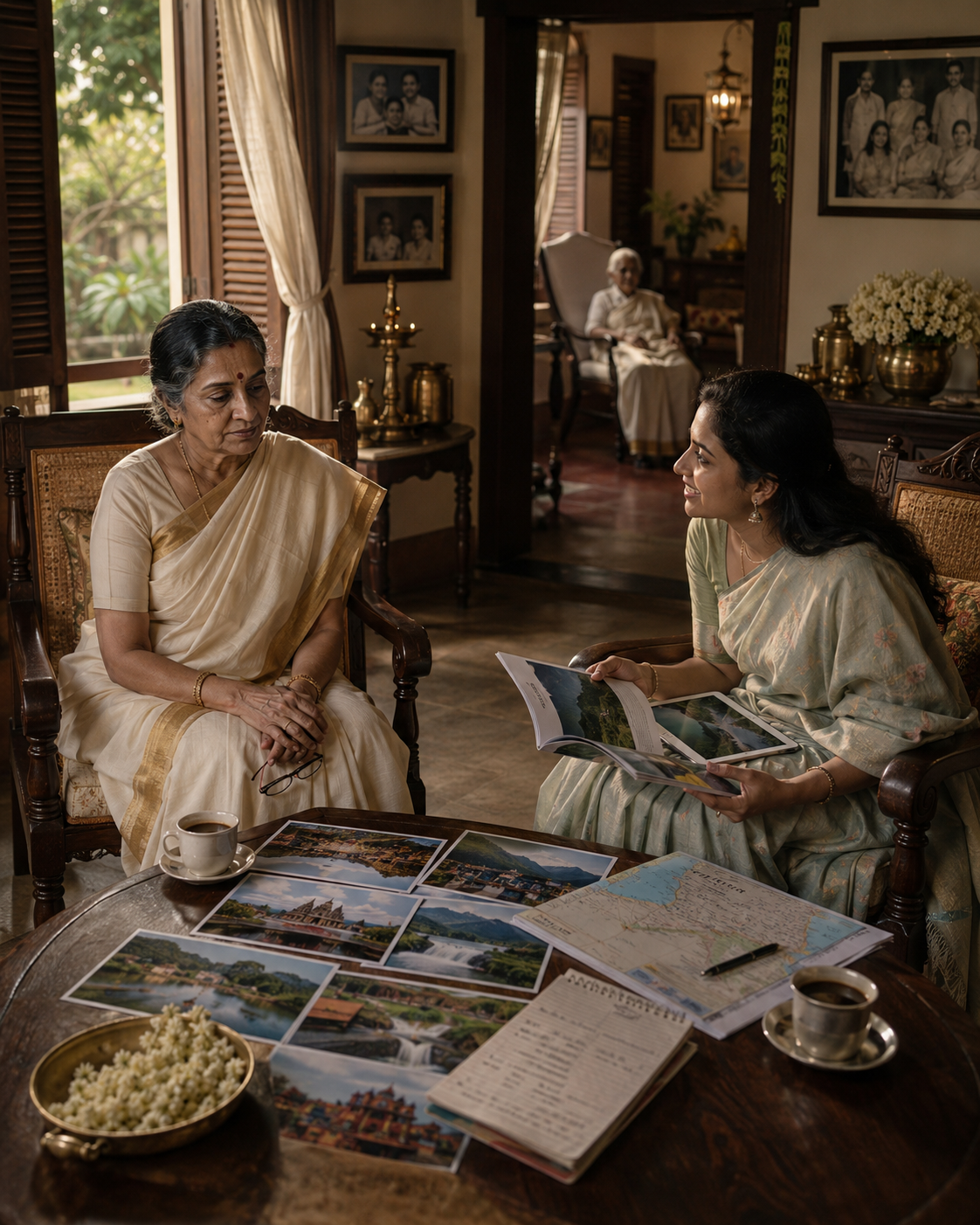
Her daughter asked her, last year, where she would like to go. Anywhere, the daughter said, name a place and we will take you. And she sat with it and found she had nothing to say. Not the sea, not the hills, not the temple town she used to speak of. She turned it over for a day and came back and said the house was best, she was happiest here, why spend the money. The daughter took this for contentment. It was a woman reaching for a preference of her own and closing her hand on nothing, because the hand had not been asked to hold one in forty years, and no longer knew the shape of it.
The call from California
Her sister calls twice a week, from California, where she went with her son’s family and stayed. They talk. The grandchildren, the cold there, the knee, a cousin’s wedding neither will travel to. And near the end, the turn the call has taken for some years now: and how is he, is he resting, has he handed things over yet. She tells her. He is cutting back. Her sister says good, good, at his age, and means it kindly, and it is kind.
Somewhere in the last years the part of the call where her sister asked how she was fell off the end of it. Not from coldness. Her sister loves her. It is only that there is always news of him, and news of the children, and there has not been news of her in a long time. She is not the one things happen to. She is the one they happen near. She used to mind, a little. She does not think she minds now. She has stopped being sure she can tell the difference between not minding and not knowing how to.
Home in eight weeks
They have told her he will be home in eight weeks.
Everyone has said it as good news, and it is good news, and she has said it back the same way. He has worked since he was a boy. He should have his mornings. She cannot picture the two of them in the house all day. For forty years he has come home carrying the day and she has lifted it off him: the coffee, the quiet, the not-asking. That was the shape of them, and it held, and it was even a kind of love. She does not know their shape with no day to bring home. She has tried to see the long afternoons and the picture will not hold. And she cannot say this to anyone, because it would sound like a woman who does not want her husband home, and it is not that. It is that she has been told a door is opening and she cannot see the room.
The people she cannot tell

There is no one to say any of it to, and the reason is the cruelty of it: everyone who could listen is someone she has spent her life protecting.
Not the mother-in-law, who ruled and still, in her chair, is the one authority in the house, and to whom this daughter has never once been anything but a good daughter. Not the younger brother’s wife, whose dignity she has guarded for thirty years and who would be wounded to the core to think the guarding cost anything. Not her own daughter, who fought her own long fight in this family and does not need her mother’s weight set down on top of it. Not her husband, who is carrying his own Monday, the same fear about his factory that she carries about her house, and neither of them has said it, and she will not be the one to make him hold both.
And not her sister in California, who has stopped asking, from long practice, and whom she loves too much to correct.
So she lies awake and turns it over. Whether she was a person these forty years, or a set of tasks so well and so quietly performed that everyone, herself included, forgot to check whether a woman was still in there doing them.
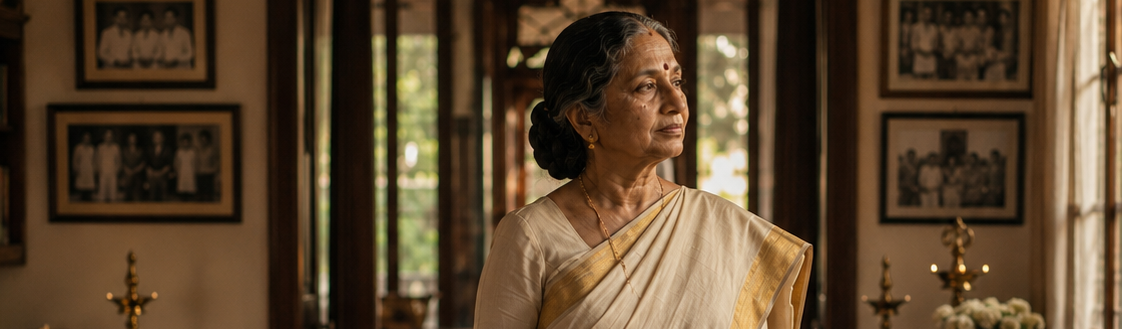
Was there a woman there, or only the work she did
Forty years of holding a house together, and she cannot now say whether she was a person, or only the thing that held it.
The coffee
It is his coffee time.
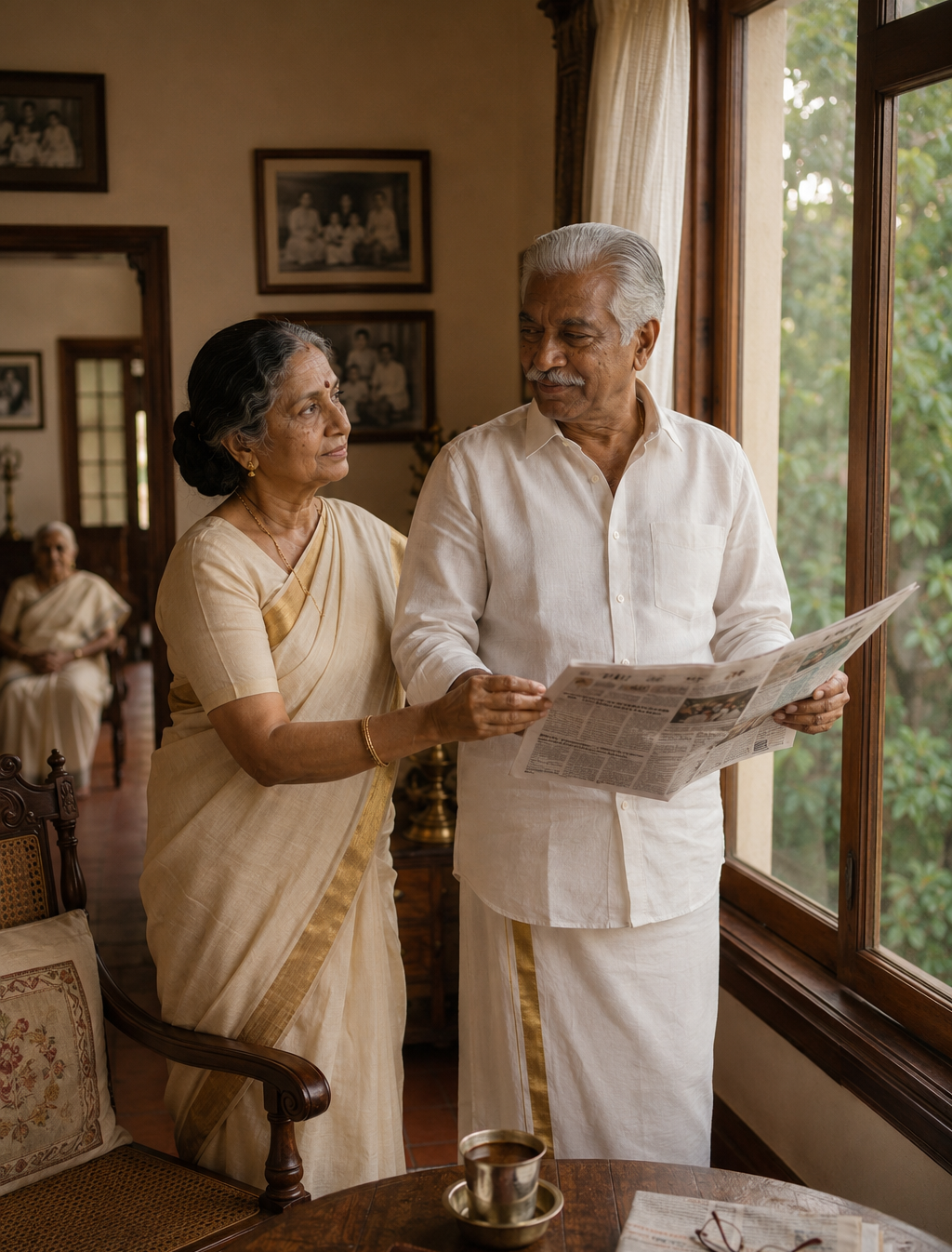
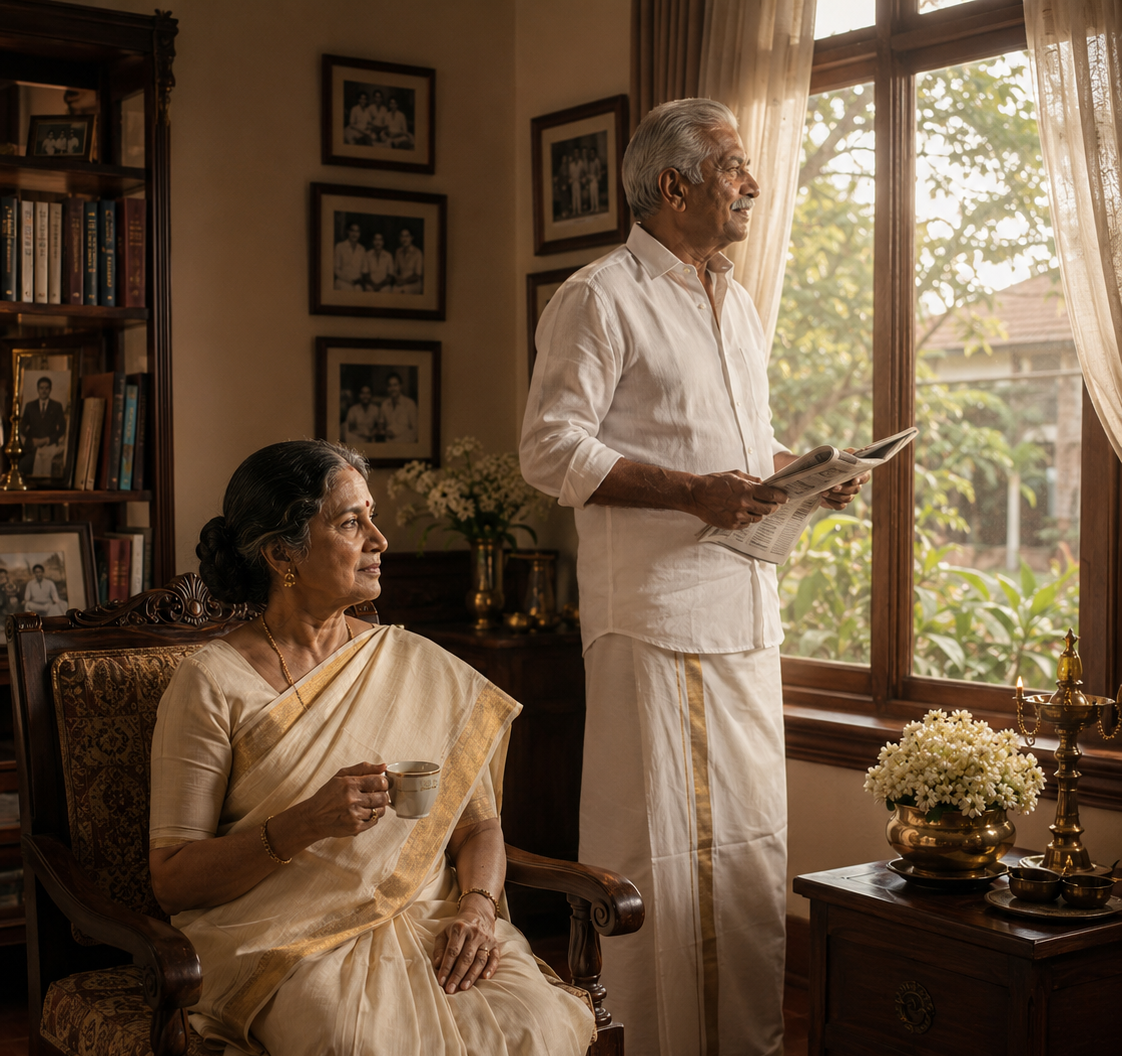
She makes it the way he takes it and carries it out. He is at the window with the paper he is not reading. She sets it by his hand; he says something about the day; she says something back. It is warm. It has been warm for forty years, and the warmth is real, and that is not the same as being seen.
She thinks, standing there, that she would like, once, to say the true sentence out loud. Not to be answered, not to fix anything, only to have it be outside her the one time, in the air, heard by a person who is not already carrying more than she is. Someone who is not in this house. She does not say it now. She straightens the paper where it has slid, asks if he wants the coffee warmed, and goes back in to see about the evening, because the old woman will want her food soon, and the day is not finished, and there is, still, that much of her that is needed.